Yakima pilot ties dedicated DUI enforcement to ignition‑interlock compliance and court case planning
September 30, 2025 | Legislative Sessions, Washington
This article was created by AI summarizing key points discussed. AI makes mistakes, so for full details and context, please refer to the video of the full meeting. Please report any errors so we can fix them. Report an error »
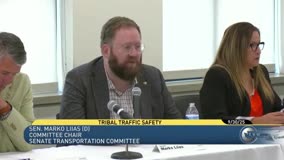
YAKIMA, Wash. — City and county officials updated the Washington State Senate Transportation Committee on Sept. 30 on a Yakima pilot that combines dedicated DUI enforcement, community education and court case planning to improve ignition‑interlock compliance and reduce impaired‑driving crashes.
Sean Boyle, police chief for the City of Yakima, described a department initiative that placed at least one officer specifically on DUI enforcement and education with funding from the Washington Traffic Safety Commission and state proviso funds. Boyle said the unit’s duties included targeted enforcement, presentations, social‑media outreach and coordination with recovery navigators and regional calls for service.
“We went almost 12 months without an impaired‑driving fatality,” Boyle told the committee, summarizing a period where the city saw a meaningful reduction in fatal or serious‑injury collisions tied to impaired driving. He also reported that during the 2023–24 cycle the enforcement officers contacted 1,115 people, made 222 DUI arrests and achieved 754,822 social media impressions for campaign messaging.
Nick Bizon of the Yakima County District Court DUI Supervision Unit said the court pursued a complementary approach aimed at increasing ignition‑interlock installation and compliance. Bizon reported that, for 2024–25, the court handled about 1,000 DUI convictions and that Department of Licensing data showed roughly 3,800 Yakima County residents as noncompliant with ignition‑interlock requirements; he said the court’s review represented about 14 percent of the county population based on the figures they examined.
Bizon described pretrial and post‑conviction case planning that prioritizes indigent and repeat offenders for device installation and support services, reduces individual caseloads so staff can respond quickly to noncompliance, and ties early‑termination eligibility to having a license and an installed interlock device where feasible.
Both speakers emphasized the program’s dual focus on enforcement and services rather than punishment alone. Boyle described prevention and outreach efforts, including presentations to 346 people and wide social‑media messaging; Bizon said the court is adding skill‑building and budgeting assistance to help defendants overcome barriers to getting devices and licenses.
Committee members praised the local effort and asked for follow‑up data. The presenters said they will continue tracking results and welcomed future opportunities to present outcome data to the committee.
Sean Boyle, police chief for the City of Yakima, described a department initiative that placed at least one officer specifically on DUI enforcement and education with funding from the Washington Traffic Safety Commission and state proviso funds. Boyle said the unit’s duties included targeted enforcement, presentations, social‑media outreach and coordination with recovery navigators and regional calls for service.
“We went almost 12 months without an impaired‑driving fatality,” Boyle told the committee, summarizing a period where the city saw a meaningful reduction in fatal or serious‑injury collisions tied to impaired driving. He also reported that during the 2023–24 cycle the enforcement officers contacted 1,115 people, made 222 DUI arrests and achieved 754,822 social media impressions for campaign messaging.
Nick Bizon of the Yakima County District Court DUI Supervision Unit said the court pursued a complementary approach aimed at increasing ignition‑interlock installation and compliance. Bizon reported that, for 2024–25, the court handled about 1,000 DUI convictions and that Department of Licensing data showed roughly 3,800 Yakima County residents as noncompliant with ignition‑interlock requirements; he said the court’s review represented about 14 percent of the county population based on the figures they examined.
Bizon described pretrial and post‑conviction case planning that prioritizes indigent and repeat offenders for device installation and support services, reduces individual caseloads so staff can respond quickly to noncompliance, and ties early‑termination eligibility to having a license and an installed interlock device where feasible.
Both speakers emphasized the program’s dual focus on enforcement and services rather than punishment alone. Boyle described prevention and outreach efforts, including presentations to 346 people and wide social‑media messaging; Bizon said the court is adding skill‑building and budgeting assistance to help defendants overcome barriers to getting devices and licenses.
Committee members praised the local effort and asked for follow‑up data. The presenters said they will continue tracking results and welcomed future opportunities to present outcome data to the committee.
View the Full Meeting & All Its Details
This article offers just a summary. Unlock complete video, transcripts, and insights as a Founder Member.
✓
Watch full, unedited meeting videos
✓
Search every word spoken in unlimited transcripts
✓
AI summaries & real-time alerts (all government levels)
✓
Permanent access to expanding government content
30-day money-back guarantee
