Piedmont council adopts framework to develop housing at Moraga Canyon, citing safety requirements and state housing obligations
October 06, 2025 | Piedmont City Unified, School Districts, California
This article was created by AI summarizing key points discussed. AI makes mistakes, so for full details and context, please refer to the video of the full meeting. Please report any errors so we can fix them. Report an error »
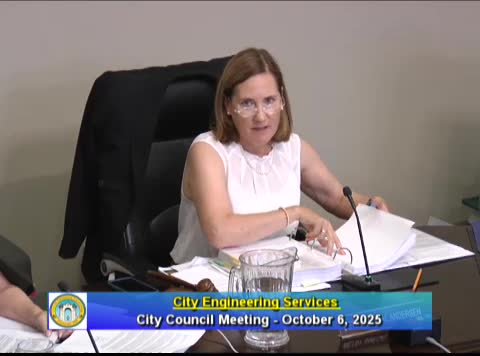
Piedmont City Council on Monday voted unanimously to adopt an addendum to the city’s 2023–2031 housing element environmental impact report and to introduce an ordinance aligning zoning with the Moraga Canyon Specific Plan, a framework the city says is intended to enable development on city-owned land to help meet the state-required regional housing needs allocation.
The specific plan is a regulatory framework, not building plans. “A specific plan is not a construction project. There are no building plans. There are no site plans. There are no landscape plans,” Planning and Building Director Kevin Jackson told the council, stressing the document provides design and review standards that would guide future proposals by developers.
The plan responds to a legally-binding housing element requirement, Program 1L, and to Piedmont’s RHNA allocation for the sixth cycle. City staff said the Moraga Canyon area was identified to help accommodate the city’s portion of the assignment and that the adopted framework would allow a developer to pursue either a north- or south-side development option and a mix of market-rate and deed-restricted affordable housing.
City staff and consultants framed the plan around three priorities: (1) meeting state housing obligations, (2) providing a clear design and regulatory framework to reduce uncertainty for developers, and (3) strengthening wildfire and evacuation measures for the canyon and Moraga Avenue. The city’s environmental consultant, Rincon, described the action taken as an addendum tiered to the housing-element EIR and said it finds no new or more severe impacts beyond those already analyzed in the program-level EIR.
Traffic and circulation: The plan includes multimodal improvements to Moraga Avenue and a recommended signalized crossing at Red Rock Road. Sam Tabibnia, the project’s transportation consultant, summarized September 2023 counts and the project trip estimates: “existing traffic volumes along Moraga Avenue [are] about 11,000 vehicles per day” and the project would generate an estimated 9–10 daily vehicle trips per unit, producing an approximate 5% change in corridor traffic under the study assumptions. Tabibnia also noted measured speeds above the posted limit and the highway design manual metrics being used to set driveway sight-distance criteria.
Fire and evacuation: Fire Chief Dave Brannigan told council the plan “will not diminish our community safety. In fact, it provides a structural opportunity to enhance our overall resilience,” and emphasized three actions the department advocates: “harden your home, manage your yard, and have a plan.” The specific plan requires wildland‑urban interface construction standards, defensible‑space landscaping, ember‑resistant vents, Class A roofing, and fire sprinklers for new structures. It also calls for coordinated emergency signal timing and temporary reversible lanes to support evacuation if needed.
Environmental review: Rincon Consultants’ Carly Kaufman explained the addendum approach under CEQA: the housing‑element EIR was a program EIR that already analyzed the site at up to 199 units and identified significant and unavoidable impacts in several categories. The addendum documents that the more detailed specific‑plan framework does not create new or more severe significant impacts than those evaluated in the previous housing‑element EIR; it carries forward the mitigation measures and adds site‑specific policies to address geotechnical, hazardous materials, noise, and cultural resource issues.
Design, affordability and implementation: Staff recommended several clarifications and small changes in response to public comment and planning commission direction, including: clarifying stopping‑sight‑distance and signage language; updating bicycle/transit guidance; refining site‑design and step‑back standards; and explicitly linking unit counts and affordability targets to the Surplus Lands Act considerations. The staff report also recommended a minimum of about 130 multifamily units on the primary site area, with a requirement that at least 40% be affordable if the city seeks Surplus Lands Act compliance that would permit a streamlined process. City staff described subsequent steps if council adopts the plan: determine Surplus Lands Act status, solicit developer proposals (notice of availability or RFP), select a developer, negotiate a development agreement, and process concurrent subdivision, design, and permit reviews.
What council decided and what happens next: After questions from council members and nearly two hours of public comment, the council voted to approve the CEQA addendum and the specific‑plan framework with staff’s recommended edits and to introduce the zoning ordinance amendments at first reading. Staff and consultants repeatedly told council that the specific plan does not itself authorize construction; any future project would require separate project‑level approvals, public hearings, and technical studies (traffic, geotechnical, noise, and others) tied to the actual proposal. Staff said the city hopes to have a developer under agreement in 2026 and building permits issued in 2027 to meet housing‑element timelines, but any such schedule will depend on proposals, financing and the permit processes.
Council members and staff emphasized the plan’s role as a tool to reduce uncertainty and to create a clear baseline for negotiations with prospective developers. Several council members asked staff to preserve flexibility in negotiations and to revisit standards that developers may identify as barriers, while insisting on maintaining safety, affordability, and design standards. The council adopted the addendum and introduced the ordinance by unanimous vote; staff will return with implementation steps, including potential RFP language and financial analysis, and the matter will proceed through the public RFP/developer selection and permitting stages.
Ending: The Moraga Canyon specific plan establishes a formal path for Piedmont to use city‑owned land to address state housing requirements while adding explicit wildfire, circulation, and design standards. The action frames future negotiations; it does not authorize construction. Community members who spoke urged both stronger safety limits and continued flexibility so development can be financially feasible; staff and council said they will carry those priorities into the next phases of developer outreach and project review.
The specific plan is a regulatory framework, not building plans. “A specific plan is not a construction project. There are no building plans. There are no site plans. There are no landscape plans,” Planning and Building Director Kevin Jackson told the council, stressing the document provides design and review standards that would guide future proposals by developers.
The plan responds to a legally-binding housing element requirement, Program 1L, and to Piedmont’s RHNA allocation for the sixth cycle. City staff said the Moraga Canyon area was identified to help accommodate the city’s portion of the assignment and that the adopted framework would allow a developer to pursue either a north- or south-side development option and a mix of market-rate and deed-restricted affordable housing.
City staff and consultants framed the plan around three priorities: (1) meeting state housing obligations, (2) providing a clear design and regulatory framework to reduce uncertainty for developers, and (3) strengthening wildfire and evacuation measures for the canyon and Moraga Avenue. The city’s environmental consultant, Rincon, described the action taken as an addendum tiered to the housing-element EIR and said it finds no new or more severe impacts beyond those already analyzed in the program-level EIR.
Traffic and circulation: The plan includes multimodal improvements to Moraga Avenue and a recommended signalized crossing at Red Rock Road. Sam Tabibnia, the project’s transportation consultant, summarized September 2023 counts and the project trip estimates: “existing traffic volumes along Moraga Avenue [are] about 11,000 vehicles per day” and the project would generate an estimated 9–10 daily vehicle trips per unit, producing an approximate 5% change in corridor traffic under the study assumptions. Tabibnia also noted measured speeds above the posted limit and the highway design manual metrics being used to set driveway sight-distance criteria.
Fire and evacuation: Fire Chief Dave Brannigan told council the plan “will not diminish our community safety. In fact, it provides a structural opportunity to enhance our overall resilience,” and emphasized three actions the department advocates: “harden your home, manage your yard, and have a plan.” The specific plan requires wildland‑urban interface construction standards, defensible‑space landscaping, ember‑resistant vents, Class A roofing, and fire sprinklers for new structures. It also calls for coordinated emergency signal timing and temporary reversible lanes to support evacuation if needed.
Environmental review: Rincon Consultants’ Carly Kaufman explained the addendum approach under CEQA: the housing‑element EIR was a program EIR that already analyzed the site at up to 199 units and identified significant and unavoidable impacts in several categories. The addendum documents that the more detailed specific‑plan framework does not create new or more severe significant impacts than those evaluated in the previous housing‑element EIR; it carries forward the mitigation measures and adds site‑specific policies to address geotechnical, hazardous materials, noise, and cultural resource issues.
Design, affordability and implementation: Staff recommended several clarifications and small changes in response to public comment and planning commission direction, including: clarifying stopping‑sight‑distance and signage language; updating bicycle/transit guidance; refining site‑design and step‑back standards; and explicitly linking unit counts and affordability targets to the Surplus Lands Act considerations. The staff report also recommended a minimum of about 130 multifamily units on the primary site area, with a requirement that at least 40% be affordable if the city seeks Surplus Lands Act compliance that would permit a streamlined process. City staff described subsequent steps if council adopts the plan: determine Surplus Lands Act status, solicit developer proposals (notice of availability or RFP), select a developer, negotiate a development agreement, and process concurrent subdivision, design, and permit reviews.
What council decided and what happens next: After questions from council members and nearly two hours of public comment, the council voted to approve the CEQA addendum and the specific‑plan framework with staff’s recommended edits and to introduce the zoning ordinance amendments at first reading. Staff and consultants repeatedly told council that the specific plan does not itself authorize construction; any future project would require separate project‑level approvals, public hearings, and technical studies (traffic, geotechnical, noise, and others) tied to the actual proposal. Staff said the city hopes to have a developer under agreement in 2026 and building permits issued in 2027 to meet housing‑element timelines, but any such schedule will depend on proposals, financing and the permit processes.
Council members and staff emphasized the plan’s role as a tool to reduce uncertainty and to create a clear baseline for negotiations with prospective developers. Several council members asked staff to preserve flexibility in negotiations and to revisit standards that developers may identify as barriers, while insisting on maintaining safety, affordability, and design standards. The council adopted the addendum and introduced the ordinance by unanimous vote; staff will return with implementation steps, including potential RFP language and financial analysis, and the matter will proceed through the public RFP/developer selection and permitting stages.
Ending: The Moraga Canyon specific plan establishes a formal path for Piedmont to use city‑owned land to address state housing requirements while adding explicit wildfire, circulation, and design standards. The action frames future negotiations; it does not authorize construction. Community members who spoke urged both stronger safety limits and continued flexibility so development can be financially feasible; staff and council said they will carry those priorities into the next phases of developer outreach and project review.
Don't Miss a Word: See the Full Meeting!
Go beyond summaries. Unlock every video, transcript, and key insight with a Founder Membership.
✓
Get instant access to full meeting videos
✓
Search and clip any phrase from complete transcripts
✓
Receive AI-powered summaries & custom alerts
✓
Enjoy lifetime, unrestricted access to government data
30-day money-back guarantee
