People First outlines Chancellor Broad, Broad Street conversions and answers council questions
October 02, 2025 | Utica, Oneida County, New York
This article was created by AI summarizing key points discussed. AI makes mistakes, so for full details and context, please refer to the video of the full meeting. Please report any errors so we can fix them. Report an error »
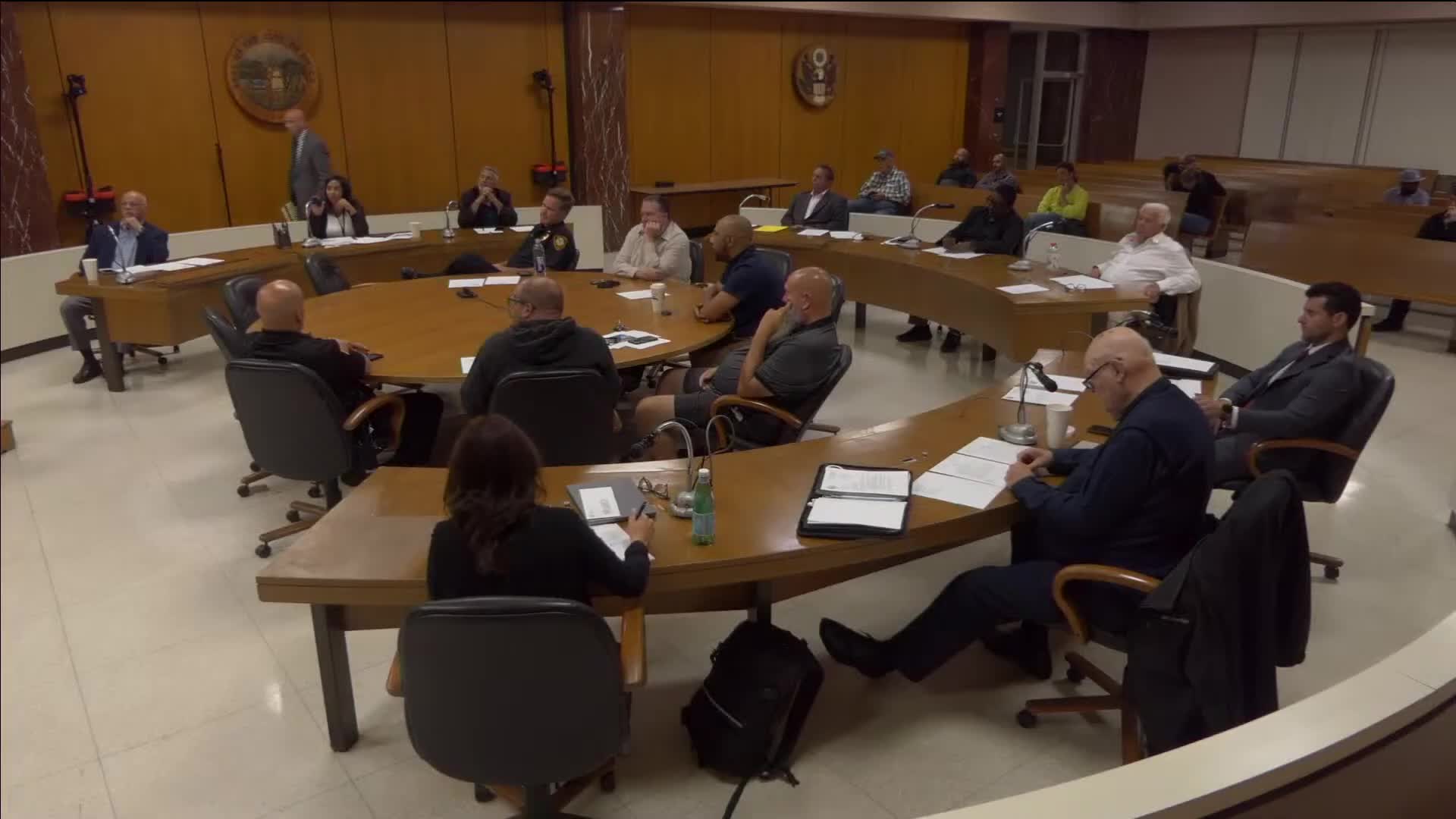
Robert Kelly, executive director of People First, told the Utica Common Council on Oct. 15 that People First completed two recent redevelopment projects—Chancellor (an 89,000+ square-foot rehabilitation) and the Broad Street warehouse conversion—and answered council questions about costs, unit counts and funding sources.
Kelly said the Chancellor building was rehabilitated to about 93,269 square feet and contains 93 units, and the Broad Street warehouse conversion produced 74 units. He described average per‑square‑foot costs of roughly $318 for Chancellor and about $408 for the Broad Street conversion and said the projects were funded through competitive New York state programs and other sources. “These initiatives are more than just bricks and mortar. They impact people’s mindsets and mentalities,” Kelly said.
Council members pressed Kelly for additional documentation. One council member requested “financials from People First for the last three years, a status and update on how many apartments have been built and how many people have been rehoused,” and asked Kelly to come to a committee meeting to discuss the materials in detail. Kelly agreed to provide the requested documents to the city clerk and to appear at a committee meeting.
Kelly described other People First initiatives in or planned for Utica: Roosevelt Residences (a prior 2017 project that Kelly said now has a waiting list), Impact Cornhill (two sites, one with 78 units and community space), Parkway Gardens (first phase projected to create 71 new units), and a market‑rate 34‑unit rental project called Eagle’s Nest. He said People First expects to add roughly 374 new units to the city’s housing stock across several projects over the next three to four years.
Kelly said the projects used HOME funds and state funding “silos” (competitive awards) and that pilot/cooperation agreements with the city were necessary to access certain state funds. He also addressed public rumors about lavish spending, saying state monitors scrutinize budgets and that ‘‘we can’t have a $100,000 chandelier’’ under state rules and review.
Council members asked for more detail on relocation, project procurement and pilot agreements. Kelly said relocation costs for residents displaced by redevelopment (for example at Parkway Gardens) are covered as part of the project and that People First contracts with local contractors and suppliers where possible. He said People First will submit the requested financials and budget breakdowns to the city clerk for distribution.
Why it matters: The presentation clarified project scope, funding sources and unit counts for major local affordable‑housing projects and prompted elected officials to request documentation and a committee briefing before further council action.
Kelly repeatedly framed the projects as responses to local housing need: “If you look at the market studies…there’s a thousand to 1,500 unit shortage of clean, safe, and affordable housing within the city of Utica,” he said. He also described a separate effort to pursue homeownership grants through the state’s Affordable Housing Opportunity Program (referred to in testimony as “AHOP/AHAW”).
The council did not take formal action on the presentation itself. Council members asked that People First provide three years of financial statements, details on construction and rehabilitation costs by project, and a tally of units created or preserved; Kelly agreed to provide materials and attend a committee meeting if requested. The council clerk will distribute the documents once received.
Kelly said the Chancellor building was rehabilitated to about 93,269 square feet and contains 93 units, and the Broad Street warehouse conversion produced 74 units. He described average per‑square‑foot costs of roughly $318 for Chancellor and about $408 for the Broad Street conversion and said the projects were funded through competitive New York state programs and other sources. “These initiatives are more than just bricks and mortar. They impact people’s mindsets and mentalities,” Kelly said.
Council members pressed Kelly for additional documentation. One council member requested “financials from People First for the last three years, a status and update on how many apartments have been built and how many people have been rehoused,” and asked Kelly to come to a committee meeting to discuss the materials in detail. Kelly agreed to provide the requested documents to the city clerk and to appear at a committee meeting.
Kelly described other People First initiatives in or planned for Utica: Roosevelt Residences (a prior 2017 project that Kelly said now has a waiting list), Impact Cornhill (two sites, one with 78 units and community space), Parkway Gardens (first phase projected to create 71 new units), and a market‑rate 34‑unit rental project called Eagle’s Nest. He said People First expects to add roughly 374 new units to the city’s housing stock across several projects over the next three to four years.
Kelly said the projects used HOME funds and state funding “silos” (competitive awards) and that pilot/cooperation agreements with the city were necessary to access certain state funds. He also addressed public rumors about lavish spending, saying state monitors scrutinize budgets and that ‘‘we can’t have a $100,000 chandelier’’ under state rules and review.
Council members asked for more detail on relocation, project procurement and pilot agreements. Kelly said relocation costs for residents displaced by redevelopment (for example at Parkway Gardens) are covered as part of the project and that People First contracts with local contractors and suppliers where possible. He said People First will submit the requested financials and budget breakdowns to the city clerk for distribution.
Why it matters: The presentation clarified project scope, funding sources and unit counts for major local affordable‑housing projects and prompted elected officials to request documentation and a committee briefing before further council action.
Kelly repeatedly framed the projects as responses to local housing need: “If you look at the market studies…there’s a thousand to 1,500 unit shortage of clean, safe, and affordable housing within the city of Utica,” he said. He also described a separate effort to pursue homeownership grants through the state’s Affordable Housing Opportunity Program (referred to in testimony as “AHOP/AHAW”).
The council did not take formal action on the presentation itself. Council members asked that People First provide three years of financial statements, details on construction and rehabilitation costs by project, and a tally of units created or preserved; Kelly agreed to provide materials and attend a committee meeting if requested. The council clerk will distribute the documents once received.
View the Full Meeting & All Its Details
This article offers just a summary. Unlock complete video, transcripts, and insights as a Founder Member.
✓
Watch full, unedited meeting videos
✓
Search every word spoken in unlimited transcripts
✓
AI summaries & real-time alerts (all government levels)
✓
Permanent access to expanding government content
30-day money-back guarantee
