Albany mayor unveils roughly $277 million 2026 budget with tax levy and fee increases
October 02, 2025 | Albany City, Albany County, New York
This article was created by AI summarizing key points discussed. AI makes mistakes, so for full details and context, please refer to the video of the full meeting. Please report any errors so we can fix them. Report an error »
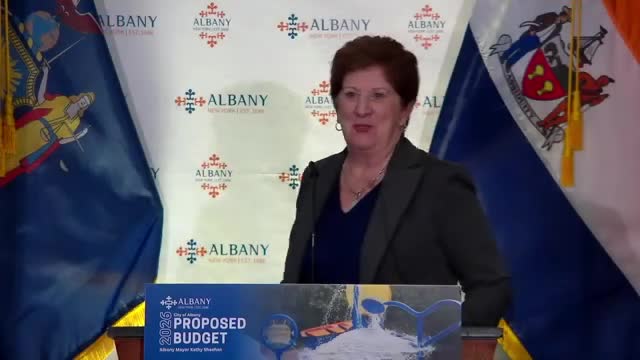
The mayor of Albany presented the city's proposed fiscal 2026 budget to the City Council; the proposal includes roughly $277,000,000 in operating funds, a tax levy increase described as compliant with New York State's cap, and a proposed $90 annual increase to the city's trash-collection fee.
The budget matter matters because it sets the city's spending priorities for services, infrastructure and debt service while the mayor said the city faces uncertainty from federal actions and economic headwinds that could affect revenue and cash flow.
The mayor framed the proposal as a plan based on current assumptions and emphasized continuity in core services and strategic investments. "The only reason that we are here is to serve the city of Albany and to work to ensure that we provide the services and support and the safety and health that our community wants," the mayor said. The mayor said the city has rebuilt its rainy day fund to $15,000,000 and has balanced budgets for years without tapping fund balance.
Key numbers in the proposal include a roughly $277 million operating budget (about a 3% increase from last year, according to the mayor), a tax levy increase the mayor described as 3% and compliant with the state cap, and an average property-owner impact example: a homeowner with a $250,000 house would see a $51 increase in the annual tax bill. The mayor said debt-service costs are rising, with about a $4,000,000 increase in debt service driving part of the levy change, and retiree health-care costs are projected to rise by about $1,000,000.
The mayor listed several revenue and expense shifts: the city expects about $24,000,000 in grants from outside sources in the budget, a projected $1,000,000 reduction tied to the allocation of American Rescue Plan funds, and an anticipated $400,000 decline in PILOT (payment-in-lieu-of-taxes) receipts because there have been no recent large development projects feeding that pipeline. He also warned of cash-flow risk tied to a federal government shutdown, saying "we have about $3,000,000 of reimbursements that we're expecting from the feds that are now at risk of being delayed" and that the city may need to issue revenue anticipation notes if reimbursements are delayed.
On fees and service changes, the mayor proposed a $90 annual increase in the residential trash fee ("about $15 a month" and "$180 a year" for a single-family home), noting the gap between the fee and the cost of providing trash collection and comparing the annual cost to private hauler rates in nearby communities.
The proposal reduces capital spending compared with recent years largely because of higher debt service from recently completed projects, the mayor said. Still, the 2026 plan includes $30,000,000 for resurfacing streets, sidewalk work, traffic-safety improvements and other transportation projects. The mayor highlighted a Washington Park complete-streets project the budget documents list at about $8,500,000, with $2,000,000 already secured from the state and a hoped-for completion in 2027 if full funding is assembled.
Public-safety and social-service investments in the proposal include $2,000,000 for upgraded police body-worn camera hardware and software and continued funding for Albany Navigates, which the mayor said has housed 41 people to date. The budget also includes a $500,000 pilot for a youth-support hub in the recreation department, a program the mayor said staff and some council members requested and that the administration expects may be supplemented with grant funding.
On housing, the mayor stressed the city's mixed progress: he said the city has been successful in building very-low-income, tax-subsidized housing and that three projects are underway with two more in the pipeline targeting affordability between 20% and 80% of area median income (AMI). He said the city is not producing housing units for households above 80% of AMI under current approaches and cited inclusionary zoning changes under consideration: "When we look at unsubsidized inclusionary unit production, we were on average creating 17 units a year ... under the new plan ... it's been 8," and he projected that production could be zero in 2025 unless policy or market conditions change. The mayor also referenced a state-level investment the governor has proposed: "the governor has pledged of $400,000,000 that she has proposed for the city of Albany," which he said could affect downtown transformation.
During questions, a council member asked for specifics about which comparable cities the administration used for proposed elected-official wage adjustments; the mayor said that information will be provided to the council. On proposed recruitment for special patrol or special unit officers, the mayor responded that hiring is ongoing and would proceed as qualified candidates are identified. He also said the personnel assumptions in the budget reflect requests from the incoming administration and are intended to allow a future mayor to start with preferred staffing.
There were no formal votes or council decisions recorded during the mayor's presentation; the mayor said the proposal begins a multi-month engagement with department heads and council members that will shape the final budget. "I look forward to seeing how this budget plays out and how our future plays out," the mayor said, and he opened the floor to questions at the end of the presentation.
Next steps noted by the mayor include council review meetings with department heads over the coming months and additional council discussion of specific line items such as the trash fee, capital projects and personnel changes.
The budget matter matters because it sets the city's spending priorities for services, infrastructure and debt service while the mayor said the city faces uncertainty from federal actions and economic headwinds that could affect revenue and cash flow.
The mayor framed the proposal as a plan based on current assumptions and emphasized continuity in core services and strategic investments. "The only reason that we are here is to serve the city of Albany and to work to ensure that we provide the services and support and the safety and health that our community wants," the mayor said. The mayor said the city has rebuilt its rainy day fund to $15,000,000 and has balanced budgets for years without tapping fund balance.
Key numbers in the proposal include a roughly $277 million operating budget (about a 3% increase from last year, according to the mayor), a tax levy increase the mayor described as 3% and compliant with the state cap, and an average property-owner impact example: a homeowner with a $250,000 house would see a $51 increase in the annual tax bill. The mayor said debt-service costs are rising, with about a $4,000,000 increase in debt service driving part of the levy change, and retiree health-care costs are projected to rise by about $1,000,000.
The mayor listed several revenue and expense shifts: the city expects about $24,000,000 in grants from outside sources in the budget, a projected $1,000,000 reduction tied to the allocation of American Rescue Plan funds, and an anticipated $400,000 decline in PILOT (payment-in-lieu-of-taxes) receipts because there have been no recent large development projects feeding that pipeline. He also warned of cash-flow risk tied to a federal government shutdown, saying "we have about $3,000,000 of reimbursements that we're expecting from the feds that are now at risk of being delayed" and that the city may need to issue revenue anticipation notes if reimbursements are delayed.
On fees and service changes, the mayor proposed a $90 annual increase in the residential trash fee ("about $15 a month" and "$180 a year" for a single-family home), noting the gap between the fee and the cost of providing trash collection and comparing the annual cost to private hauler rates in nearby communities.
The proposal reduces capital spending compared with recent years largely because of higher debt service from recently completed projects, the mayor said. Still, the 2026 plan includes $30,000,000 for resurfacing streets, sidewalk work, traffic-safety improvements and other transportation projects. The mayor highlighted a Washington Park complete-streets project the budget documents list at about $8,500,000, with $2,000,000 already secured from the state and a hoped-for completion in 2027 if full funding is assembled.
Public-safety and social-service investments in the proposal include $2,000,000 for upgraded police body-worn camera hardware and software and continued funding for Albany Navigates, which the mayor said has housed 41 people to date. The budget also includes a $500,000 pilot for a youth-support hub in the recreation department, a program the mayor said staff and some council members requested and that the administration expects may be supplemented with grant funding.
On housing, the mayor stressed the city's mixed progress: he said the city has been successful in building very-low-income, tax-subsidized housing and that three projects are underway with two more in the pipeline targeting affordability between 20% and 80% of area median income (AMI). He said the city is not producing housing units for households above 80% of AMI under current approaches and cited inclusionary zoning changes under consideration: "When we look at unsubsidized inclusionary unit production, we were on average creating 17 units a year ... under the new plan ... it's been 8," and he projected that production could be zero in 2025 unless policy or market conditions change. The mayor also referenced a state-level investment the governor has proposed: "the governor has pledged of $400,000,000 that she has proposed for the city of Albany," which he said could affect downtown transformation.
During questions, a council member asked for specifics about which comparable cities the administration used for proposed elected-official wage adjustments; the mayor said that information will be provided to the council. On proposed recruitment for special patrol or special unit officers, the mayor responded that hiring is ongoing and would proceed as qualified candidates are identified. He also said the personnel assumptions in the budget reflect requests from the incoming administration and are intended to allow a future mayor to start with preferred staffing.
There were no formal votes or council decisions recorded during the mayor's presentation; the mayor said the proposal begins a multi-month engagement with department heads and council members that will shape the final budget. "I look forward to seeing how this budget plays out and how our future plays out," the mayor said, and he opened the floor to questions at the end of the presentation.
Next steps noted by the mayor include council review meetings with department heads over the coming months and additional council discussion of specific line items such as the trash fee, capital projects and personnel changes.
View the Full Meeting & All Its Details
This article offers just a summary. Unlock complete video, transcripts, and insights as a Founder Member.
✓
Watch full, unedited meeting videos
✓
Search every word spoken in unlimited transcripts
✓
AI summaries & real-time alerts (all government levels)
✓
Permanent access to expanding government content
30-day money-back guarantee
