State Bond Commission approves $10 million bond for Imperial Calcasieu Human Services Authority after discussion of repayment and historic tax credits
October 16, 2025 | 2025 Legislature LA, Louisiana
This article was created by AI summarizing key points discussed. AI makes mistakes, so for full details and context, please refer to the video of the full meeting. Please report any errors so we can fix them. Report an error »
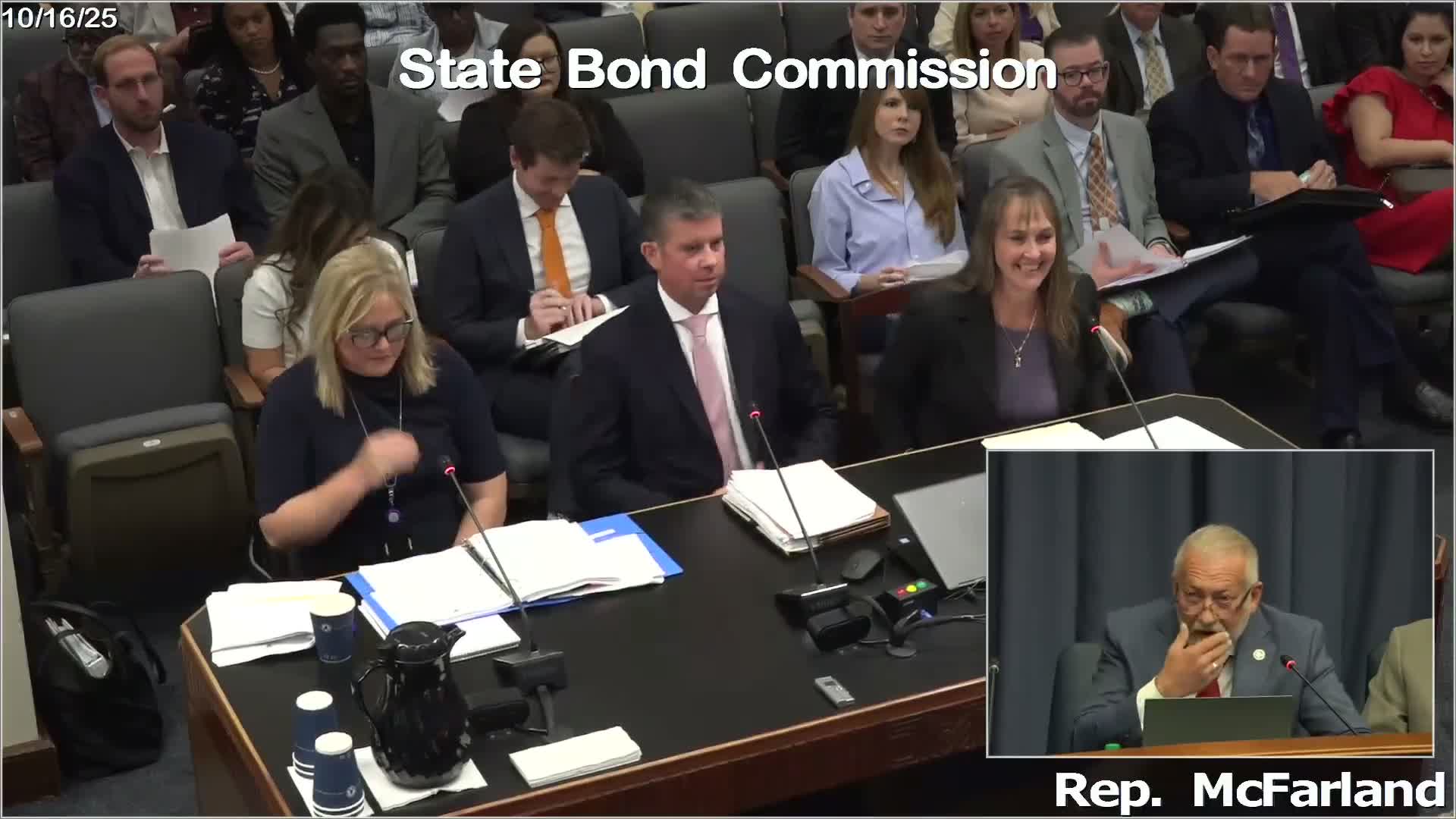
The State Bond Commission on Oct. 16 approved item 28, authorizing the Calcasieu Parish Public Trust Authority to issue up to $10 million in revenue bonds to fund renovations of an office building that Imperial Calcasieu Human Services Authority (MCAL) will occupy and partially lease out.
The commission voted on the item after a detailed presentation and questions about MCAL’s ability to cover debt service without additional State General Fund direct appropriations. Representative Sam Romero moved approval; Senator Sandra Stein seconded. The motion passed by voice vote with no objection.
MCAL Executive Director Tanya McGee told commissioners MCAL’s operating mix includes State General Fund appropriations, federal block grants (from the Substance Abuse and Mental Health Services Administration), and self‑generated revenue. “Yes. We have multiple means of financing, state general fund dollars. We get block grant funding, federal block grant funding from Substance Abuse Mental Health Services Administration, and self generated revenue,” McGee said.
McGee said the authority expects to pay debt service from revenues other than direct State General Fund appropriations and that the trust-lease structure is designed to avoid creating a state obligation. She told the commission the authority anticipates additional revenue from planned lease space in the renovated building and from expected increases in Medicaid reimbursement rates. “We are currently in very expensive, very small leased spaces all over the city…those lease payments will go away, and then we’ll be able to utilize that funding to also put toward the payments on this building as well,” McGee said.
Commissioners asked how MCAL would respond if self‑generated revenue fell short. McGee said she would cut non‑mandated community services as required. “At that point, I would just have to make decisions as an executive director as if I have to cut back on some of our community based services that we’re not necessarily mandated to provide, but we do in terms of serving the community,” she said.
McGee also described potential value from state historic tax credits. She said consultants estimate the $10 million renovation could generate about $2 million in historic tax credit value; commissioners noted that tax credits reduce state taxable revenues but are not direct cash appropriations to MCAL.
Treasurer and other commissioners raised concerns about setting a precedent if other human service districts sought similar financings and pressed MCAL on contingency plans. Senator Stein, speaking in support, commended MCAL’s work in hurricane‑affected areas and said she was confident in the numbers presented.
The commission’s approved structure will have the public trust issue bonds and lease the property to MCAL; MCAL will pay lease amounts sufficient to cover debt service, with payments made from non‑State General Fund revenue sources. The commission’s staff noted that because MCAL is limited by statute in its authority to incur debt, the public trust structure is commonly used to accomplish financing while keeping obligations off the State General Fund.
Votes at the meeting recorded Senator Morris as recusing himself from items 9, 15, 18, 25 and 28. The motion to approve items 26 through 28 (which included MCAL’s item 28) was moved by Representative Romero and seconded by Senator Stein; no objection was recorded.
The commission’s materials and staff comments noted that LDH (Louisiana Department of Health) supports the project and that MCAL provided financials showing projected excess cash flow sufficient to cover estimated debt service. MCAL said it expects to lease part of the renovated space to additional agencies, including potential LDH offices, which would contribute toward debt service.
The commission approved item 28 as a limited obligation of the public trust, payable solely from lease revenues of MCAL and other project revenues; staff recommended approval after reviewing the application and supporting materials.
A supplemental resolution and sale documents will follow the preliminary approval; the commission’s action does not create a State General Fund obligation.
The commission voted on the item after a detailed presentation and questions about MCAL’s ability to cover debt service without additional State General Fund direct appropriations. Representative Sam Romero moved approval; Senator Sandra Stein seconded. The motion passed by voice vote with no objection.
MCAL Executive Director Tanya McGee told commissioners MCAL’s operating mix includes State General Fund appropriations, federal block grants (from the Substance Abuse and Mental Health Services Administration), and self‑generated revenue. “Yes. We have multiple means of financing, state general fund dollars. We get block grant funding, federal block grant funding from Substance Abuse Mental Health Services Administration, and self generated revenue,” McGee said.
McGee said the authority expects to pay debt service from revenues other than direct State General Fund appropriations and that the trust-lease structure is designed to avoid creating a state obligation. She told the commission the authority anticipates additional revenue from planned lease space in the renovated building and from expected increases in Medicaid reimbursement rates. “We are currently in very expensive, very small leased spaces all over the city…those lease payments will go away, and then we’ll be able to utilize that funding to also put toward the payments on this building as well,” McGee said.
Commissioners asked how MCAL would respond if self‑generated revenue fell short. McGee said she would cut non‑mandated community services as required. “At that point, I would just have to make decisions as an executive director as if I have to cut back on some of our community based services that we’re not necessarily mandated to provide, but we do in terms of serving the community,” she said.
McGee also described potential value from state historic tax credits. She said consultants estimate the $10 million renovation could generate about $2 million in historic tax credit value; commissioners noted that tax credits reduce state taxable revenues but are not direct cash appropriations to MCAL.
Treasurer and other commissioners raised concerns about setting a precedent if other human service districts sought similar financings and pressed MCAL on contingency plans. Senator Stein, speaking in support, commended MCAL’s work in hurricane‑affected areas and said she was confident in the numbers presented.
The commission’s approved structure will have the public trust issue bonds and lease the property to MCAL; MCAL will pay lease amounts sufficient to cover debt service, with payments made from non‑State General Fund revenue sources. The commission’s staff noted that because MCAL is limited by statute in its authority to incur debt, the public trust structure is commonly used to accomplish financing while keeping obligations off the State General Fund.
Votes at the meeting recorded Senator Morris as recusing himself from items 9, 15, 18, 25 and 28. The motion to approve items 26 through 28 (which included MCAL’s item 28) was moved by Representative Romero and seconded by Senator Stein; no objection was recorded.
The commission’s materials and staff comments noted that LDH (Louisiana Department of Health) supports the project and that MCAL provided financials showing projected excess cash flow sufficient to cover estimated debt service. MCAL said it expects to lease part of the renovated space to additional agencies, including potential LDH offices, which would contribute toward debt service.
The commission approved item 28 as a limited obligation of the public trust, payable solely from lease revenues of MCAL and other project revenues; staff recommended approval after reviewing the application and supporting materials.
A supplemental resolution and sale documents will follow the preliminary approval; the commission’s action does not create a State General Fund obligation.
View the Full Meeting & All Its Details
This article offers just a summary. Unlock complete video, transcripts, and insights as a Founder Member.
✓
Watch full, unedited meeting videos
✓
Search every word spoken in unlimited transcripts
✓
AI summaries & real-time alerts (all government levels)
✓
Permanent access to expanding government content
30-day money-back guarantee
