Anacortes presents draft 20‑year water system plan; consultants identify $142 million in planning‑level projects
August 26, 2025 | Anacortes, Skagit County, Washington
This article was created by AI summarizing key points discussed. AI makes mistakes, so for full details and context, please refer to the video of the full meeting. Please report any errors so we can fix them. Report an error »
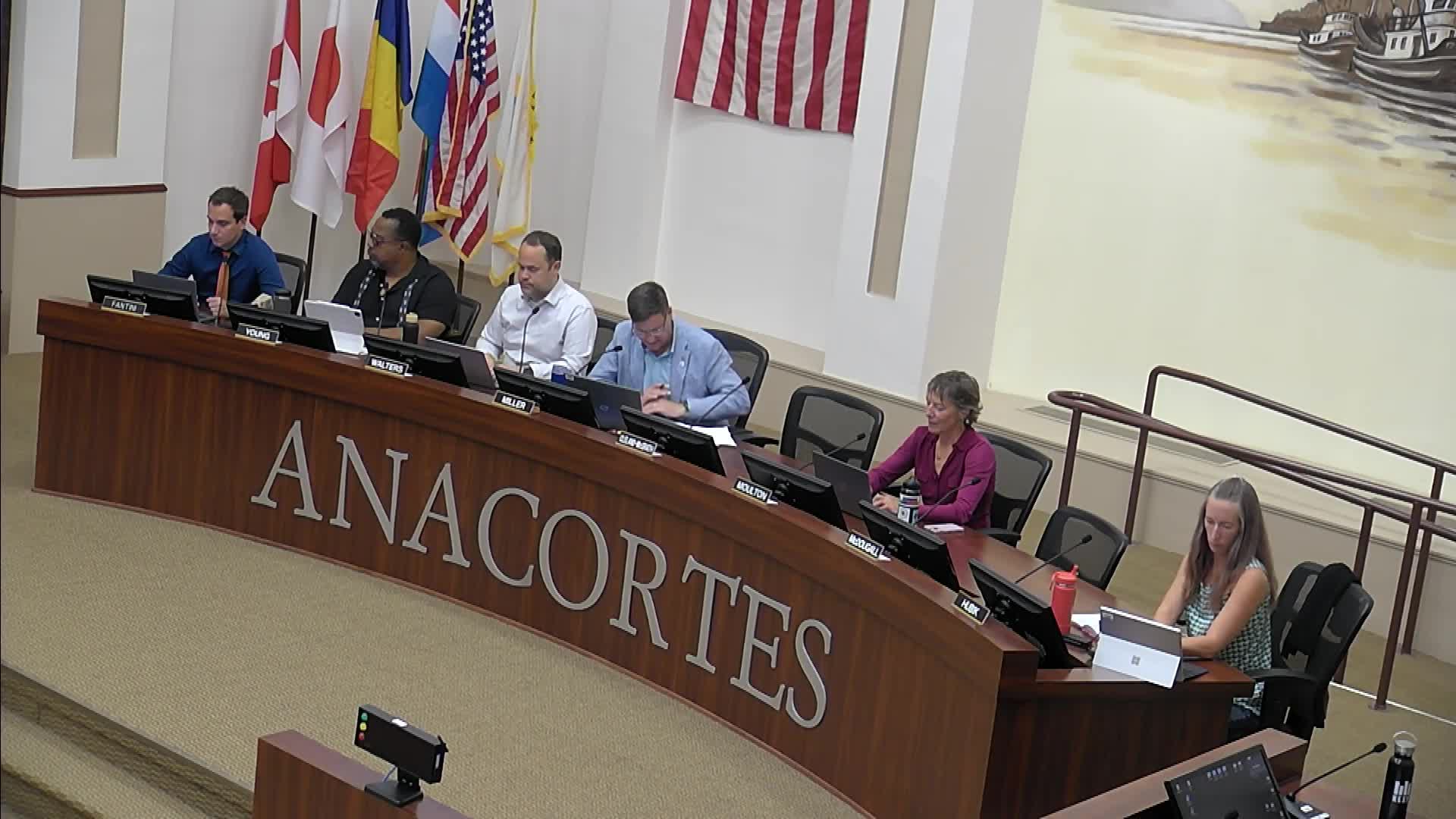
Public Works Director Andy Rayum and consultants from Carroll Engineers briefed the Anacortes City Council on the draft water system plan and the capital facilities plan it will inform, during the council meeting on Aug. 25, 2025.
The water system plan is a Department of Health–required engineering document that models supply, storage, pumping and distribution and yields a prioritized 20‑year capital improvement program (CIP). Aurelina Buonant of Carroll Engineers told council the plan documents existing facilities, projects future demand and identifies projects needed to meet pressure and fire‑flow standards as well as to address aging infrastructure.
Why it matters: The plan sets the projects that will drive the city’s utility capital program and inform rate and budget decisions. Council will use the plan to shape the six‑year capital facilities plan (CFP) and upcoming rate and revenue decisions.
Carroll Engineers presented demand forecasts, hydraulic‑model results and a prioritized set of projects. Key takeaways the consultant gave to council include:
- System condition and capacity: The city’s water system includes seven reservoirs, multiple booster pump stations and nearly 180 miles of distribution pipe. The consultant said the city’s water treatment plant and water rights provide sufficient overall supply for projected demand, but specific areas of the distribution system lack minimum pressure or fire flow capacity and would require pipe upsizing or pump/station work.
- Project scope and cost: The draft CIP contained projects across pump stations, pressure‑zone adjustments, storage/tank work, distribution pipeline upsizing and treatment‑plant improvements. The consultant presented an aggregate, planning‑level (Class‑5) cost estimate of about $142 million for the 20‑year list. Carroll Engineers described those as class‑5 planning estimates with wide accuracy ranges common at this stage.
- Short‑term CFP and phasing: The 0–6 year (short‑term) bucket shown to council totaled roughly $20 million; the 6–10 year bucket about $18 million; the 10–20 year projects were larger in aggregate. The consultants said they will prioritize projects to fit the six‑year CFP the city will adopt this fall.
Finance Manager Rhonda Peck summarized an initial fiscal analysis for the water utility: using a conservative 3% annual growth assumption for service revenue (the city typically ties rate changes to CPI), Peck reported that projected service revenue aligns with the six‑year expense profile shown in the draft CFP, subject to council direction on rates and timing.
Council members asked detailed questions about specific items: the accuracy of Class‑5 estimates (the consultant described a wide accuracy range typical of planning estimates), how demand forecasting accounts for land‑use changes and zoning, where the city will need pipe upsizing (Carroll Engineers identified about 20,000 feet of distribution pipes recommended for upsizing to meet fire‑flow and pressure criteria) and whether the city faces supply shortfalls (consultants said the city currently has adequate raw supply and water rights for forecasted demand but must fix local pressure and fire‑flow constraints).
Next steps and schedule: consultants will finalize the financial chapter and produce a city review draft, then an agency review draft for Department of Health and adjacent purveyors. Department of Health review can take several months; staff said the water system plan will then feed into the CFP adopted later in September and into detailed project scoping. Council will hold project‑level review sessions (staff indicated a first session on Sept. 15) to examine individual CIP projects and refine priorities.
Speakers quoted in this article spoke during item 6(b) and the subsequent fiscal discussion.
Ending: The city will bring a finalized draft with the full financial analysis to council this fall and hold targeted sessions to review individual CIP projects before adopting the six‑year CFP.
The water system plan is a Department of Health–required engineering document that models supply, storage, pumping and distribution and yields a prioritized 20‑year capital improvement program (CIP). Aurelina Buonant of Carroll Engineers told council the plan documents existing facilities, projects future demand and identifies projects needed to meet pressure and fire‑flow standards as well as to address aging infrastructure.
Why it matters: The plan sets the projects that will drive the city’s utility capital program and inform rate and budget decisions. Council will use the plan to shape the six‑year capital facilities plan (CFP) and upcoming rate and revenue decisions.
Carroll Engineers presented demand forecasts, hydraulic‑model results and a prioritized set of projects. Key takeaways the consultant gave to council include:
- System condition and capacity: The city’s water system includes seven reservoirs, multiple booster pump stations and nearly 180 miles of distribution pipe. The consultant said the city’s water treatment plant and water rights provide sufficient overall supply for projected demand, but specific areas of the distribution system lack minimum pressure or fire flow capacity and would require pipe upsizing or pump/station work.
- Project scope and cost: The draft CIP contained projects across pump stations, pressure‑zone adjustments, storage/tank work, distribution pipeline upsizing and treatment‑plant improvements. The consultant presented an aggregate, planning‑level (Class‑5) cost estimate of about $142 million for the 20‑year list. Carroll Engineers described those as class‑5 planning estimates with wide accuracy ranges common at this stage.
- Short‑term CFP and phasing: The 0–6 year (short‑term) bucket shown to council totaled roughly $20 million; the 6–10 year bucket about $18 million; the 10–20 year projects were larger in aggregate. The consultants said they will prioritize projects to fit the six‑year CFP the city will adopt this fall.
Finance Manager Rhonda Peck summarized an initial fiscal analysis for the water utility: using a conservative 3% annual growth assumption for service revenue (the city typically ties rate changes to CPI), Peck reported that projected service revenue aligns with the six‑year expense profile shown in the draft CFP, subject to council direction on rates and timing.
Council members asked detailed questions about specific items: the accuracy of Class‑5 estimates (the consultant described a wide accuracy range typical of planning estimates), how demand forecasting accounts for land‑use changes and zoning, where the city will need pipe upsizing (Carroll Engineers identified about 20,000 feet of distribution pipes recommended for upsizing to meet fire‑flow and pressure criteria) and whether the city faces supply shortfalls (consultants said the city currently has adequate raw supply and water rights for forecasted demand but must fix local pressure and fire‑flow constraints).
Next steps and schedule: consultants will finalize the financial chapter and produce a city review draft, then an agency review draft for Department of Health and adjacent purveyors. Department of Health review can take several months; staff said the water system plan will then feed into the CFP adopted later in September and into detailed project scoping. Council will hold project‑level review sessions (staff indicated a first session on Sept. 15) to examine individual CIP projects and refine priorities.
Speakers quoted in this article spoke during item 6(b) and the subsequent fiscal discussion.
Ending: The city will bring a finalized draft with the full financial analysis to council this fall and hold targeted sessions to review individual CIP projects before adopting the six‑year CFP.
Don't Miss a Word: See the Full Meeting!
Go beyond summaries. Unlock every video, transcript, and key insight with a Founder Membership.
✓
Get instant access to full meeting videos
✓
Search and clip any phrase from complete transcripts
✓
Receive AI-powered summaries & custom alerts
✓
Enjoy lifetime, unrestricted access to government data
30-day money-back guarantee
