Board briefed on proposal to require FAFSA completion for graduation; staff say rule would take effect with 2021–22 school year
October 16, 2025 | Alabama State Department of Education, State Agencies, Executive, Alabama
This article was created by AI summarizing key points discussed. AI makes mistakes, so for full details and context, please refer to the video of the full meeting. Please report any errors so we can fix them. Report an error »
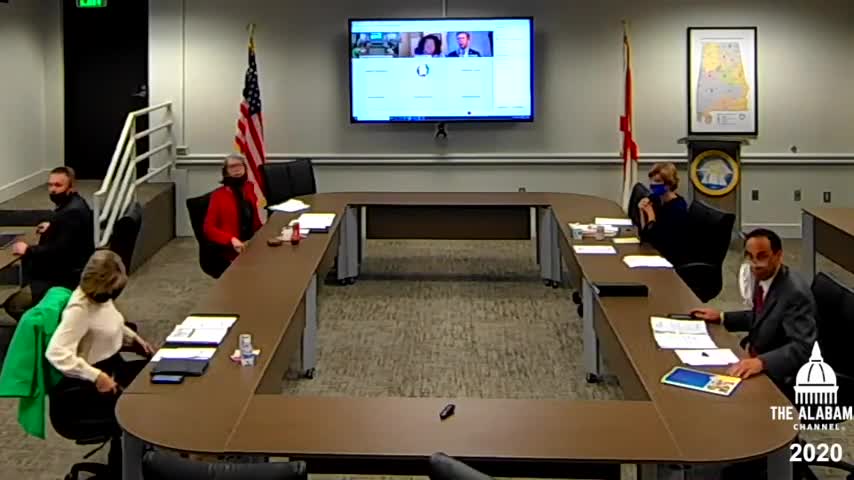
Department staff and board members discussed a planned administrative-code amendment on Dec. 10 that would make FAFSA completion the default for high-school seniors unless a student or parent opts out. Eric Mackey, the state superintendent, said the department is considering an opt-out model similar to a policy adopted in other states and emphasized the proposal would not be immediate for the current graduating class.
"It would take a change to the code," Mackey said while describing timeline considerations, and department staff later told the board the rule would take effect with the 2021–22 school year (implementation would affect the graduating class of 2022). Mackey said the intent is to increase participation in federal financial-aid applications and reduce the amount of federal aid left unused by eligible students.
Sean Stevens, a department presenter, told the board that low FAFSA completion translates to major losses in available financial aid: "Alabama's 2,018 graduates missed out on $47,400,000 in financial aid that could have, helped fund whatever they wanted to do after leaving high school," he said.
Board members debated privacy, parental choice and potential legal or administrative complications. Several members said they support higher FAFSA completion but were wary of making completion a graduation condition. Board member Belinda McRae (Miss Bell in transcript) said parents may resist providing tax information and asked that the state avoid tying FAFSA to graduation. Mackey and staff said the form’s data flow is federal — the state would not receive families’ financial data — and that local schools would only record whether a student completed or opted out.
Department staff said the board would receive the formal rule, required public notice and a timeline for adoption at the next meeting; staff also said they will collect comparative data from other states that adopted similar policies and provide additional detail to the board.
No vote was taken at the work session; presenters said any change would proceed through the Administrative Code amendment process with public notice before the board would consider final adoption.
"It would take a change to the code," Mackey said while describing timeline considerations, and department staff later told the board the rule would take effect with the 2021–22 school year (implementation would affect the graduating class of 2022). Mackey said the intent is to increase participation in federal financial-aid applications and reduce the amount of federal aid left unused by eligible students.
Sean Stevens, a department presenter, told the board that low FAFSA completion translates to major losses in available financial aid: "Alabama's 2,018 graduates missed out on $47,400,000 in financial aid that could have, helped fund whatever they wanted to do after leaving high school," he said.
Board members debated privacy, parental choice and potential legal or administrative complications. Several members said they support higher FAFSA completion but were wary of making completion a graduation condition. Board member Belinda McRae (Miss Bell in transcript) said parents may resist providing tax information and asked that the state avoid tying FAFSA to graduation. Mackey and staff said the form’s data flow is federal — the state would not receive families’ financial data — and that local schools would only record whether a student completed or opted out.
Department staff said the board would receive the formal rule, required public notice and a timeline for adoption at the next meeting; staff also said they will collect comparative data from other states that adopted similar policies and provide additional detail to the board.
No vote was taken at the work session; presenters said any change would proceed through the Administrative Code amendment process with public notice before the board would consider final adoption.
View the Full Meeting & All Its Details
This article offers just a summary. Unlock complete video, transcripts, and insights as a Founder Member.
✓
Watch full, unedited meeting videos
✓
Search every word spoken in unlimited transcripts
✓
AI summaries & real-time alerts (all government levels)
✓
Permanent access to expanding government content
30-day money-back guarantee
