Candidates debate how Lafayette should preserve and represent its local history
This article was created by AI summarizing key points discussed. AI makes mistakes, so for full details and context, please refer to the video of the full meeting. Please report any errors so we can fix them. Report an error »
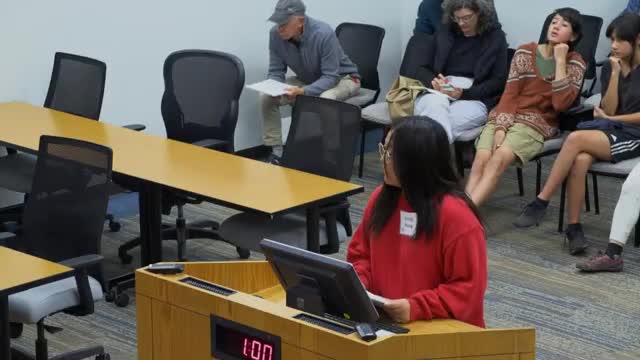
Candidates discussed how Lafayette should preserve and present its history, including a Potter’s Field plaque that a candidate said will acknowledge the city’s difficult past.
Saul Tapia Vega, a current council member and candidate for re-election, recounted work he said he led on a cemetery plaque for Potter’s Field to record the city’s history, including Ku Klux Klan activity in the 1940s and 1950s. “My first meeting ever on city council, we talked about the cemetery plaque… this city was run by the Ku Klux Klan,” Tapia Vega said, adding that the plaque’s unveiling is scheduled “this month” and that efforts to include names had not been completed.
Other candidates called for telling the whole history, including both good and bad elements. Anne Marie Jensen said communities cannot learn from the past if the past is denied. Kyle Bollier and others urged fuller education in schools and public programming so residents understand Lafayette’s labor and immigrant histories as well as its shortcomings.
Speakers referenced historical figures and topics including founder Mary Miller, mining-era histories tied to nearby towns, and recognition of Arapaho and Cheyenne peoples. Candidates suggested school curricula, library programs and public plaques as venues for increasing public knowledge. No candidate proposed an ordinance at the forum; candidates generally supported continued work to document and present Lafayette’s history more fully.
Saul Tapia Vega, a current council member and candidate for re-election, recounted work he said he led on a cemetery plaque for Potter’s Field to record the city’s history, including Ku Klux Klan activity in the 1940s and 1950s. “My first meeting ever on city council, we talked about the cemetery plaque… this city was run by the Ku Klux Klan,” Tapia Vega said, adding that the plaque’s unveiling is scheduled “this month” and that efforts to include names had not been completed.
Other candidates called for telling the whole history, including both good and bad elements. Anne Marie Jensen said communities cannot learn from the past if the past is denied. Kyle Bollier and others urged fuller education in schools and public programming so residents understand Lafayette’s labor and immigrant histories as well as its shortcomings.
Speakers referenced historical figures and topics including founder Mary Miller, mining-era histories tied to nearby towns, and recognition of Arapaho and Cheyenne peoples. Candidates suggested school curricula, library programs and public plaques as venues for increasing public knowledge. No candidate proposed an ordinance at the forum; candidates generally supported continued work to document and present Lafayette’s history more fully.
Don't Miss a Word: See the Full Meeting!
Go beyond summaries. Unlock every video, transcript, and key insight with a Founder Membership.
✓
Get instant access to full meeting videos
✓
Search and clip any phrase from complete transcripts
✓
Receive AI-powered summaries & custom alerts
✓
Enjoy lifetime, unrestricted access to government data
30-day money-back guarantee
