Panama City reviews three FEMA funding paths for Martin Theater, downtown and St. Andrews marinas
September 08, 2025 | Panama City, Bay County, Florida
This article was created by AI summarizing key points discussed. AI makes mistakes, so for full details and context, please refer to the video of the full meeting. Please report any errors so we can fix them. Report an error »
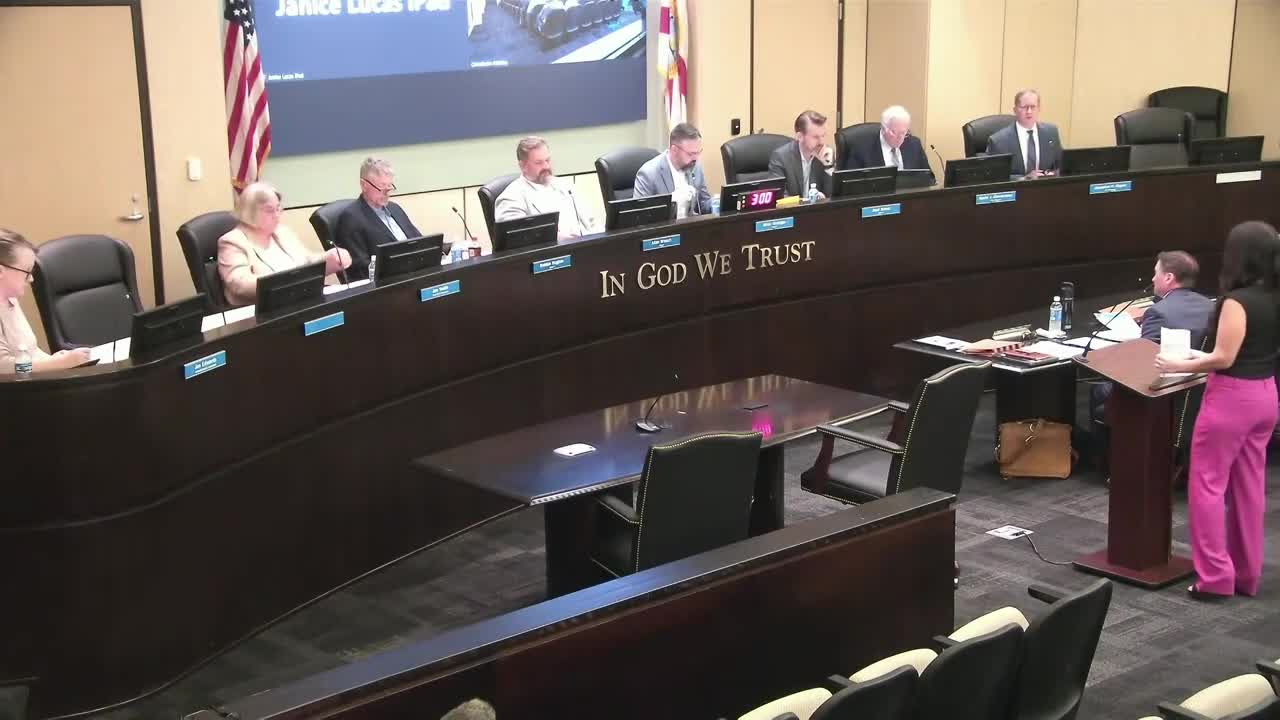
Panama City commissioners spent more than two hours on Aug. 26 reviewing options for roughly $40.6 million in additional FEMA disaster recovery funds tied to several hurricane Michael projects, but made no final decision.
Disaster-recovery consultants from the Integrity Group outlined three broad funding paths for $40.6 million in newly obligated money — including an additional $8.9 million for the St. Andrews marina infrastructure project — and warned each path has tradeoffs for project timing, eligibility for mitigation funds and long-term city debt. Commissioners asked staff and consultants to return with clearer funding plans and partner agreements before taking a vote at a future meeting.
Why it matters: The city is already committed to two major rebuilds — a $32 million reconstruction of the Martin Theater complex and a roughly $12.9 million set of bulkhead repairs at the St. Andrews marina — and the new FEMA adjustments create both an opportunity to reduce city borrowing and a risk of losing some federal money if projects are altered improperly.
Consultants Olivia Schmidt, senior vice president of program services for the Integrity Group, and CEO Gary Yates walked the commission through FEMA program types (including FEMA policy commonly referenced as "428" projects, standard non-428 projects, and hazard mitigation funding sometimes called HMP/HMGP) and how those program rules affect whether newly obligated dollars can be reallocated.
Schmidt said the city’s recent re-evaluation of the St. Andrews marina project resulted in FEMA agreeing to increase the obligation for that project from about $13.5 million to roughly $22.46 million, a roughly $8.9 million increase. She told commissioners the additional obligation is still routing through FEMA administrative queues and has not yet been paid to the state or city. "We don't have this extra money right now," she said; "these are options that are being presented so that if and when it does hit, we'll be able to move." (Transcript excerpt: Olivia Schmidt)
The Integrity Group presented three options the commission could consider:
- Option 1: Keep the Martin Theater project as currently scoped and obligate approximately $35.5 million to it; this covers the theater's estimated $32 million cost but would require returning an estimated $3.5 million to FEMA if not fully used by the approved scope. It does not address the full bulkhead funding.
- Option 2: Keep major obligations on the Martin Theater but move some marina-related obligations in a way that could capture a small amount of hazard mitigation funding (HMP) for marina elements; this reduces the potential return to FEMA compared with doing nothing but could leave roughly $7.9 million unfunded on the bulkhead depending on how funds are used.
- Option 3: Prioritize completing the St. Andrews bulkheads (and related marina projects) by reallocating the marina obligation so the bulkheads are fully funded; that approach would minimize long-term city debt but would short the Martin Theater by roughly $4.5 million and could delay FEMA drawdowns and reimbursements for the theater while amendment and environmental reviews are processed.
Schmidt and Yates emphasized that several technical constraints affect any choice: whether a project is a 428 (cost-estimate–based) or standard project (actuals-based), whether the work is "in-kind" or expands an original footprint by more than 20 percent (which triggers a full environmental/historic preservation review, commonly called EHP), and whether hazard mitigation funds (HMP) attached to certain marina elements would remain eligible after a scope change.
Yates warned about newly announced federal review procedures that could slow reimbursements further: he said that, under current federal guidance, any new expenditures over $100,000 may require review at the secretary level and that some applicants have reported drawdown delays of up to 97 days even for previously obligated funds. "Payments be delayed up to to 97 days," he told the commission, citing observed delays in other states. (Transcript excerpt: Gary Yates)
Commissioners emphasized policy priorities rather than selecting a path at the meeting. Commissioner Janice Lucas said she opposed committing more city money to the Martin Theater beyond the previously approved amounts and expressed concern about public perception if marina money were shifted away from waterfront projects. Commissioner Brian Granger and others stressed they wanted both marinas and the theater completed with no net increase in long-term debt.
City staff told the commission there is no vote expected at the Aug. 26 meeting. Staff and consultants will return with more detailed, consolidated funding scenarios, partnership agreements and schedules before seeking a formal decision. Staff indicated Sept. 9 was the initial target for returning the item but the matter might be pushed to Sept. 23 to give staff and partners additional time.
Next steps: Commissioners asked staff to consult partners on the downtown marina, confirm procurement and contract impacts, and bring back a consolidated recommendation with clear funding sources, timetables and the anticipated effects on long-term debt and reimbursements. The commission also asked staff to draft a letter to Florida's congressional delegation asking for help expediting federal reviews and to provide that draft for review prior to transmission.
The presentation and discussion identified tradeoffs every commissioner will weigh: faster access to reimbursements if the Martin Theater remains undisturbed versus the potential to fully fund marina bulkheads and reduce the city's exposed long-term debt.
Disaster-recovery consultants from the Integrity Group outlined three broad funding paths for $40.6 million in newly obligated money — including an additional $8.9 million for the St. Andrews marina infrastructure project — and warned each path has tradeoffs for project timing, eligibility for mitigation funds and long-term city debt. Commissioners asked staff and consultants to return with clearer funding plans and partner agreements before taking a vote at a future meeting.
Why it matters: The city is already committed to two major rebuilds — a $32 million reconstruction of the Martin Theater complex and a roughly $12.9 million set of bulkhead repairs at the St. Andrews marina — and the new FEMA adjustments create both an opportunity to reduce city borrowing and a risk of losing some federal money if projects are altered improperly.
Consultants Olivia Schmidt, senior vice president of program services for the Integrity Group, and CEO Gary Yates walked the commission through FEMA program types (including FEMA policy commonly referenced as "428" projects, standard non-428 projects, and hazard mitigation funding sometimes called HMP/HMGP) and how those program rules affect whether newly obligated dollars can be reallocated.
Schmidt said the city’s recent re-evaluation of the St. Andrews marina project resulted in FEMA agreeing to increase the obligation for that project from about $13.5 million to roughly $22.46 million, a roughly $8.9 million increase. She told commissioners the additional obligation is still routing through FEMA administrative queues and has not yet been paid to the state or city. "We don't have this extra money right now," she said; "these are options that are being presented so that if and when it does hit, we'll be able to move." (Transcript excerpt: Olivia Schmidt)
The Integrity Group presented three options the commission could consider:
- Option 1: Keep the Martin Theater project as currently scoped and obligate approximately $35.5 million to it; this covers the theater's estimated $32 million cost but would require returning an estimated $3.5 million to FEMA if not fully used by the approved scope. It does not address the full bulkhead funding.
- Option 2: Keep major obligations on the Martin Theater but move some marina-related obligations in a way that could capture a small amount of hazard mitigation funding (HMP) for marina elements; this reduces the potential return to FEMA compared with doing nothing but could leave roughly $7.9 million unfunded on the bulkhead depending on how funds are used.
- Option 3: Prioritize completing the St. Andrews bulkheads (and related marina projects) by reallocating the marina obligation so the bulkheads are fully funded; that approach would minimize long-term city debt but would short the Martin Theater by roughly $4.5 million and could delay FEMA drawdowns and reimbursements for the theater while amendment and environmental reviews are processed.
Schmidt and Yates emphasized that several technical constraints affect any choice: whether a project is a 428 (cost-estimate–based) or standard project (actuals-based), whether the work is "in-kind" or expands an original footprint by more than 20 percent (which triggers a full environmental/historic preservation review, commonly called EHP), and whether hazard mitigation funds (HMP) attached to certain marina elements would remain eligible after a scope change.
Yates warned about newly announced federal review procedures that could slow reimbursements further: he said that, under current federal guidance, any new expenditures over $100,000 may require review at the secretary level and that some applicants have reported drawdown delays of up to 97 days even for previously obligated funds. "Payments be delayed up to to 97 days," he told the commission, citing observed delays in other states. (Transcript excerpt: Gary Yates)
Commissioners emphasized policy priorities rather than selecting a path at the meeting. Commissioner Janice Lucas said she opposed committing more city money to the Martin Theater beyond the previously approved amounts and expressed concern about public perception if marina money were shifted away from waterfront projects. Commissioner Brian Granger and others stressed they wanted both marinas and the theater completed with no net increase in long-term debt.
City staff told the commission there is no vote expected at the Aug. 26 meeting. Staff and consultants will return with more detailed, consolidated funding scenarios, partnership agreements and schedules before seeking a formal decision. Staff indicated Sept. 9 was the initial target for returning the item but the matter might be pushed to Sept. 23 to give staff and partners additional time.
Next steps: Commissioners asked staff to consult partners on the downtown marina, confirm procurement and contract impacts, and bring back a consolidated recommendation with clear funding sources, timetables and the anticipated effects on long-term debt and reimbursements. The commission also asked staff to draft a letter to Florida's congressional delegation asking for help expediting federal reviews and to provide that draft for review prior to transmission.
The presentation and discussion identified tradeoffs every commissioner will weigh: faster access to reimbursements if the Martin Theater remains undisturbed versus the potential to fully fund marina bulkheads and reduce the city's exposed long-term debt.
View the Full Meeting & All Its Details
This article offers just a summary. Unlock complete video, transcripts, and insights as a Founder Member.
✓
Watch full, unedited meeting videos
✓
Search every word spoken in unlimited transcripts
✓
AI summaries & real-time alerts (all government levels)
✓
Permanent access to expanding government content
30-day money-back guarantee
