Commissioners approve Knox remodeling claims, debate procurement rules and shift courthouse maintenance oversight
July 08, 2025 | DeKalb County, Indiana
This article was created by AI summarizing key points discussed. AI makes mistakes, so for full details and context, please refer to the video of the full meeting. Please report any errors so we can fix them. Report an error »
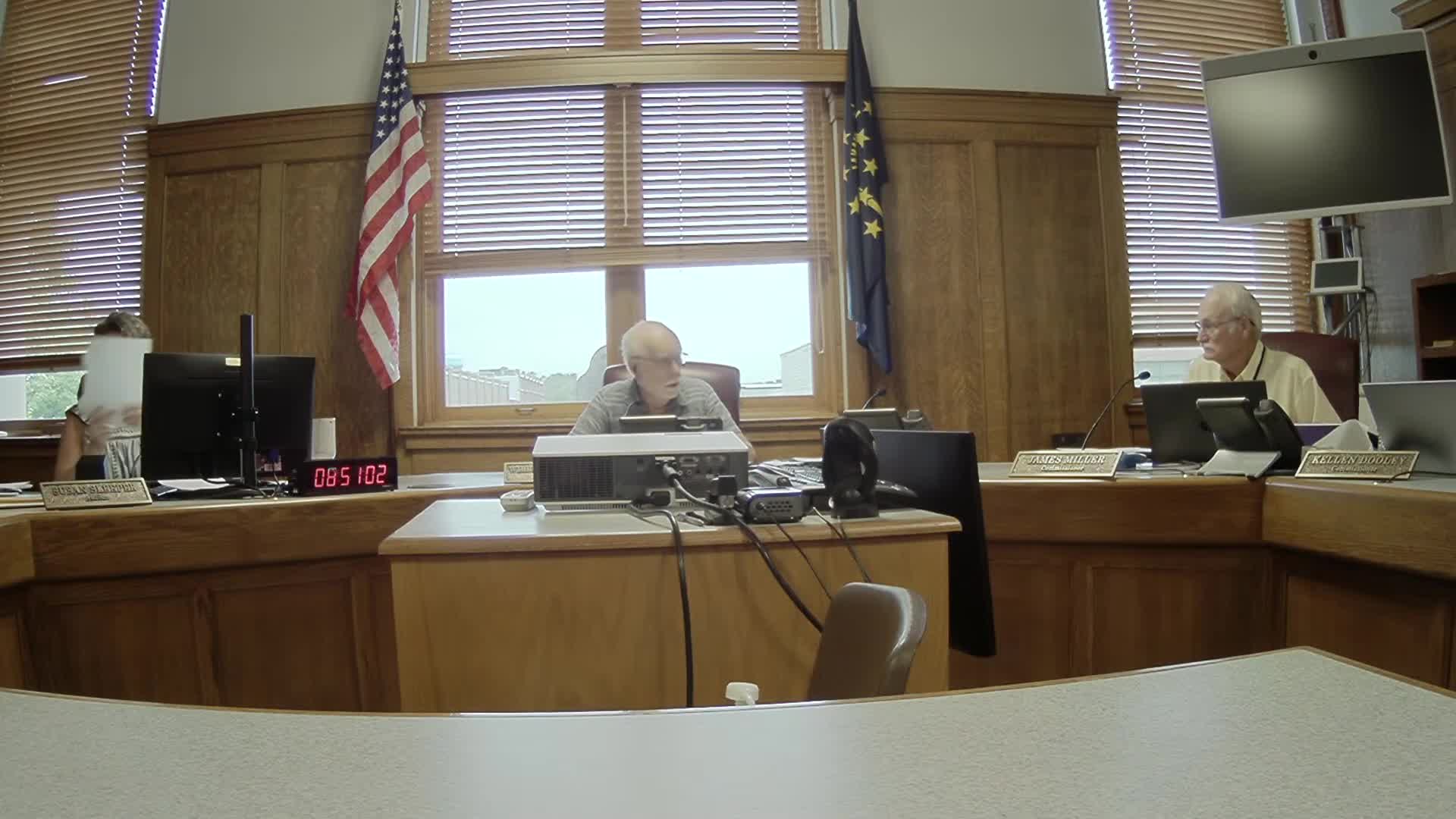
DeKalb County commissioners on July 7 approved payment of contractor claims tied to an ongoing courthouse remodeling project but spent much of the meeting debating whether elected officeholders should manage remodeling work and whether the county followed procurement rules for the work.
Why it matters: Commissioners approved payment for work already performed while flagging potential procurement and contracting problems that could expose the county to legal or budgetary risk if cumulative project costs exceed statutory bidding thresholds. The board also discussed reorganizing responsibility for courthouse maintenance under the county’s facilities manager.
What the board approved
The commissioners voted to pay the claims presented, including two invoices that had been denied at a prior meeting. "I think the only thing we can really do right now is pay the claims that they've claimed because that's work that they've done," one commissioner said during debate; another motion to pay as presented passed by voice vote.
Procurement and bidding concerns
Commissioners and staff reviewed invoices from Knox (contractor) and others that, taken together, raised questions about whether the renovations had been properly advertised and contracted. Commissioners said the county council had appropriated money for a courthouse preservation project but that departments proceeded to spend on separate pieces of work without centralized contracts.
Clarifying details discussed included:
- Payments already made to Knox totaling $23,001.20 in March and May and additional invoices now presented for approval, including several in the tens of thousands of dollars.
- Sample invoice amounts cited in the discussion: a Knox painting invoice listed as roughly $70,000 and furniture costs described separately; one new invoice amount cited as $16,006.29 that had been denied two weeks earlier and re-presented for payment.
Commissioners debated relevant statutory thresholds for competitive bidding. County attorneys and staff described a tiered approach: purchases between $50,000 and $150,000 typically require three vendor quotes; purchases above the formal public-bid threshold (discussed as $150,000 in the meeting) require a formal sealed-bid process. Board members also noted that artificially splitting a single project into smaller pieces to avoid bidding requirements is not permissible under Indiana law and could present legal risk.
Facilities oversight and policy changes
Commissioners discussed consolidating responsibility for courthouse remodeling and maintenance under Larry, the county’s facilities/maintenance manager. Several commissioners argued that elected officeholders should not directly manage construction and remodeling projects and favored a formal role for the county maintenance director to oversee bids, contractors and contracts going forward. "If he is not directed by his superiors, then not a lot is going to change," one commissioner said of Larry’s authority.
The board instructed staff to:
- Bring Larry in for a discussion to define responsibilities and the scope of authority for courthouse repairs, remodels and contracting.
- Review and, if needed, clarify job descriptions (including a potential formal change to Larry’s job description) and procurement procedures so that contracts are routed correctly to commissioners for approval when required by statute.
Context and next steps
Commissioners expressed reluctance to withhold payment for work already performed but said they may stop further work if procurement or contractual irregularities persist. Staff were asked to research legal precedent about whether several separate invoices constitute a single project for bidding purposes and to report back. The board also suggested moving future courthouse remodeling budget items into a centralized county buildings account so that long-term planning and bidding could be managed centrally.
Ending
The board approved payment of the claims as presented and directed staff to return with recommended procurement clarifications, a conversation with the facilities manager about centralized oversight, and a plan for policy changes to avoid similar disputes in the future.
Why it matters: Commissioners approved payment for work already performed while flagging potential procurement and contracting problems that could expose the county to legal or budgetary risk if cumulative project costs exceed statutory bidding thresholds. The board also discussed reorganizing responsibility for courthouse maintenance under the county’s facilities manager.
What the board approved
The commissioners voted to pay the claims presented, including two invoices that had been denied at a prior meeting. "I think the only thing we can really do right now is pay the claims that they've claimed because that's work that they've done," one commissioner said during debate; another motion to pay as presented passed by voice vote.
Procurement and bidding concerns
Commissioners and staff reviewed invoices from Knox (contractor) and others that, taken together, raised questions about whether the renovations had been properly advertised and contracted. Commissioners said the county council had appropriated money for a courthouse preservation project but that departments proceeded to spend on separate pieces of work without centralized contracts.
Clarifying details discussed included:
- Payments already made to Knox totaling $23,001.20 in March and May and additional invoices now presented for approval, including several in the tens of thousands of dollars.
- Sample invoice amounts cited in the discussion: a Knox painting invoice listed as roughly $70,000 and furniture costs described separately; one new invoice amount cited as $16,006.29 that had been denied two weeks earlier and re-presented for payment.
Commissioners debated relevant statutory thresholds for competitive bidding. County attorneys and staff described a tiered approach: purchases between $50,000 and $150,000 typically require three vendor quotes; purchases above the formal public-bid threshold (discussed as $150,000 in the meeting) require a formal sealed-bid process. Board members also noted that artificially splitting a single project into smaller pieces to avoid bidding requirements is not permissible under Indiana law and could present legal risk.
Facilities oversight and policy changes
Commissioners discussed consolidating responsibility for courthouse remodeling and maintenance under Larry, the county’s facilities/maintenance manager. Several commissioners argued that elected officeholders should not directly manage construction and remodeling projects and favored a formal role for the county maintenance director to oversee bids, contractors and contracts going forward. "If he is not directed by his superiors, then not a lot is going to change," one commissioner said of Larry’s authority.
The board instructed staff to:
- Bring Larry in for a discussion to define responsibilities and the scope of authority for courthouse repairs, remodels and contracting.
- Review and, if needed, clarify job descriptions (including a potential formal change to Larry’s job description) and procurement procedures so that contracts are routed correctly to commissioners for approval when required by statute.
Context and next steps
Commissioners expressed reluctance to withhold payment for work already performed but said they may stop further work if procurement or contractual irregularities persist. Staff were asked to research legal precedent about whether several separate invoices constitute a single project for bidding purposes and to report back. The board also suggested moving future courthouse remodeling budget items into a centralized county buildings account so that long-term planning and bidding could be managed centrally.
Ending
The board approved payment of the claims as presented and directed staff to return with recommended procurement clarifications, a conversation with the facilities manager about centralized oversight, and a plan for policy changes to avoid similar disputes in the future.
View the Full Meeting & All Its Details
This article offers just a summary. Unlock complete video, transcripts, and insights as a Founder Member.
✓
Watch full, unedited meeting videos
✓
Search every word spoken in unlimited transcripts
✓
AI summaries & real-time alerts (all government levels)
✓
Permanent access to expanding government content
30-day money-back guarantee
