Board rails toward self-funded health plan; consultants say savings and clinic could cut costs long term
October 01, 2025 | Little Rock City, Pulaski County, Arkansas
This article was created by AI summarizing key points discussed. AI makes mistakes, so for full details and context, please refer to the video of the full meeting. Please report any errors so we can fix them. Report an error »
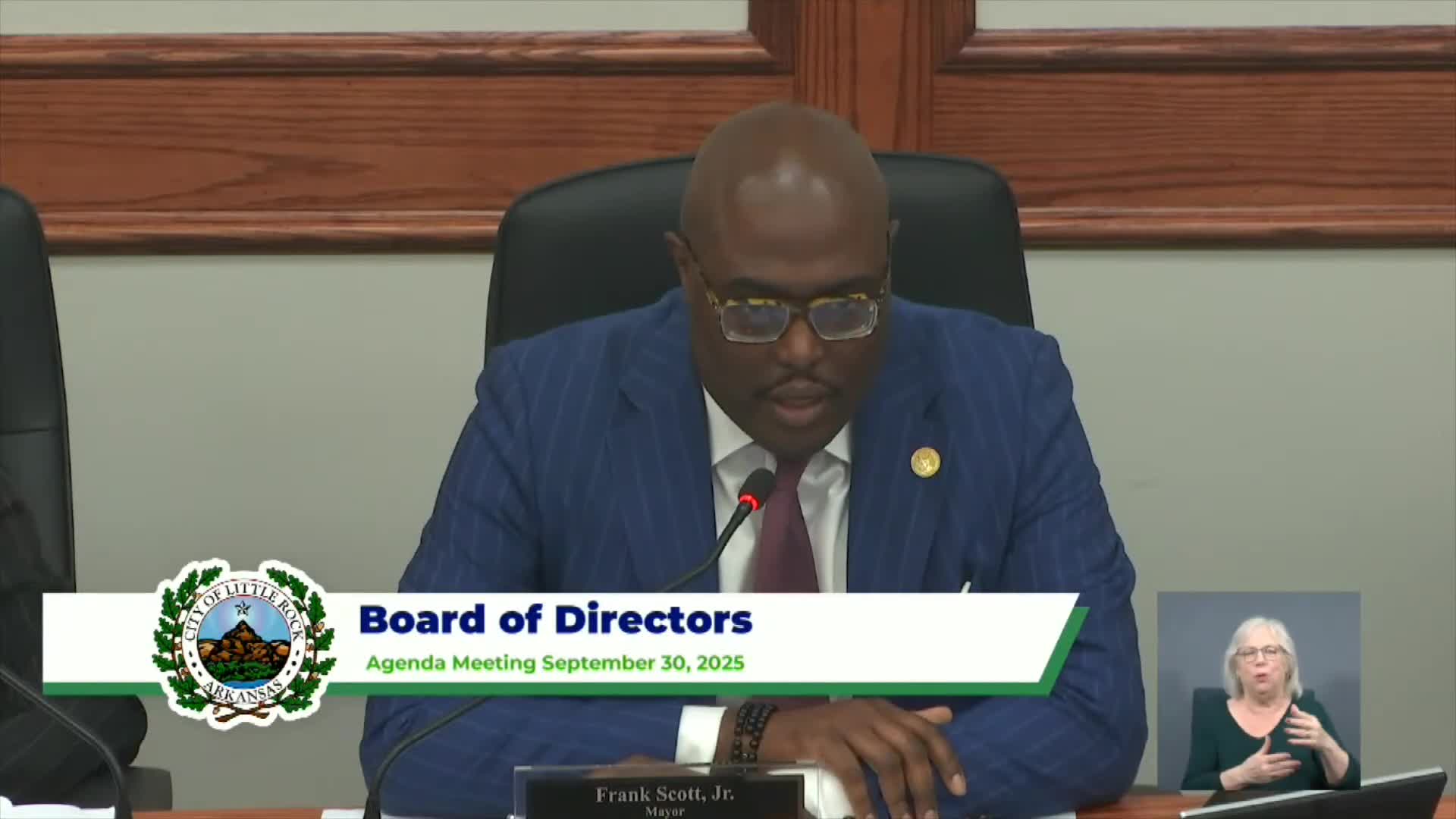
Consultants advising the City of Little Rock told the board that moving the city’s employee health plan from a fully insured model to a self-funded model could reduce long-term net costs and give city leadership greater visibility into claims and pharmaceutical rebates. "When you move over to the self funded model, we can really unbundle that and go to different carriers for different things," one JTS presenter said. Presenters said the city could receive drug rebates directly under a self-funded arrangement—money that fully insured carriers currently retain—and that a self-funded structure makes it possible to retain unspent premium dollars in a reserve. City staff and consultants also recommended creating an on-site clinic to reduce emergency-room visits and help members adhere to medications; consultants estimated clinic-driven savings based on the city’s claims data. The board discussed timing, risks and governance. Consultants said self-funding is typically a multi-year strategy but remains a year-to-year decision by the board; they suggested three to five years is a reasonable period to judge the change, with many public employers planning for a three-year evaluation given the city’s size. Board members pressed officials on operational details: which network and third-party administrator would be used, whether the city would preserve employees’ current providers, and how to audit claims processing. Presenters said the city could select a major network (for example, Cigna, Blue Cross, or UMR) as the third-party administrator and that doing so would retain in-network doctors. The board directed staff to proceed with the procurement process for a TPA and stop-loss insurer, and staff said they will include a self-insurance fund in the 2026 budget and present reserve-policy language to govern those funds. The board indicated broad support to proceed; staff said they will return next week with a formal TPA and reinsurance recommendation and will provide regular reporting to the board on claims and fund status. Consultants also said the city’s current carrier offered startup assistance for a clinic even under a fully insured model; staff estimated a clinic setup cost in the range of about $600,000 for a 2,000–2,500 square-foot site and said the clinic would serve employees and their dependents. The board also discussed paid parental leave as a planned management policy change that will be implemented alongside benefit adjustments.
View the Full Meeting & All Its Details
This article offers just a summary. Unlock complete video, transcripts, and insights as a Founder Member.
✓
Watch full, unedited meeting videos
✓
Search every word spoken in unlimited transcripts
✓
AI summaries & real-time alerts (all government levels)
✓
Permanent access to expanding government content
30-day money-back guarantee
