Commission discusses adding civilian EMS roles to merit ordinance protections
July 08, 2025 | Evansville City, Vanderburgh County, Indiana
This article was created by AI summarizing key points discussed. AI makes mistakes, so for full details and context, please refer to the video of the full meeting. Please report any errors so we can fix them. Report an error »
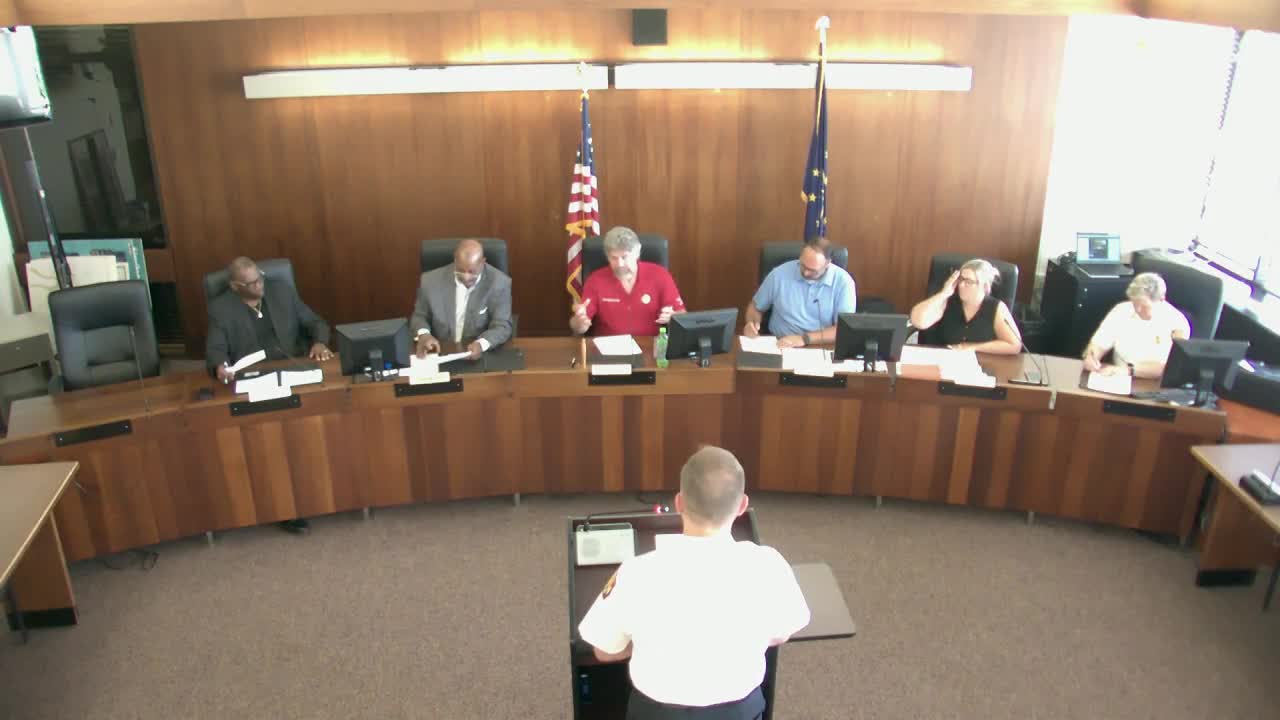
At its July 8 meeting, the Evansville Fire Merit Commission discussed adding civilian emergency medical services positions to the commission's merit ordinance so those employees would have a mechanism to appeal certain negative personnel actions. The commission did not vote to adopt ordinance changes at the meeting.
The matter drew its most detailed explanation from the Fire Chief, who said the civilian EMS roles would not be merit positions under state law but that the ordinance change would give those employees a defensible appeal option. “These are gonna be, civilian positions. So under the Indiana statute, they are not merit positions,” the Fire Chief said. “But to give them a defensible, opportunity to protect themselves, we are going to include them, in the merit commission ordinance as far as, if a, any type of, negative action was taken against them.”
The chief said the language had been reviewed with the city’s general counsel. Commission members also heard that one staff member, Matt, was still finishing the EMS-related language and that “there are a couple other little things we need to clarify in the merit ordinance.” A commissioner confirmed that the commission had not yet completed the approval process for the ordinance changes.
Commission discussion emphasized procedure and timing rather than policy debate. Commissioners asked whether the civilian EMS positions would fall under the mayor’s commission and how the change would align with state statute; the chief and staff answered that the roles are civilians under Indiana law and that the proposed ordinance language is intended to provide a procedural outlet for personnel disputes involving those employees.
No motion to adopt ordinance language was made during the meeting. Commissioners discussed next steps only: finalize the EMS language, resolve the remaining clarifications in the draft ordinance and return the item for formal action at a future meeting.
The commission also noted unrelated upcoming budget meetings with the mayor and controller; those meetings were described as separate from the ordinance work and not a blocker for returning the ordinance once staff finishes revisions.
The matter drew its most detailed explanation from the Fire Chief, who said the civilian EMS roles would not be merit positions under state law but that the ordinance change would give those employees a defensible appeal option. “These are gonna be, civilian positions. So under the Indiana statute, they are not merit positions,” the Fire Chief said. “But to give them a defensible, opportunity to protect themselves, we are going to include them, in the merit commission ordinance as far as, if a, any type of, negative action was taken against them.”
The chief said the language had been reviewed with the city’s general counsel. Commission members also heard that one staff member, Matt, was still finishing the EMS-related language and that “there are a couple other little things we need to clarify in the merit ordinance.” A commissioner confirmed that the commission had not yet completed the approval process for the ordinance changes.
Commission discussion emphasized procedure and timing rather than policy debate. Commissioners asked whether the civilian EMS positions would fall under the mayor’s commission and how the change would align with state statute; the chief and staff answered that the roles are civilians under Indiana law and that the proposed ordinance language is intended to provide a procedural outlet for personnel disputes involving those employees.
No motion to adopt ordinance language was made during the meeting. Commissioners discussed next steps only: finalize the EMS language, resolve the remaining clarifications in the draft ordinance and return the item for formal action at a future meeting.
The commission also noted unrelated upcoming budget meetings with the mayor and controller; those meetings were described as separate from the ordinance work and not a blocker for returning the ordinance once staff finishes revisions.
View the Full Meeting & All Its Details
This article offers just a summary. Unlock complete video, transcripts, and insights as a Founder Member.
✓
Watch full, unedited meeting videos
✓
Search every word spoken in unlimited transcripts
✓
AI summaries & real-time alerts (all government levels)
✓
Permanent access to expanding government content
30-day money-back guarantee
