Emerald Ash Borer Expands in Minnesota with New Finds in Brainerd and Surrounding Areas
February 22, 2024 | Agriculture, Department of , Agencies, Boards, & Commissions, Executive, Minnesota
This article was created by AI summarizing key points discussed. AI makes mistakes, so for full details and context, please refer to the video of the full meeting. Please report any errors so we can fix them. Report an error »
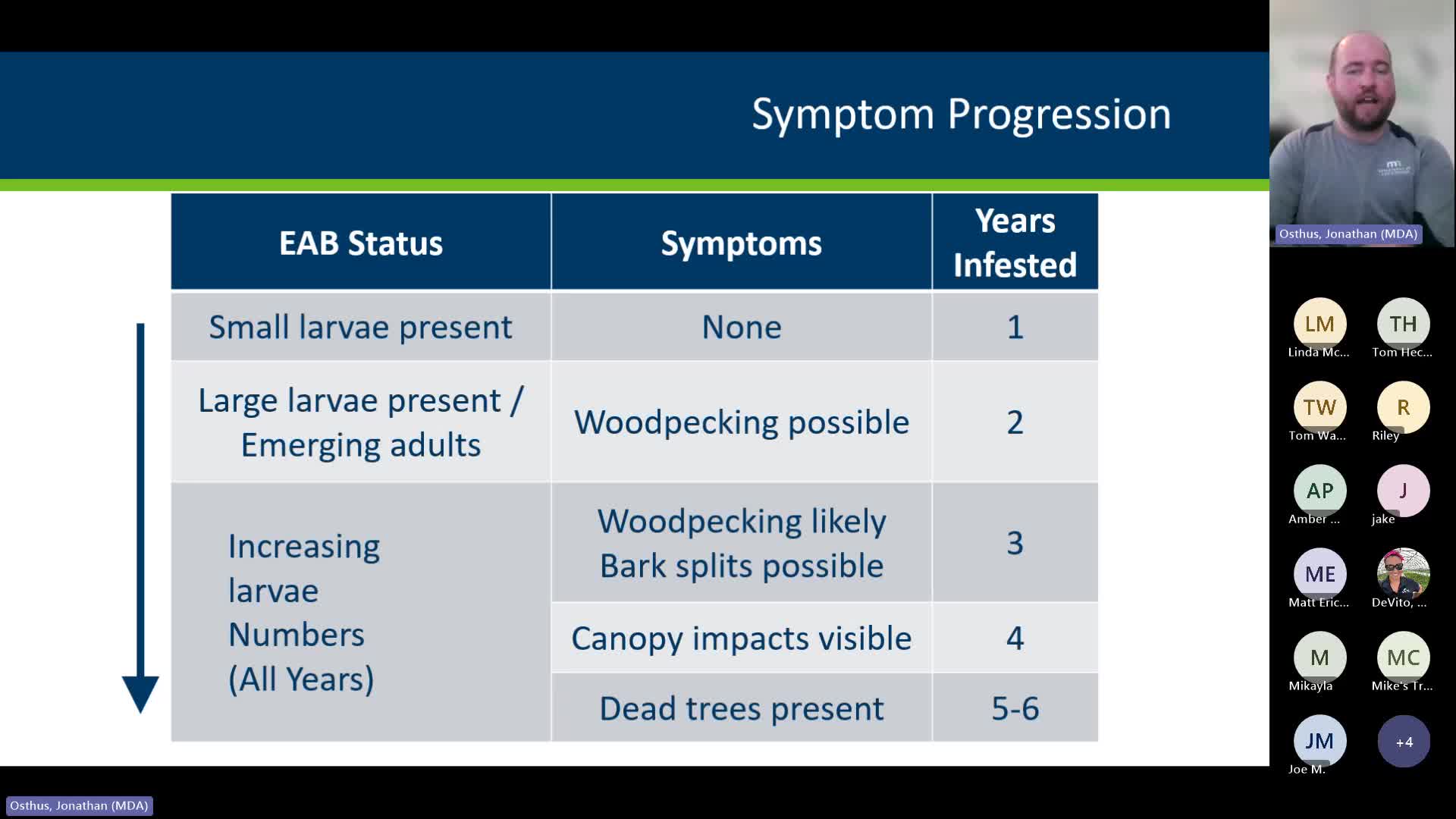
The Emerald Ash Borer Informational Meeting held in Crow Wing County on February 22, 2024, focused on the ongoing threat of the invasive pest to local ash trees. The meeting provided crucial insights into the life cycle of the emerald ash borer (EAB) and its impact on tree health, emphasizing the importance of early detection and management strategies.
Experts explained that the first year of EAB infestation is often undetectable, as only small larvae are present beneath the bark. Identifying an infestation at this stage requires labor-intensive branch sampling. By the second year, larger larvae may attract woodpeckers, and subtle signs of damage may begin to appear, although significant canopy decline is not yet visible. It is in the third year that homeowners may start to notice woodpecker damage and bark splits, but canopy decline remains minimal. The fourth year marks a critical point where visible thinning occurs, indicating that the tree may be beyond treatment with insecticides.
The meeting highlighted the urgency for homeowners to monitor their ash trees, particularly for woodpecker feeding damage during winter months. If trees are located near homes or other structures, it is advisable to address potential hazards before the trees become completely dead, as removal costs can escalate significantly.
The Minnesota Department of Agriculture (MDA) reported that EAB infestations have been confirmed in 48 counties across the state, with a notable spread of 1 to 2 miles per year. Areas within 10 to 15 miles of known infestations are at high risk, prompting recommendations for preventive insecticide treatments. Recent findings of EAB in Brainerd and surrounding areas underscore the need for communities to prepare for the pest's arrival and manage their ash resources proactively.
As the emerald ash borer continues to expand its reach, the meeting served as a vital reminder for residents to stay vigilant and take action to protect their trees.
Experts explained that the first year of EAB infestation is often undetectable, as only small larvae are present beneath the bark. Identifying an infestation at this stage requires labor-intensive branch sampling. By the second year, larger larvae may attract woodpeckers, and subtle signs of damage may begin to appear, although significant canopy decline is not yet visible. It is in the third year that homeowners may start to notice woodpecker damage and bark splits, but canopy decline remains minimal. The fourth year marks a critical point where visible thinning occurs, indicating that the tree may be beyond treatment with insecticides.
The meeting highlighted the urgency for homeowners to monitor their ash trees, particularly for woodpecker feeding damage during winter months. If trees are located near homes or other structures, it is advisable to address potential hazards before the trees become completely dead, as removal costs can escalate significantly.
The Minnesota Department of Agriculture (MDA) reported that EAB infestations have been confirmed in 48 counties across the state, with a notable spread of 1 to 2 miles per year. Areas within 10 to 15 miles of known infestations are at high risk, prompting recommendations for preventive insecticide treatments. Recent findings of EAB in Brainerd and surrounding areas underscore the need for communities to prepare for the pest's arrival and manage their ash resources proactively.
As the emerald ash borer continues to expand its reach, the meeting served as a vital reminder for residents to stay vigilant and take action to protect their trees.
View the Full Meeting & All Its Details
This article offers just a summary. Unlock complete video, transcripts, and insights as a Founder Member.
✓
Watch full, unedited meeting videos
✓
Search every word spoken in unlimited transcripts
✓
AI summaries & real-time alerts (all government levels)
✓
Permanent access to expanding government content
30-day money-back guarantee
