Emerald Ash Borer Threatens Minnesota's Billion Ash Tree Population
February 22, 2024 | Agriculture, Department of , Agencies, Boards, & Commissions, Executive, Minnesota
This article was created by AI summarizing key points discussed. AI makes mistakes, so for full details and context, please refer to the video of the full meeting. Please report any errors so we can fix them. Report an error »
Emerald Ash Borer Threatens Minnesota's Ash Trees: Urgent Action Needed
The Emerald Ash Borer (EAB) is emerging as a critical threat to Minnesota's ash tree population, with experts warning of its devastating impact on communities. During a recent informational meeting held by the Minnesota Department of Agriculture in Crow Wing County, officials highlighted the alarming lifecycle of this invasive beetle and its potential for mass tree mortality.
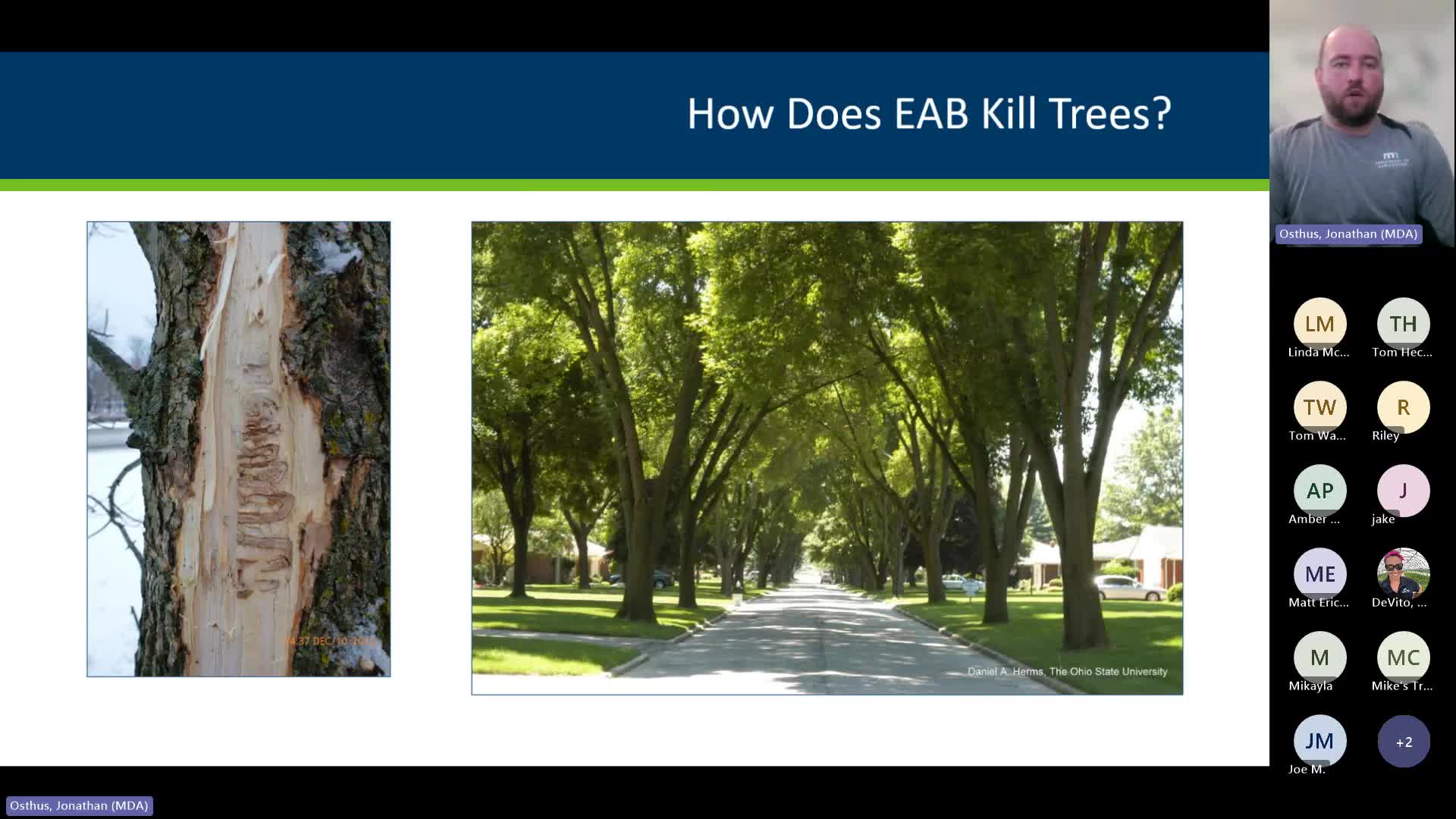
EAB begins its attack on ash trees subtly, with only a few beetles infesting a tree at first. However, as their population grows, they tunnel beneath the bark, causing significant damage that can lead to the tree's death. "Once you start to hit that population explosion, within a couple of years, you have mass tree mortality," explained a speaker at the meeting. This rapid decline poses serious challenges for cities and communities that rely on healthy trees for environmental and aesthetic benefits.
Minnesota is home to nearly a billion ash trees, the highest number in the contiguous United States. The state’s three native ash species—black, green, and white ash—are all highly susceptible to EAB, with mortality rates reaching up to 99%. In many communities, ash trees make up a significant portion of the urban forest, with estimates suggesting that one in five trees is an ash, and in some areas, that number rises to one in two.
The meeting underscored the importance of early detection in managing EAB populations. "The earlier you can detect emerald ash borer populations, the better outcomes you’re going to have for your management activities," the speaker emphasized. Communities are encouraged to identify ash trees and monitor them for signs of infestation, which can include distinct bark damage and the presence of the beetles themselves.
As Minnesota grapples with the looming threat of EAB, the call for proactive measures is clear. The state must act swiftly to protect its valuable ash resources and ensure the health of its urban forests for future generations.
The Emerald Ash Borer (EAB) is emerging as a critical threat to Minnesota's ash tree population, with experts warning of its devastating impact on communities. During a recent informational meeting held by the Minnesota Department of Agriculture in Crow Wing County, officials highlighted the alarming lifecycle of this invasive beetle and its potential for mass tree mortality.
EAB begins its attack on ash trees subtly, with only a few beetles infesting a tree at first. However, as their population grows, they tunnel beneath the bark, causing significant damage that can lead to the tree's death. "Once you start to hit that population explosion, within a couple of years, you have mass tree mortality," explained a speaker at the meeting. This rapid decline poses serious challenges for cities and communities that rely on healthy trees for environmental and aesthetic benefits.
Minnesota is home to nearly a billion ash trees, the highest number in the contiguous United States. The state’s three native ash species—black, green, and white ash—are all highly susceptible to EAB, with mortality rates reaching up to 99%. In many communities, ash trees make up a significant portion of the urban forest, with estimates suggesting that one in five trees is an ash, and in some areas, that number rises to one in two.
The meeting underscored the importance of early detection in managing EAB populations. "The earlier you can detect emerald ash borer populations, the better outcomes you’re going to have for your management activities," the speaker emphasized. Communities are encouraged to identify ash trees and monitor them for signs of infestation, which can include distinct bark damage and the presence of the beetles themselves.
As Minnesota grapples with the looming threat of EAB, the call for proactive measures is clear. The state must act swiftly to protect its valuable ash resources and ensure the health of its urban forests for future generations.
View the Full Meeting & All Its Details
This article offers just a summary. Unlock complete video, transcripts, and insights as a Founder Member.
✓
Watch full, unedited meeting videos
✓
Search every word spoken in unlimited transcripts
✓
AI summaries & real-time alerts (all government levels)
✓
Permanent access to expanding government content
30-day money-back guarantee
