Supervisor Haney introduces legislation to expedite public project appeals in San Francisco
May 17, 2021 | San Francisco County, California
This article was created by AI summarizing key points discussed. AI makes mistakes, so for full details and context, please refer to the video of the full meeting. Please report any errors so we can fix them. Report an error »
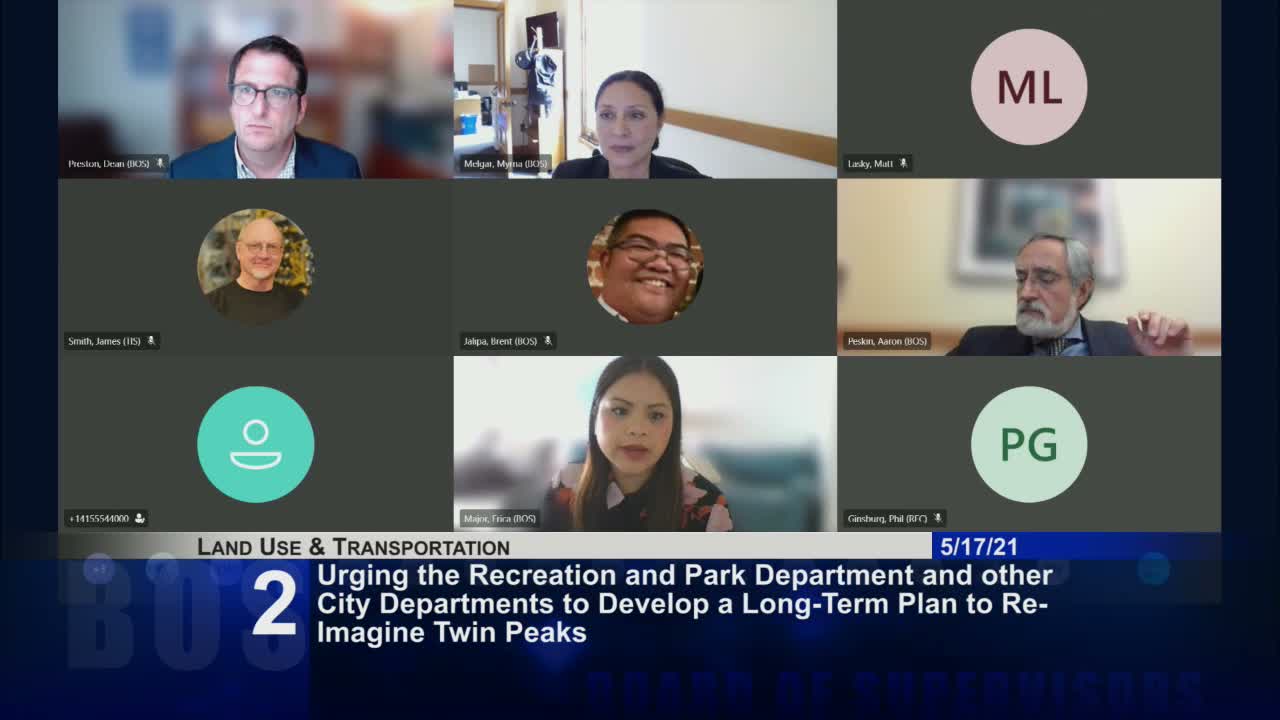
The San Francisco County government meeting on July 4, 2025, focused on a significant ordinance aimed at streamlining the appeals process for certain public projects under the California Environmental Quality Act (CEQA). The ordinance, introduced by Supervisor Matt Haney, seeks to allow critical public projects to proceed during the appeal process, thereby reducing costly delays that have previously hindered timely responses to public health and safety needs.
The meeting began with Supervisor Haney thanking the committee members and city officials for their collaboration on the legislation. He emphasized the importance of the proposed changes, which are designed to expedite public projects that are either temporary, reversible, or necessary for safety reasons. The ordinance aims to address issues that arose during the COVID-19 pandemic when several emergency transportation projects faced delays due to appeals filed by a small number of individuals.
Key provisions of the ordinance include raising the threshold for filing CEQA appeals from one signature to either 50 signatures or five members of the Board of Supervisors for specific projects where the SFMTA or the Port has sole approval authority. This change is intended to prevent a single individual from stalling projects that serve the public interest. Additionally, the ordinance allows certain public projects to continue during the appeal process, rather than halting entirely, which has been the current practice.
Supervisor Haney highlighted that the legislation does not eliminate the right to appeal but rather modifies the process to ensure that public projects, which often have significant environmental benefits, can advance without unnecessary delays. The ordinance has garnered support from various transportation advocates and received unanimous backing from the planning commission.
In conclusion, the meeting underscored the urgency of reforming the appeals process for public projects in San Francisco. The proposed ordinance aims to balance the need for accountability and environmental protection with the necessity of timely project implementation, particularly in response to public health emergencies. The next steps will involve further discussions and potential voting on the ordinance in upcoming meetings.
The meeting began with Supervisor Haney thanking the committee members and city officials for their collaboration on the legislation. He emphasized the importance of the proposed changes, which are designed to expedite public projects that are either temporary, reversible, or necessary for safety reasons. The ordinance aims to address issues that arose during the COVID-19 pandemic when several emergency transportation projects faced delays due to appeals filed by a small number of individuals.
Key provisions of the ordinance include raising the threshold for filing CEQA appeals from one signature to either 50 signatures or five members of the Board of Supervisors for specific projects where the SFMTA or the Port has sole approval authority. This change is intended to prevent a single individual from stalling projects that serve the public interest. Additionally, the ordinance allows certain public projects to continue during the appeal process, rather than halting entirely, which has been the current practice.
Supervisor Haney highlighted that the legislation does not eliminate the right to appeal but rather modifies the process to ensure that public projects, which often have significant environmental benefits, can advance without unnecessary delays. The ordinance has garnered support from various transportation advocates and received unanimous backing from the planning commission.
In conclusion, the meeting underscored the urgency of reforming the appeals process for public projects in San Francisco. The proposed ordinance aims to balance the need for accountability and environmental protection with the necessity of timely project implementation, particularly in response to public health emergencies. The next steps will involve further discussions and potential voting on the ordinance in upcoming meetings.
Don't Miss a Word: See the Full Meeting!
Go beyond summaries. Unlock every video, transcript, and key insight with a Founder Membership.
✓
Get instant access to full meeting videos
✓
Search and clip any phrase from complete transcripts
✓
Receive AI-powered summaries & custom alerts
✓
Enjoy lifetime, unrestricted access to government data
30-day money-back guarantee
