Commissioners evaluate meal cost models for city shelters and navigation centers
May 02, 2024 | San Francisco City, San Francisco County, California
This article was created by AI summarizing key points discussed. AI makes mistakes, so for full details and context, please refer to the video of the full meeting. Please report any errors so we can fix them. Report an error »
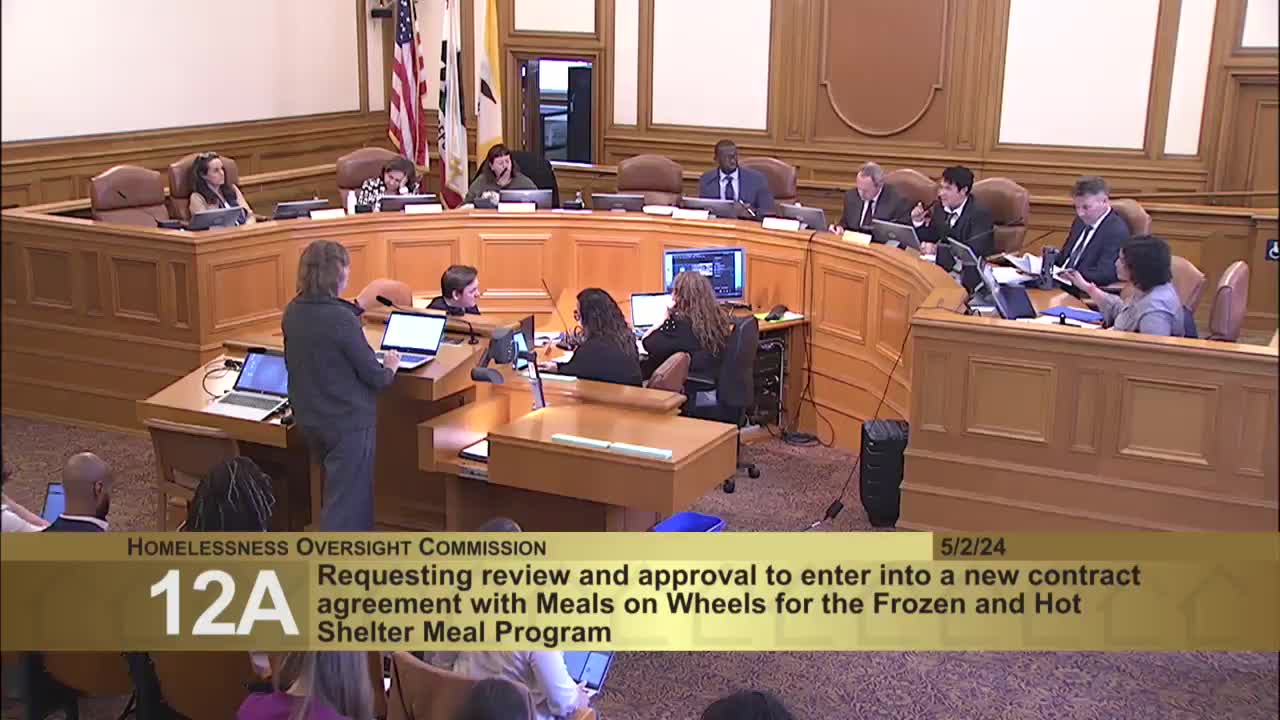
The San Francisco City Council meeting on July 4, 2025, focused on discussions surrounding food safety and meal distribution programs within the city. Key points included concerns about sodium levels in meals provided to residents and the efficiency of meal utilization at various service sites.
Commissioner Evan raised questions regarding the variance in meal usage rates between different service locations. The Bayview vehicle triage and mission cabins reported a 96% utilization rate for frozen meals, while navigation centers had a lower rate of 70%. The difference was attributed to the nature of meal service; navigation centers utilize a frozen meal model that allows for precise matching of meal orders to actual guest needs, minimizing waste. In contrast, hot meal programs must estimate demand, which can lead to excess meals being ordered when guests are not present.
The cost of meals was also discussed, with frozen meals averaging $7.15 each and hot meals costing approximately $8. The meeting highlighted that there are currently three programs using the hot meal model and eleven utilizing the frozen meal model. A question was raised about the total number of meals served annually, with indications suggesting around one million meals, although clarification was needed on whether this figure included both meal types.
Additionally, a historical perspective was shared by a commissioner who noted their past experience with Meals on Wheels, prompting a clarification that Meals on Wheels and Open Hand are separate organizations.
The discussions underscored the city's ongoing efforts to improve food quality and safety while addressing the nutritional needs of its residents. Further analysis and follow-up on meal distribution metrics were indicated as necessary next steps.
Commissioner Evan raised questions regarding the variance in meal usage rates between different service locations. The Bayview vehicle triage and mission cabins reported a 96% utilization rate for frozen meals, while navigation centers had a lower rate of 70%. The difference was attributed to the nature of meal service; navigation centers utilize a frozen meal model that allows for precise matching of meal orders to actual guest needs, minimizing waste. In contrast, hot meal programs must estimate demand, which can lead to excess meals being ordered when guests are not present.
The cost of meals was also discussed, with frozen meals averaging $7.15 each and hot meals costing approximately $8. The meeting highlighted that there are currently three programs using the hot meal model and eleven utilizing the frozen meal model. A question was raised about the total number of meals served annually, with indications suggesting around one million meals, although clarification was needed on whether this figure included both meal types.
Additionally, a historical perspective was shared by a commissioner who noted their past experience with Meals on Wheels, prompting a clarification that Meals on Wheels and Open Hand are separate organizations.
The discussions underscored the city's ongoing efforts to improve food quality and safety while addressing the nutritional needs of its residents. Further analysis and follow-up on meal distribution metrics were indicated as necessary next steps.
View the Full Meeting & All Its Details
This article offers just a summary. Unlock complete video, transcripts, and insights as a Founder Member.
✓
Watch full, unedited meeting videos
✓
Search every word spoken in unlimited transcripts
✓
AI summaries & real-time alerts (all government levels)
✓
Permanent access to expanding government content
30-day money-back guarantee
