San Francisco proposes compassionate response team for homelessness crisis
June 10, 2021 | San Francisco County, California
This article was created by AI summarizing key points discussed. AI makes mistakes, so for full details and context, please refer to the video of the full meeting. Please report any errors so we can fix them. Report an error »
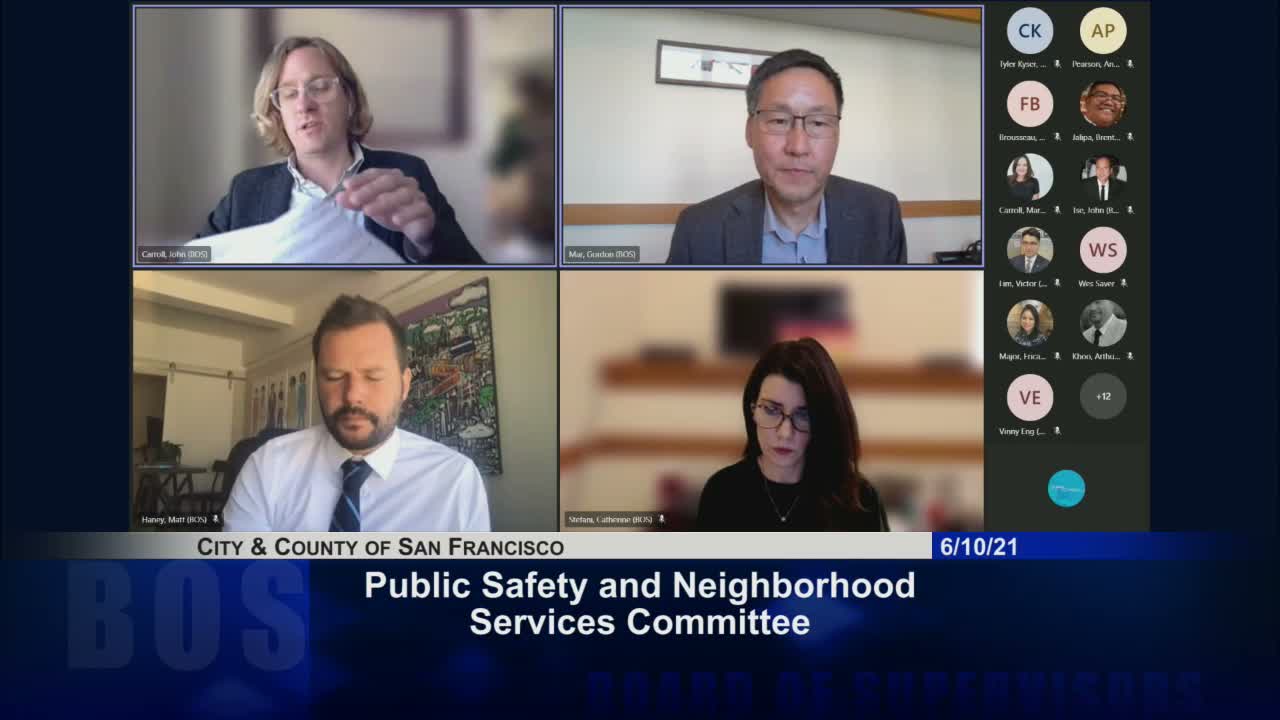
In a significant step towards addressing homelessness in San Francisco, the Board of Supervisors has proposed the establishment of a 24/7 compassionate alternative response team. This initiative aims to provide a more effective and humane approach to assisting unhoused individuals, moving away from traditional police enforcement methods that have proven inadequate.
Supervisor Matt Haney, who sponsored the resolution, emphasized the urgent need for a trained and compassionate response to homelessness. He noted that many residents have witnessed the struggles of those living on the streets and often feel helpless in knowing how to assist them. The proposed team would be equipped to handle calls related to homelessness, offering immediate support and connecting individuals to necessary services.
The resolution builds on the success of the Street Crisis Response Team, a pilot program that has shown promising results in addressing mental health crises among unhoused individuals. By utilizing interdisciplinary teams trained in trauma-informed care, the city aims to provide a more appropriate response than what police officers can offer. This shift is not only about improving care but also about reducing costs associated with the current enforcement-heavy approach.
The compassionate alternative response team (CARP) would include a specialized dispatch system for calls involving unhoused individuals and may establish a dedicated hotline for such emergencies. The model promotes a peer-based approach, ensuring that the response teams reflect the communities they serve and are grounded in best practices.
This initiative is part of a broader strategy to tackle the homelessness crisis in San Francisco, which has seen significant investment through measures like Proposition C. The city has allocated hundreds of millions of dollars towards permanent supportive housing and other resources, but effective street-level responses remain crucial for long-term solutions.
As the city moves forward with this proposal, it aims to create a system that not only addresses immediate needs but also empowers individuals and fosters community engagement around homelessness. The hope is to transform the current cycle of displacement into a more supportive and constructive approach that truly helps those in need.
Supervisor Matt Haney, who sponsored the resolution, emphasized the urgent need for a trained and compassionate response to homelessness. He noted that many residents have witnessed the struggles of those living on the streets and often feel helpless in knowing how to assist them. The proposed team would be equipped to handle calls related to homelessness, offering immediate support and connecting individuals to necessary services.
The resolution builds on the success of the Street Crisis Response Team, a pilot program that has shown promising results in addressing mental health crises among unhoused individuals. By utilizing interdisciplinary teams trained in trauma-informed care, the city aims to provide a more appropriate response than what police officers can offer. This shift is not only about improving care but also about reducing costs associated with the current enforcement-heavy approach.
The compassionate alternative response team (CARP) would include a specialized dispatch system for calls involving unhoused individuals and may establish a dedicated hotline for such emergencies. The model promotes a peer-based approach, ensuring that the response teams reflect the communities they serve and are grounded in best practices.
This initiative is part of a broader strategy to tackle the homelessness crisis in San Francisco, which has seen significant investment through measures like Proposition C. The city has allocated hundreds of millions of dollars towards permanent supportive housing and other resources, but effective street-level responses remain crucial for long-term solutions.
As the city moves forward with this proposal, it aims to create a system that not only addresses immediate needs but also empowers individuals and fosters community engagement around homelessness. The hope is to transform the current cycle of displacement into a more supportive and constructive approach that truly helps those in need.
Don't Miss a Word: See the Full Meeting!
Go beyond summaries. Unlock every video, transcript, and key insight with a Founder Membership.
✓
Get instant access to full meeting videos
✓
Search and clip any phrase from complete transcripts
✓
Receive AI-powered summaries & custom alerts
✓
Enjoy lifetime, unrestricted access to government data
30-day money-back guarantee
