San Francisco launches Accessible Business Entrance Program to aid compliance for property owners
August 18, 2021 | San Francisco City, San Francisco County, California
This article was created by AI summarizing key points discussed. AI makes mistakes, so for full details and context, please refer to the video of the full meeting. Please report any errors so we can fix them. Report an error »
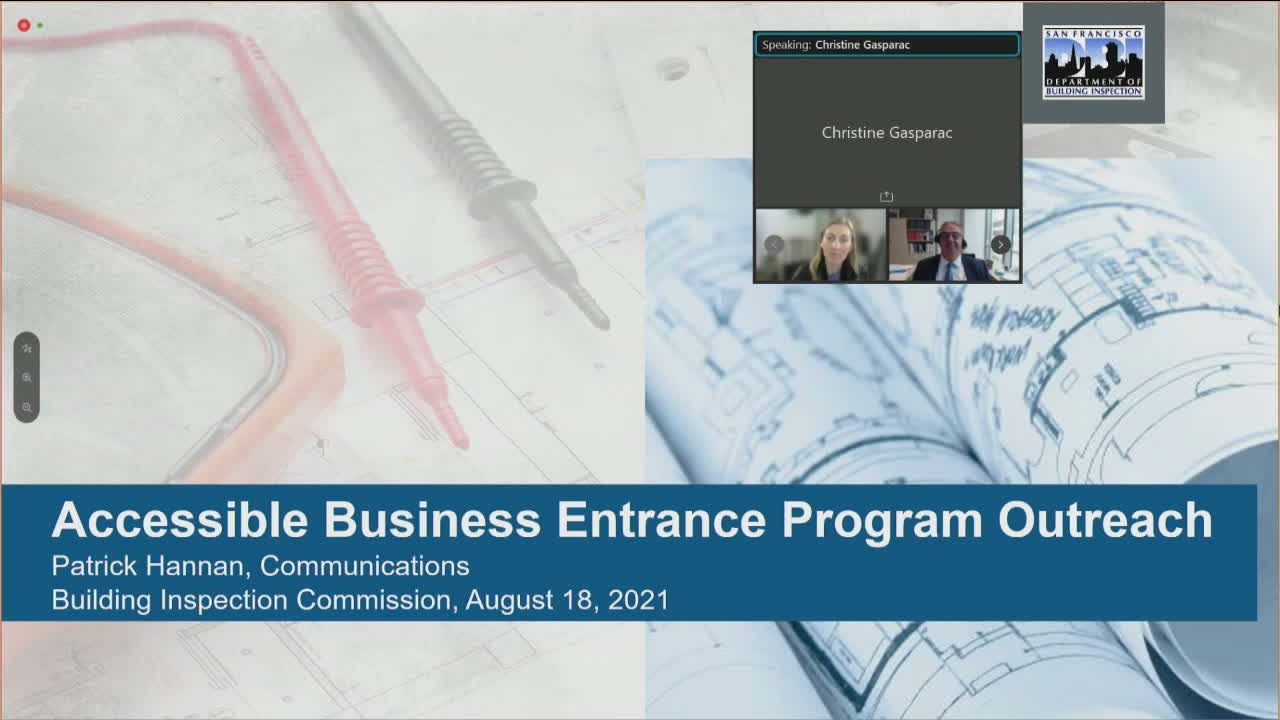
San Francisco is taking significant steps to enhance accessibility for individuals with disabilities through the Accessible Business Entrance (ABE) Program. This initiative aims to assist property owners in complying with state and federal accessibility laws, ensuring that all residents can access goods and services offered by local businesses.
The ABE Program has been in place for several years, but recent lawsuits under the Americans with Disabilities Act (ADA) have underscored the urgency of its implementation. Approximately 250 ADA lawsuits have been filed in San Francisco, many targeting businesses in Chinatown, which are still recovering from the impacts of the COVID-19 pandemic. The program is designed to help these businesses proactively address accessibility issues before they face legal action.
Property owners are required to take one of three actions: submit a pre-screening form, complete a waiver form, or fill out a compliance checklist with the help of a qualified professional. This process is essential for determining what renovations are necessary to meet compliance standards. The responsibility for securing building permits and completing renovations lies with the property owners.
Currently, the city is focusing on approximately 13,000 addresses belonging to around 6,000 property owners who need to comply with the ordinance. The deadline for compliance is set for September 1, 2021, but city officials are exploring the possibility of extending this deadline. An interdepartmental team, including representatives from the city administrator's office and the office of small business, is working on outreach efforts to inform property owners about their obligations.
To facilitate compliance, the city plans to enhance its communication strategies, targeting noncompliant property owners through direct mail, email campaigns, and multilingual outreach. A new brochure will be introduced, and the city will update its website to provide clear compliance information.
The ABE Program is not a legal shield but serves as a first line of defense against potential lawsuits. By helping businesses improve accessibility, the city aims to foster a more inclusive environment for all residents and visitors. As the program progresses, city officials will continue to monitor compliance and provide necessary support to property owners.
The ABE Program has been in place for several years, but recent lawsuits under the Americans with Disabilities Act (ADA) have underscored the urgency of its implementation. Approximately 250 ADA lawsuits have been filed in San Francisco, many targeting businesses in Chinatown, which are still recovering from the impacts of the COVID-19 pandemic. The program is designed to help these businesses proactively address accessibility issues before they face legal action.
Property owners are required to take one of three actions: submit a pre-screening form, complete a waiver form, or fill out a compliance checklist with the help of a qualified professional. This process is essential for determining what renovations are necessary to meet compliance standards. The responsibility for securing building permits and completing renovations lies with the property owners.
Currently, the city is focusing on approximately 13,000 addresses belonging to around 6,000 property owners who need to comply with the ordinance. The deadline for compliance is set for September 1, 2021, but city officials are exploring the possibility of extending this deadline. An interdepartmental team, including representatives from the city administrator's office and the office of small business, is working on outreach efforts to inform property owners about their obligations.
To facilitate compliance, the city plans to enhance its communication strategies, targeting noncompliant property owners through direct mail, email campaigns, and multilingual outreach. A new brochure will be introduced, and the city will update its website to provide clear compliance information.
The ABE Program is not a legal shield but serves as a first line of defense against potential lawsuits. By helping businesses improve accessibility, the city aims to foster a more inclusive environment for all residents and visitors. As the program progresses, city officials will continue to monitor compliance and provide necessary support to property owners.
Don't Miss a Word: See the Full Meeting!
Go beyond summaries. Unlock every video, transcript, and key insight with a Founder Membership.
✓
Get instant access to full meeting videos
✓
Search and clip any phrase from complete transcripts
✓
Receive AI-powered summaries & custom alerts
✓
Enjoy lifetime, unrestricted access to government data
30-day money-back guarantee
