San Francisco bans gas-powered landscaping equipment to improve air quality and worker health
April 27, 2022 | San Francisco County, California
This article was created by AI summarizing key points discussed. AI makes mistakes, so for full details and context, please refer to the video of the full meeting. Please report any errors so we can fix them. Report an error »
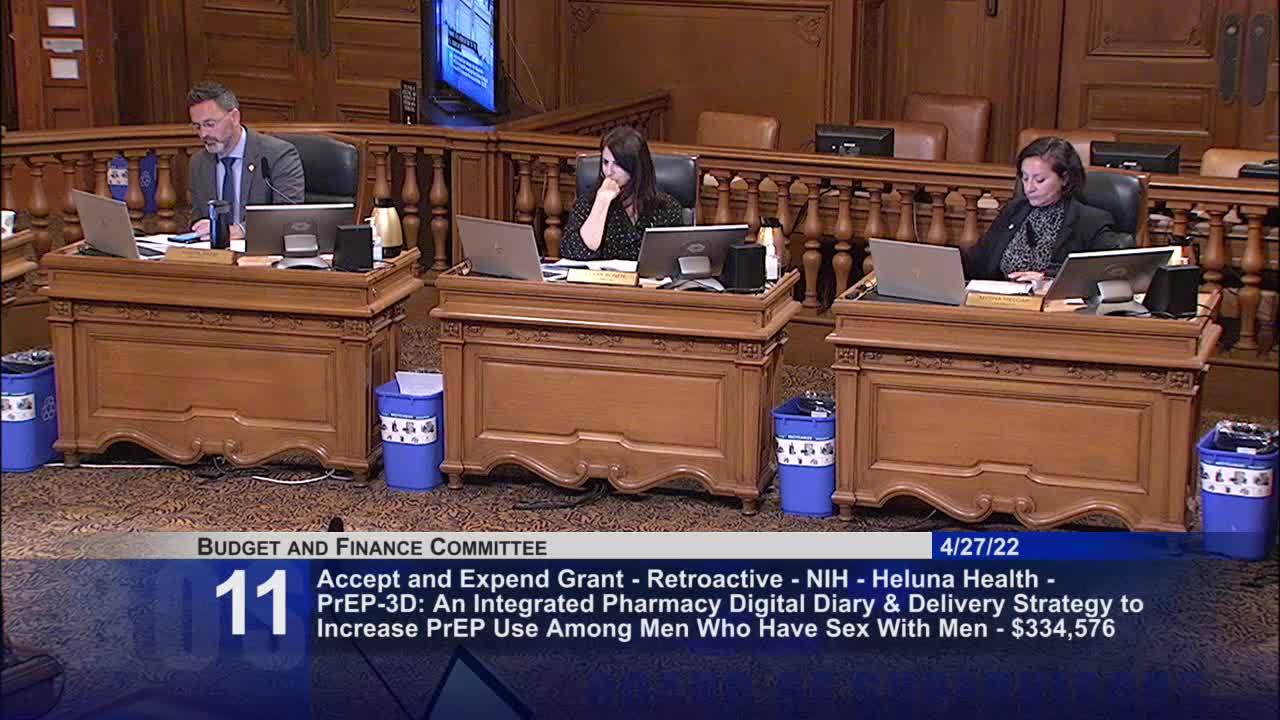
In a significant move towards environmental sustainability, the San Francisco County Board of Supervisors discussed a groundbreaking ordinance aimed at phasing out gas-powered landscaping equipment used by city departments. The proposed legislation, championed by Supervisor Melgar, seeks to ban the use of such equipment starting January 1, 2024, with a full citywide ban anticipated by January 1, 2026. This initiative is part of a broader effort to reduce pollution and protect the health of workers and communities disproportionately affected by climate change.
The ordinance outlines a comprehensive framework that includes temporary waivers for city departments unable to transition immediately due to the unavailability of suitable electric alternatives. It also establishes a buyback program to assist property owners and businesses in replacing their gas-powered equipment with cleaner, electric options. The program is designed to alleviate the financial burden on those affected, particularly low-income workers who often rely on this equipment for their livelihoods.
During the meeting, Supervisor Melgar emphasized the health risks associated with gas-powered equipment, noting that one hour of operation from a leaf blower emits pollution equivalent to driving over 1,100 miles. The legislation aims not only to mitigate environmental damage but also to address worker rights and health issues, particularly for immigrant laborers who are most impacted by the use of these machines.
The Department of the Environment will oversee the implementation and enforcement of the ordinance, which includes conducting public education campaigns about the ban and the buyback program. The proposed budget for transitioning to electric equipment is estimated at $16.5 million, with discussions on how to phase in these costs over time.
The meeting also highlighted the importance of community engagement, particularly in neighborhoods identified as having higher pollution levels. The buyback program will prioritize businesses and individuals operating in these areas, ensuring that the transition to cleaner equipment is equitable and accessible.
As the board prepares to finalize the legislation, the discussions underscored a collective commitment to environmental justice and public health, setting a precedent for similar initiatives across California and beyond. The anticipated next steps include further refinement of the ordinance and continued collaboration with community organizations to ensure a smooth transition for all stakeholders involved.
The ordinance outlines a comprehensive framework that includes temporary waivers for city departments unable to transition immediately due to the unavailability of suitable electric alternatives. It also establishes a buyback program to assist property owners and businesses in replacing their gas-powered equipment with cleaner, electric options. The program is designed to alleviate the financial burden on those affected, particularly low-income workers who often rely on this equipment for their livelihoods.
During the meeting, Supervisor Melgar emphasized the health risks associated with gas-powered equipment, noting that one hour of operation from a leaf blower emits pollution equivalent to driving over 1,100 miles. The legislation aims not only to mitigate environmental damage but also to address worker rights and health issues, particularly for immigrant laborers who are most impacted by the use of these machines.
The Department of the Environment will oversee the implementation and enforcement of the ordinance, which includes conducting public education campaigns about the ban and the buyback program. The proposed budget for transitioning to electric equipment is estimated at $16.5 million, with discussions on how to phase in these costs over time.
The meeting also highlighted the importance of community engagement, particularly in neighborhoods identified as having higher pollution levels. The buyback program will prioritize businesses and individuals operating in these areas, ensuring that the transition to cleaner equipment is equitable and accessible.
As the board prepares to finalize the legislation, the discussions underscored a collective commitment to environmental justice and public health, setting a precedent for similar initiatives across California and beyond. The anticipated next steps include further refinement of the ordinance and continued collaboration with community organizations to ensure a smooth transition for all stakeholders involved.
View the Full Meeting & All Its Details
This article offers just a summary. Unlock complete video, transcripts, and insights as a Founder Member.
✓
Watch full, unedited meeting videos
✓
Search every word spoken in unlimited transcripts
✓
AI summaries & real-time alerts (all government levels)
✓
Permanent access to expanding government content
30-day money-back guarantee
