San Francisco reviews 2021 language access report to strengthen community services
May 20, 2021 | San Francisco County, California
This article was created by AI summarizing key points discussed. AI makes mistakes, so for full details and context, please refer to the video of the full meeting. Please report any errors so we can fix them. Report an error »
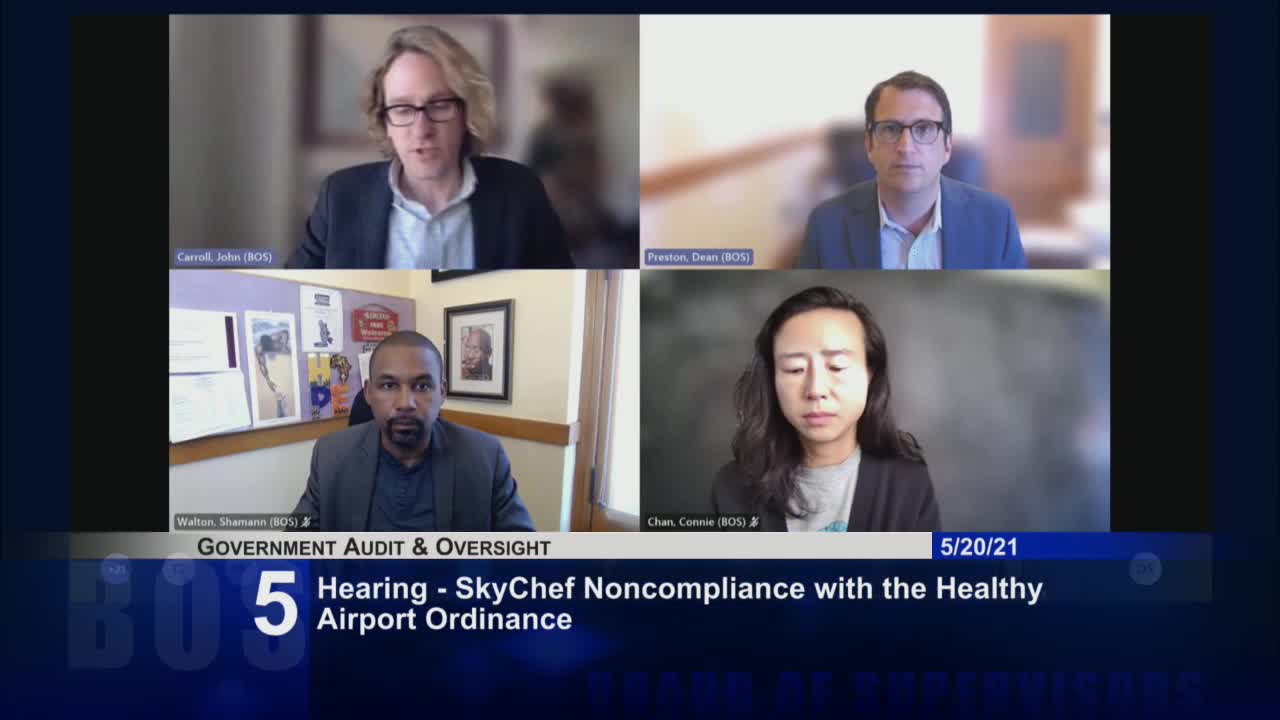
On July 4, 2025, San Francisco County held a significant hearing focused on the city's language access ordinance, a critical framework aimed at ensuring that residents with limited English proficiency can access essential city services. This meeting, led by Chair Preston and attended by members of the Office of Civic Engagement and Immigrant Affairs (OCEIA), highlighted the ongoing commitment to enhancing language access for the city's diverse population.
The hearing reviewed the 2021 language access summary report, which is mandated annually by the OCEIA. This report assesses how well various city departments comply with the language access ordinance, originally passed in 2001 and amended in subsequent years. The ordinance is particularly vital in a city where nearly half of the population speaks a language other than English at home, and about one-fifth identifies as limited English proficient (LEP).
During the meeting, representatives from the language access network, which includes organizations like the African Advocacy Network and the Filipino Community Center, emphasized the need for stronger language access measures. They argued that effective communication is not just a service but a right, especially highlighted during the COVID-19 pandemic when timely information was crucial for public safety.
Director Adrianne Pond of OCEIA presented findings from the report, underscoring that language access is essential for community participation and engagement. The report revealed that San Francisco's commitment to providing services in multiple languages—specifically English, Chinese (Cantonese and Mandarin), Spanish, and Filipino—remains a priority. The meeting also addressed the need for legislative amendments to strengthen the ordinance further, ensuring that city services are inclusive and accessible to all residents.
The discussions at this hearing reflect a broader commitment to equity and inclusion within San Francisco, particularly for its immigrant communities. As the city continues to evolve, the emphasis on language access will play a crucial role in fostering a more inclusive environment where all residents can thrive. The next steps involve gathering community feedback and potentially revising the language access ordinance to better serve the needs of limited English-speaking residents.
The hearing reviewed the 2021 language access summary report, which is mandated annually by the OCEIA. This report assesses how well various city departments comply with the language access ordinance, originally passed in 2001 and amended in subsequent years. The ordinance is particularly vital in a city where nearly half of the population speaks a language other than English at home, and about one-fifth identifies as limited English proficient (LEP).
During the meeting, representatives from the language access network, which includes organizations like the African Advocacy Network and the Filipino Community Center, emphasized the need for stronger language access measures. They argued that effective communication is not just a service but a right, especially highlighted during the COVID-19 pandemic when timely information was crucial for public safety.
Director Adrianne Pond of OCEIA presented findings from the report, underscoring that language access is essential for community participation and engagement. The report revealed that San Francisco's commitment to providing services in multiple languages—specifically English, Chinese (Cantonese and Mandarin), Spanish, and Filipino—remains a priority. The meeting also addressed the need for legislative amendments to strengthen the ordinance further, ensuring that city services are inclusive and accessible to all residents.
The discussions at this hearing reflect a broader commitment to equity and inclusion within San Francisco, particularly for its immigrant communities. As the city continues to evolve, the emphasis on language access will play a crucial role in fostering a more inclusive environment where all residents can thrive. The next steps involve gathering community feedback and potentially revising the language access ordinance to better serve the needs of limited English-speaking residents.
View the Full Meeting & All Its Details
This article offers just a summary. Unlock complete video, transcripts, and insights as a Founder Member.
✓
Watch full, unedited meeting videos
✓
Search every word spoken in unlimited transcripts
✓
AI summaries & real-time alerts (all government levels)
✓
Permanent access to expanding government content
30-day money-back guarantee
