San Francisco reauthorizes non citizen voting for school board elections
October 18, 2021 | San Francisco County, California
This article was created by AI summarizing key points discussed. AI makes mistakes, so for full details and context, please refer to the video of the full meeting. Please report any errors so we can fix them. Report an error »
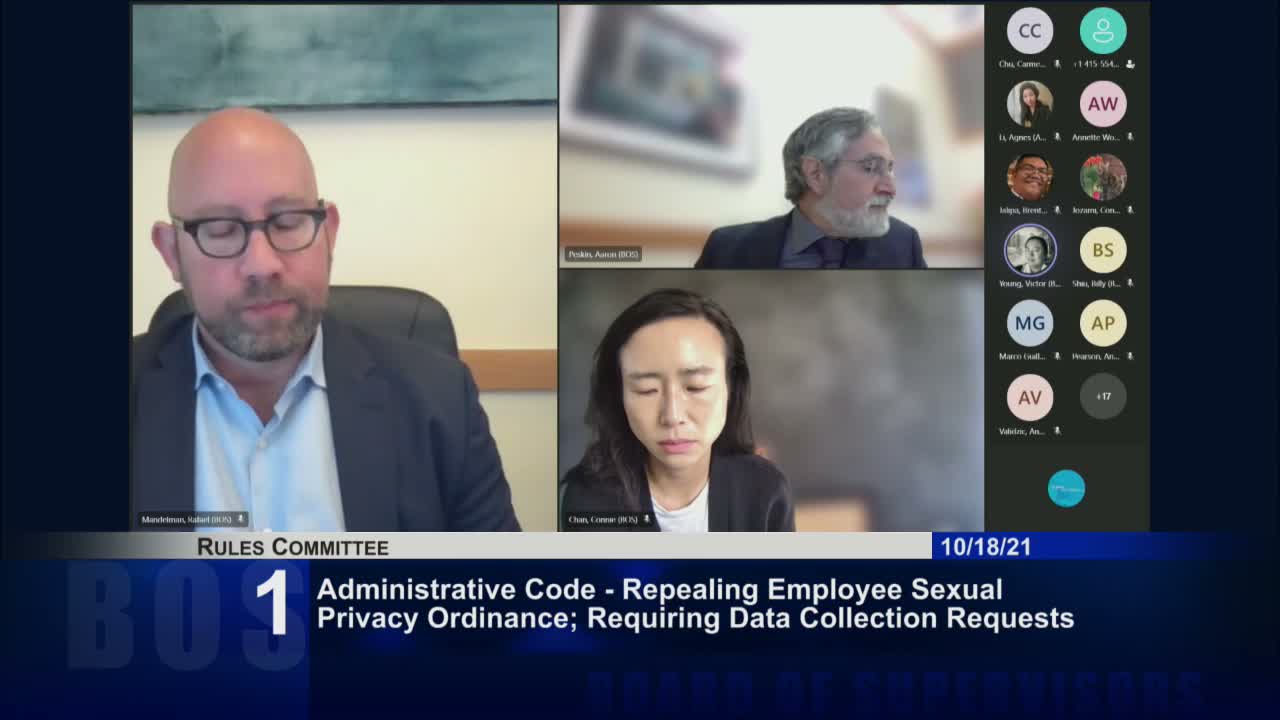
The San Francisco County Board of Supervisors convened on July 4, 2025, to discuss a significant ordinance aimed at making non-citizen voting in school board elections a permanent fixture in the city. This legislation, championed by Supervisor Chan and co-sponsored by Supervisor Melgar, seeks to solidify the rights of non-citizen parents to participate in the educational governance of their children.
The ordinance builds on the success of a pilot program initiated in 2016, which allowed non-citizen parents to vote in school board elections. This program has been in effect during the elections of 2018, 2020, and 2022, and the current proposal aims to eliminate the sunset clause that would otherwise end this voting right. Supervisor Chan emphasized the personal significance of this legislation, reflecting on her own experiences as an immigrant parent and the importance of parental involvement in education.
Community advocates from the Immigrant Parents Voting Collaborative presented their case for the ordinance, highlighting that one-third of children in San Francisco schools have immigrant parents. They argued that without the ability to vote, these parents would be disenfranchised, and the school board would not accurately represent the community's values and needs. The collaborative has been actively involved in outreach efforts, educating parents about their voting rights and encouraging their participation in school governance.
The meeting also featured discussions on the need for improved coordination between agencies and increased outreach to ensure that immigrant families are aware of their voting rights. Advocates stressed that expanding voting rights is crucial, especially in a national climate where many states are restricting access to the democratic process.
In conclusion, the Board of Supervisors is poised to take a significant step toward inclusivity in San Francisco's educational system by making non-citizen voting a permanent right. This move not only empowers immigrant parents but also aims to enhance the overall educational experience for all students in the district. The next steps will involve further discussions and potential amendments to the ordinance before it is finalized.
The ordinance builds on the success of a pilot program initiated in 2016, which allowed non-citizen parents to vote in school board elections. This program has been in effect during the elections of 2018, 2020, and 2022, and the current proposal aims to eliminate the sunset clause that would otherwise end this voting right. Supervisor Chan emphasized the personal significance of this legislation, reflecting on her own experiences as an immigrant parent and the importance of parental involvement in education.
Community advocates from the Immigrant Parents Voting Collaborative presented their case for the ordinance, highlighting that one-third of children in San Francisco schools have immigrant parents. They argued that without the ability to vote, these parents would be disenfranchised, and the school board would not accurately represent the community's values and needs. The collaborative has been actively involved in outreach efforts, educating parents about their voting rights and encouraging their participation in school governance.
The meeting also featured discussions on the need for improved coordination between agencies and increased outreach to ensure that immigrant families are aware of their voting rights. Advocates stressed that expanding voting rights is crucial, especially in a national climate where many states are restricting access to the democratic process.
In conclusion, the Board of Supervisors is poised to take a significant step toward inclusivity in San Francisco's educational system by making non-citizen voting a permanent right. This move not only empowers immigrant parents but also aims to enhance the overall educational experience for all students in the district. The next steps will involve further discussions and potential amendments to the ordinance before it is finalized.
Don't Miss a Word: See the Full Meeting!
Go beyond summaries. Unlock every video, transcript, and key insight with a Founder Membership.
✓
Get instant access to full meeting videos
✓
Search and clip any phrase from complete transcripts
✓
Receive AI-powered summaries & custom alerts
✓
Enjoy lifetime, unrestricted access to government data
30-day money-back guarantee
