Spanish Fork wastewater plant inspection reveals maintenance needs amid regulatory changes
April 17, 2024 | Springville City Council, Springville, Utah County, Utah
This article was created by AI summarizing key points discussed. AI makes mistakes, so for full details and context, please refer to the video of the full meeting. Please report any errors so we can fix them. Report an error »
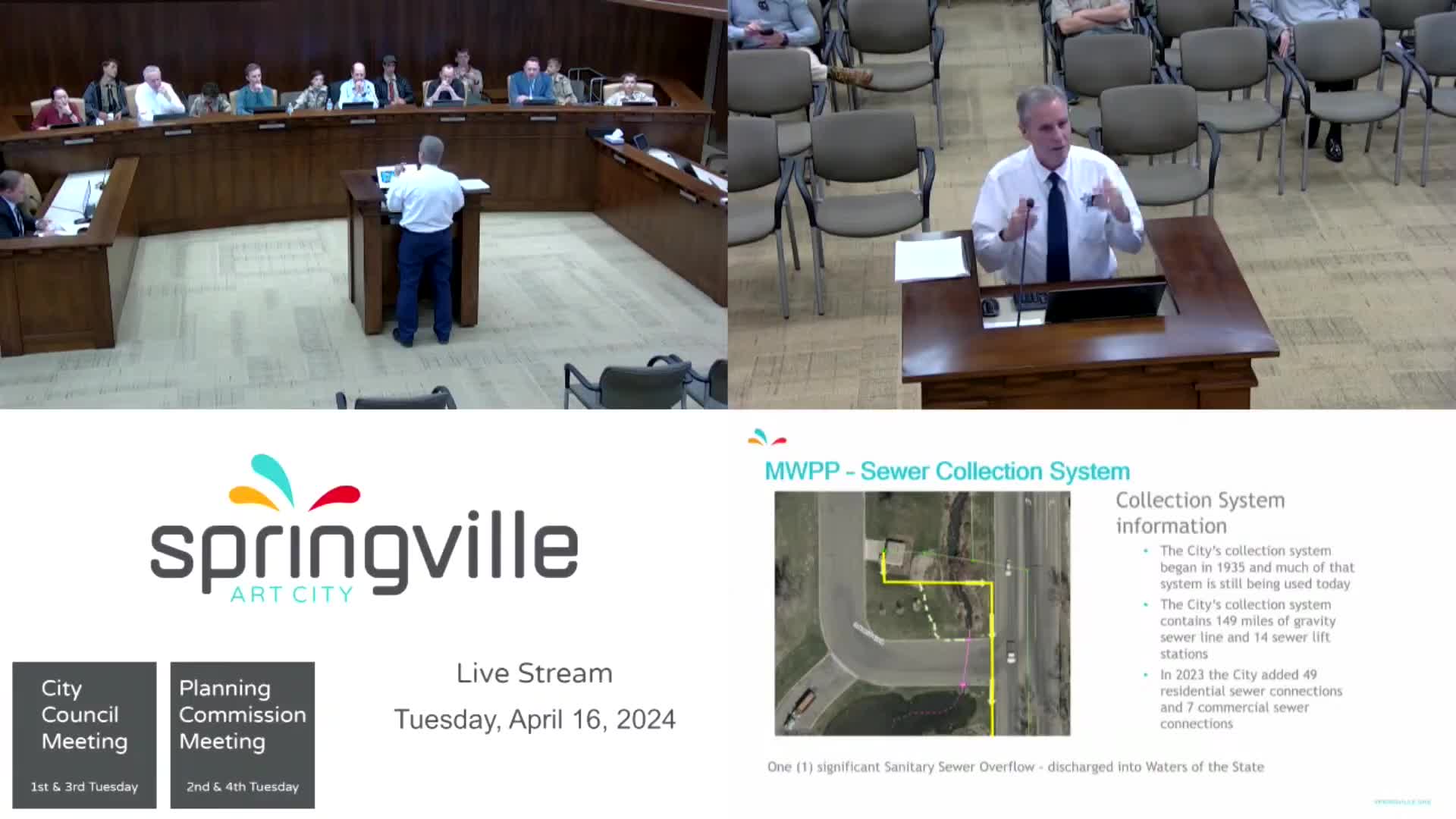
The Springville City Council meeting on April 17, 2024, focused on key updates regarding the city's wastewater treatment plant and recent operational challenges. Council members discussed a recent sewage spill incident and the plant's capacity and performance metrics.
During the meeting, officials reported a minor sewage spill, referred to as a Sanitary Sewer Overflow (SSO), which was promptly addressed after residents reported a foul odor. The city responded by shutting down the lift station to prevent further issues and deployed trucks to manage the situation. This incident highlighted the importance of community vigilance and quick response in maintaining the city's sewage infrastructure.
The wastewater treatment plant, described as a "mechanical plant," utilizes bacteria to treat sewage, emphasizing the need for careful management of what enters the system. The plant has a daily capacity of 6.6 million gallons, with an average processing of 4 million gallons. Officials noted that the plant can handle peak loads of up to 9 million gallons temporarily.
Council members also discussed the plant's ability to process biological oxygen demand (BOD) and total suspended solids, which are critical measures of wastewater strength. Last year, the plant experienced three violations, primarily due to new state regulations requiring the removal of phosphorus, which necessitated the addition of chemicals that affected the treatment process.
Looking ahead, the council expressed confidence in the plant's current capabilities, stating that it can meet regulatory requirements for the next 15 to 20 years without the need for a costly overhaul, unlike neighboring Spanish Fork, which is investing $130 million in a new facility. However, officials acknowledged that future changes in nitrogen regulations may require additional upgrades to the existing plant.
In conclusion, the meeting underscored the city's commitment to maintaining its wastewater treatment infrastructure while navigating regulatory challenges and community concerns. The council plans to submit a report to the state detailing the plant's operations and any necessary improvements.
During the meeting, officials reported a minor sewage spill, referred to as a Sanitary Sewer Overflow (SSO), which was promptly addressed after residents reported a foul odor. The city responded by shutting down the lift station to prevent further issues and deployed trucks to manage the situation. This incident highlighted the importance of community vigilance and quick response in maintaining the city's sewage infrastructure.
The wastewater treatment plant, described as a "mechanical plant," utilizes bacteria to treat sewage, emphasizing the need for careful management of what enters the system. The plant has a daily capacity of 6.6 million gallons, with an average processing of 4 million gallons. Officials noted that the plant can handle peak loads of up to 9 million gallons temporarily.
Council members also discussed the plant's ability to process biological oxygen demand (BOD) and total suspended solids, which are critical measures of wastewater strength. Last year, the plant experienced three violations, primarily due to new state regulations requiring the removal of phosphorus, which necessitated the addition of chemicals that affected the treatment process.
Looking ahead, the council expressed confidence in the plant's current capabilities, stating that it can meet regulatory requirements for the next 15 to 20 years without the need for a costly overhaul, unlike neighboring Spanish Fork, which is investing $130 million in a new facility. However, officials acknowledged that future changes in nitrogen regulations may require additional upgrades to the existing plant.
In conclusion, the meeting underscored the city's commitment to maintaining its wastewater treatment infrastructure while navigating regulatory challenges and community concerns. The council plans to submit a report to the state detailing the plant's operations and any necessary improvements.
View the Full Meeting & All Its Details
This article offers just a summary. Unlock complete video, transcripts, and insights as a Founder Member.
✓
Watch full, unedited meeting videos
✓
Search every word spoken in unlimited transcripts
✓
AI summaries & real-time alerts (all government levels)
✓
Permanent access to expanding government content
30-day money-back guarantee
