House passes multiple bills including COVID vaccine exemptions and kindergarten funding
February 18, 2022 | 2022 Utah Legislature, Utah Legislature, Utah Legislative Branch, Utah
This article was created by AI summarizing key points discussed. AI makes mistakes, so for full details and context, please refer to the video of the full meeting. Please report any errors so we can fix them. Report an error »
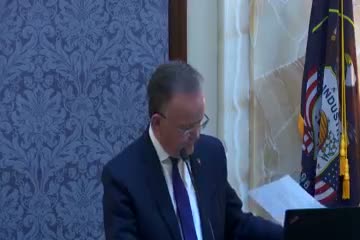
The 2022 General Legislative Session in Utah convened on February 18, 2022, to address a series of bills, with significant legislative activity taking place. The House of Representatives passed multiple bills, many of which were substituted or amended during the session.
The meeting began with the passage of House Bill 63, which pertains to COVID-19 vaccine exemptions, followed by House Bill 65, focused on forensic biological evidence preservation. The House also approved amendments to House Bill 182, which addresses local health department order amendments, and House Bill 193, which relates to full-day kindergarten.
Further legislative actions included the passage of House Bill 226, concerning higher education and corrections counsel, and House Bill 244, which involves geological carbon sequestration amendments. The House also passed House Bill 264, which introduces municipal alternate voting methods, and House Bill 269, related to capital assets concerning water.
In addition, House Bill 289, which provides insurance coverage for emergency medical service personnel, and House Bill 299, addressing juvenile justice changes, were both passed. The House also approved House Bill 313, which focuses on election security amendments, and House Bill 314, concerning inheritance disqualification amendments.
Other bills that received approval included House Bill 317, which addresses sovereign lands trespassing, House Bill 318, related to dental provider malpractice, and House Bill 321, which involves restitution amendments. The House also passed House Bill 322, concerning public transit capital development modifications, and House Bill 328, which addresses driver license and license plate amendments. Lastly, House Bill 355, focused on higher education financial aid amendments, was also passed.
These bills have been transmitted to the Senate for further consideration. The meeting also included discussions on Senate Bill 115, which pertains to firearm preemption amendments, and the consent calendar, where several bills were circled for further discussion.
Senate Bill 108, concerning indigent defense amendments, was passed unanimously after minor amendments were made by the House. Similarly, Senate Bill 121, which involves the Anesthesiologist Assistant Licensing Act, was also passed after the Senate concurred with House amendments.
The session concluded with the encircling of House Bill 225, which directs the Department of Health to create a standardized HIPAA-compliant release of information form for medical providers. This bill aims to streamline the process of obtaining medical information across the state.
Overall, the meeting was marked by a robust legislative agenda, with numerous bills advancing through the House and Senate, reflecting ongoing efforts to address various issues within the state.
The meeting began with the passage of House Bill 63, which pertains to COVID-19 vaccine exemptions, followed by House Bill 65, focused on forensic biological evidence preservation. The House also approved amendments to House Bill 182, which addresses local health department order amendments, and House Bill 193, which relates to full-day kindergarten.
Further legislative actions included the passage of House Bill 226, concerning higher education and corrections counsel, and House Bill 244, which involves geological carbon sequestration amendments. The House also passed House Bill 264, which introduces municipal alternate voting methods, and House Bill 269, related to capital assets concerning water.
In addition, House Bill 289, which provides insurance coverage for emergency medical service personnel, and House Bill 299, addressing juvenile justice changes, were both passed. The House also approved House Bill 313, which focuses on election security amendments, and House Bill 314, concerning inheritance disqualification amendments.
Other bills that received approval included House Bill 317, which addresses sovereign lands trespassing, House Bill 318, related to dental provider malpractice, and House Bill 321, which involves restitution amendments. The House also passed House Bill 322, concerning public transit capital development modifications, and House Bill 328, which addresses driver license and license plate amendments. Lastly, House Bill 355, focused on higher education financial aid amendments, was also passed.
These bills have been transmitted to the Senate for further consideration. The meeting also included discussions on Senate Bill 115, which pertains to firearm preemption amendments, and the consent calendar, where several bills were circled for further discussion.
Senate Bill 108, concerning indigent defense amendments, was passed unanimously after minor amendments were made by the House. Similarly, Senate Bill 121, which involves the Anesthesiologist Assistant Licensing Act, was also passed after the Senate concurred with House amendments.
The session concluded with the encircling of House Bill 225, which directs the Department of Health to create a standardized HIPAA-compliant release of information form for medical providers. This bill aims to streamline the process of obtaining medical information across the state.
Overall, the meeting was marked by a robust legislative agenda, with numerous bills advancing through the House and Senate, reflecting ongoing efforts to address various issues within the state.
Don't Miss a Word: See the Full Meeting!
Go beyond summaries. Unlock every video, transcript, and key insight with a Founder Membership.
✓
Get instant access to full meeting videos
✓
Search and clip any phrase from complete transcripts
✓
Receive AI-powered summaries & custom alerts
✓
Enjoy lifetime, unrestricted access to government data
30-day money-back guarantee
