Congressional hearing highlights long-term debt crisis amid Biden's budget proposals
March 22, 2024 | Budget: House Committee, Standing Committees - House & Senate, Congressional Hearings Compilation, Legislative, Federal
This article was created by AI summarizing key points discussed. AI makes mistakes, so for full details and context, please refer to the video of the full meeting. Please report any errors so we can fix them. Report an error »
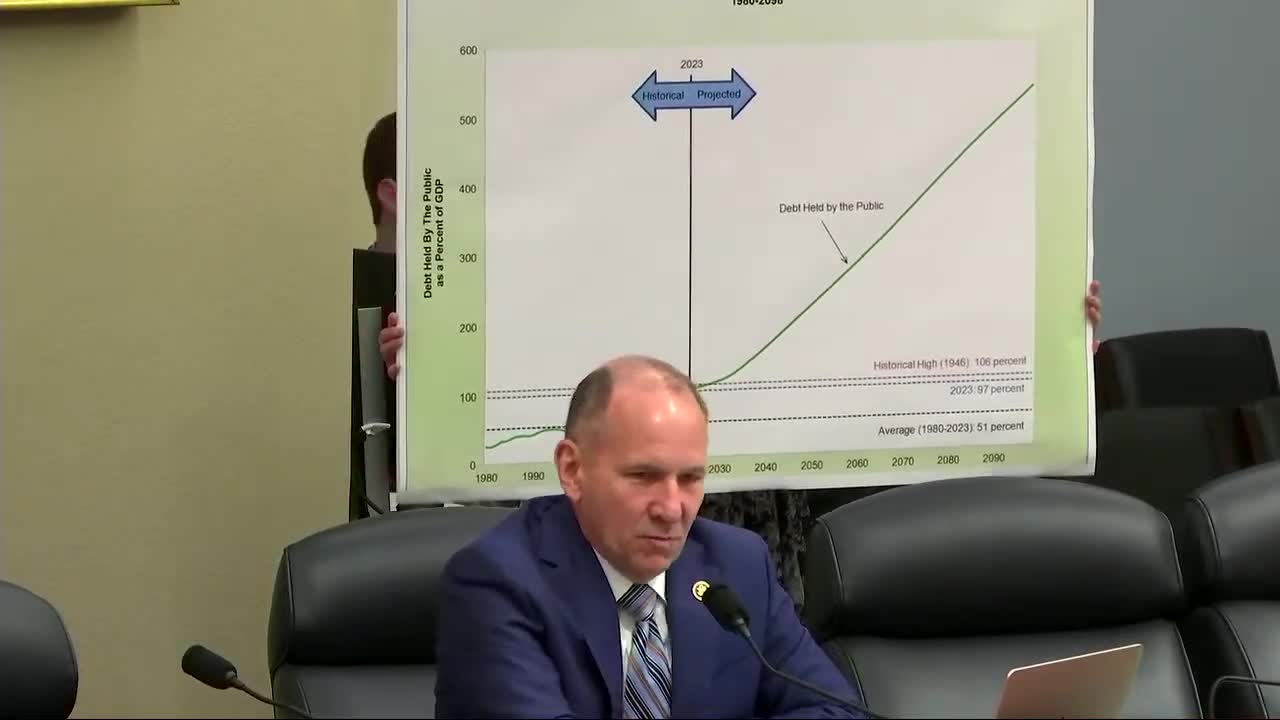
The U.S. House Committee on the Budget recently convened to discuss the President's Fiscal Year 2025 Budget Request, highlighting critical concerns about the nation's long-term fiscal health. A key takeaway from the meeting was the alarming projection that the debt-to-GDP ratio could soar from its current level of 97% to approximately 500% over the next 75 years if current policies remain unchanged.
Committee members emphasized the urgency of addressing this issue, with reports indicating that the current fiscal policy is unsustainable. Experts warned that without timely adjustments, the necessary changes to restore fiscal stability would be more drastic and potentially detrimental to economic growth.
A significant portion of the discussion centered on entitlement programs, including Social Security, Medicare, and Medicaid, which are major drivers of government spending. One committee member challenged the assertion that the President's budget could ensure the solvency of Social Security without benefit cuts, citing a report from the Tax Foundation. This report estimated that the proposed tax increases for individuals earning over $400,000 would generate about $3 trillion over a decade, which falls short of addressing the projected $78 trillion shortfall in these programs over 30 years.
The dialogue underscored a growing consensus among lawmakers that simply raising revenue will not suffice to resolve the looming fiscal challenges. As the committee continues to evaluate the budget proposal, the implications of these discussions will be crucial for shaping future fiscal policies and ensuring the sustainability of essential government programs.
Committee members emphasized the urgency of addressing this issue, with reports indicating that the current fiscal policy is unsustainable. Experts warned that without timely adjustments, the necessary changes to restore fiscal stability would be more drastic and potentially detrimental to economic growth.
A significant portion of the discussion centered on entitlement programs, including Social Security, Medicare, and Medicaid, which are major drivers of government spending. One committee member challenged the assertion that the President's budget could ensure the solvency of Social Security without benefit cuts, citing a report from the Tax Foundation. This report estimated that the proposed tax increases for individuals earning over $400,000 would generate about $3 trillion over a decade, which falls short of addressing the projected $78 trillion shortfall in these programs over 30 years.
The dialogue underscored a growing consensus among lawmakers that simply raising revenue will not suffice to resolve the looming fiscal challenges. As the committee continues to evaluate the budget proposal, the implications of these discussions will be crucial for shaping future fiscal policies and ensuring the sustainability of essential government programs.
View the Full Meeting & All Its Details
This article offers just a summary. Unlock complete video, transcripts, and insights as a Founder Member.
✓
Watch full, unedited meeting videos
✓
Search every word spoken in unlimited transcripts
✓
AI summaries & real-time alerts (all government levels)
✓
Permanent access to expanding government content
30-day money-back guarantee
