Jefferson County health officials address local water quality concerns and PFAS contamination
May 31, 2024 | Conifer, Jefferson County, Colorado
This article was created by AI summarizing key points discussed. AI makes mistakes, so for full details and context, please refer to the video of the full meeting. Please report any errors so we can fix them. Report an error »
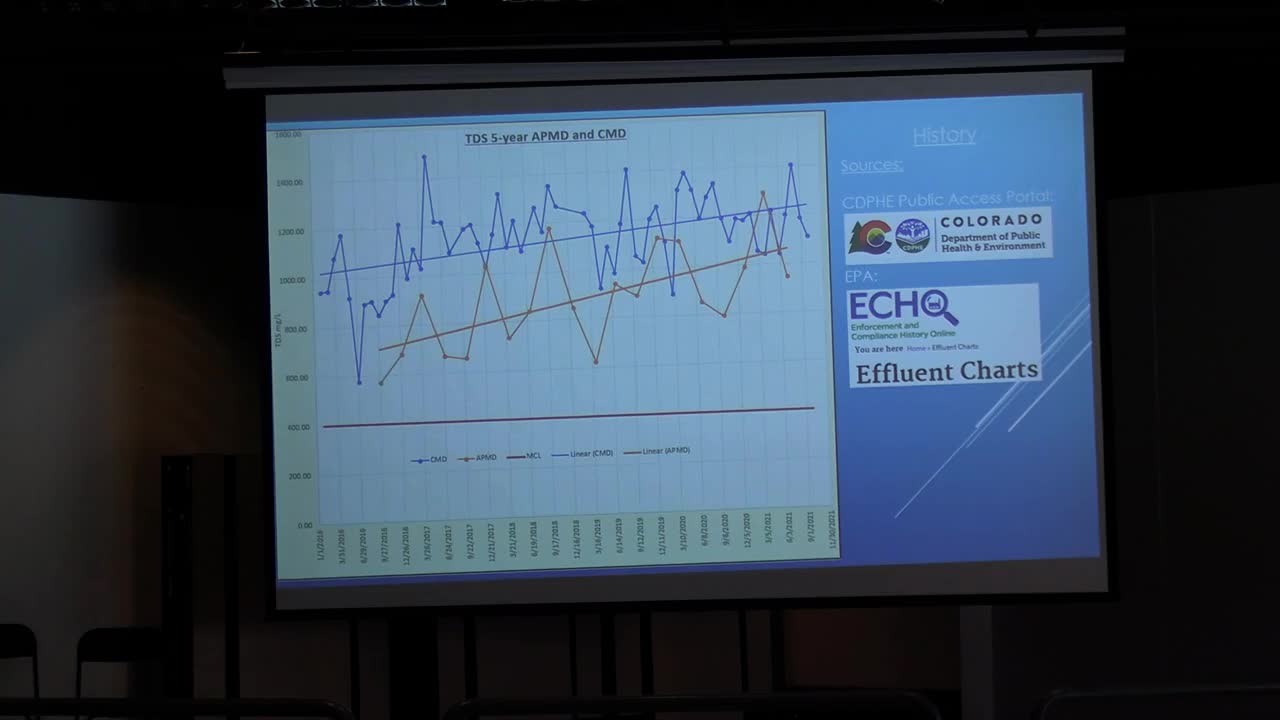
Jefferson County officials are taking significant steps to address water quality concerns in the region, particularly regarding the presence of contaminants such as PFAS (per- and polyfluoroalkyl substances) and elevated total dissolved solids (TDS). During a recent Water Symposium held on May 31, 2024, experts discussed the challenges posed by these pollutants and outlined strategies for improving water safety for local residents.
One of the key issues highlighted was the rising levels of TDS in the water supply, attributed to various sources, including de-icing agents and other contaminants. John, a water quality specialist, noted that historical data shows a concerning trend of increasing TDS levels since the early 2000s. He emphasized the need for ongoing monitoring and potential remediation efforts to stabilize these levels and ensure sustainable water quality.
The symposium also addressed the urgent issue of PFAS, often referred to as "forever chemicals" due to their persistence in the environment. These substances have been linked to serious health risks, including an estimated 9,600 deaths annually in the U.S. The Environmental Protection Agency (EPA) has recently set stringent limits for PFAS levels in drinking water, prompting local water systems, including those serving Conifer High School and South Evergreen, to implement additional treatment measures to comply with these regulations.
Roy Laws from the Jefferson County Health Department provided insights into the importance of regular water testing for private wells, as many residents are unaware of potential contaminants in their water supply. He urged homeowners to conduct tests for bacteria, nitrates, and fluoride, particularly in areas with known contamination risks. Laws highlighted that while water quality is generally good, localized issues can arise, making proactive testing essential for public health.
The discussions at the symposium underscored the collaborative efforts between local health departments and water management authorities to enhance water quality monitoring and treatment. With funding from the infrastructure bill, significant resources are being allocated to improve water systems and address contamination challenges.
As Jefferson County moves forward, the focus remains on ensuring safe drinking water for all residents, with ongoing assessments and community engagement to tackle these pressing environmental health issues. The next steps will involve implementing new treatment technologies and continuing to educate the public about the importance of water quality testing.
One of the key issues highlighted was the rising levels of TDS in the water supply, attributed to various sources, including de-icing agents and other contaminants. John, a water quality specialist, noted that historical data shows a concerning trend of increasing TDS levels since the early 2000s. He emphasized the need for ongoing monitoring and potential remediation efforts to stabilize these levels and ensure sustainable water quality.
The symposium also addressed the urgent issue of PFAS, often referred to as "forever chemicals" due to their persistence in the environment. These substances have been linked to serious health risks, including an estimated 9,600 deaths annually in the U.S. The Environmental Protection Agency (EPA) has recently set stringent limits for PFAS levels in drinking water, prompting local water systems, including those serving Conifer High School and South Evergreen, to implement additional treatment measures to comply with these regulations.
Roy Laws from the Jefferson County Health Department provided insights into the importance of regular water testing for private wells, as many residents are unaware of potential contaminants in their water supply. He urged homeowners to conduct tests for bacteria, nitrates, and fluoride, particularly in areas with known contamination risks. Laws highlighted that while water quality is generally good, localized issues can arise, making proactive testing essential for public health.
The discussions at the symposium underscored the collaborative efforts between local health departments and water management authorities to enhance water quality monitoring and treatment. With funding from the infrastructure bill, significant resources are being allocated to improve water systems and address contamination challenges.
As Jefferson County moves forward, the focus remains on ensuring safe drinking water for all residents, with ongoing assessments and community engagement to tackle these pressing environmental health issues. The next steps will involve implementing new treatment technologies and continuing to educate the public about the importance of water quality testing.
View the Full Meeting & All Its Details
This article offers just a summary. Unlock complete video, transcripts, and insights as a Founder Member.
✓
Watch full, unedited meeting videos
✓
Search every word spoken in unlimited transcripts
✓
AI summaries & real-time alerts (all government levels)
✓
Permanent access to expanding government content
30-day money-back guarantee
