Commissioners adjust zoning regulations for solar facilities in agricultural areas
November 06, 2024 | Chino Valley, Yavapai County, Arizona
This article was created by AI summarizing key points discussed. AI makes mistakes, so for full details and context, please refer to the video of the full meeting. Please report any errors so we can fix them. Report an error »
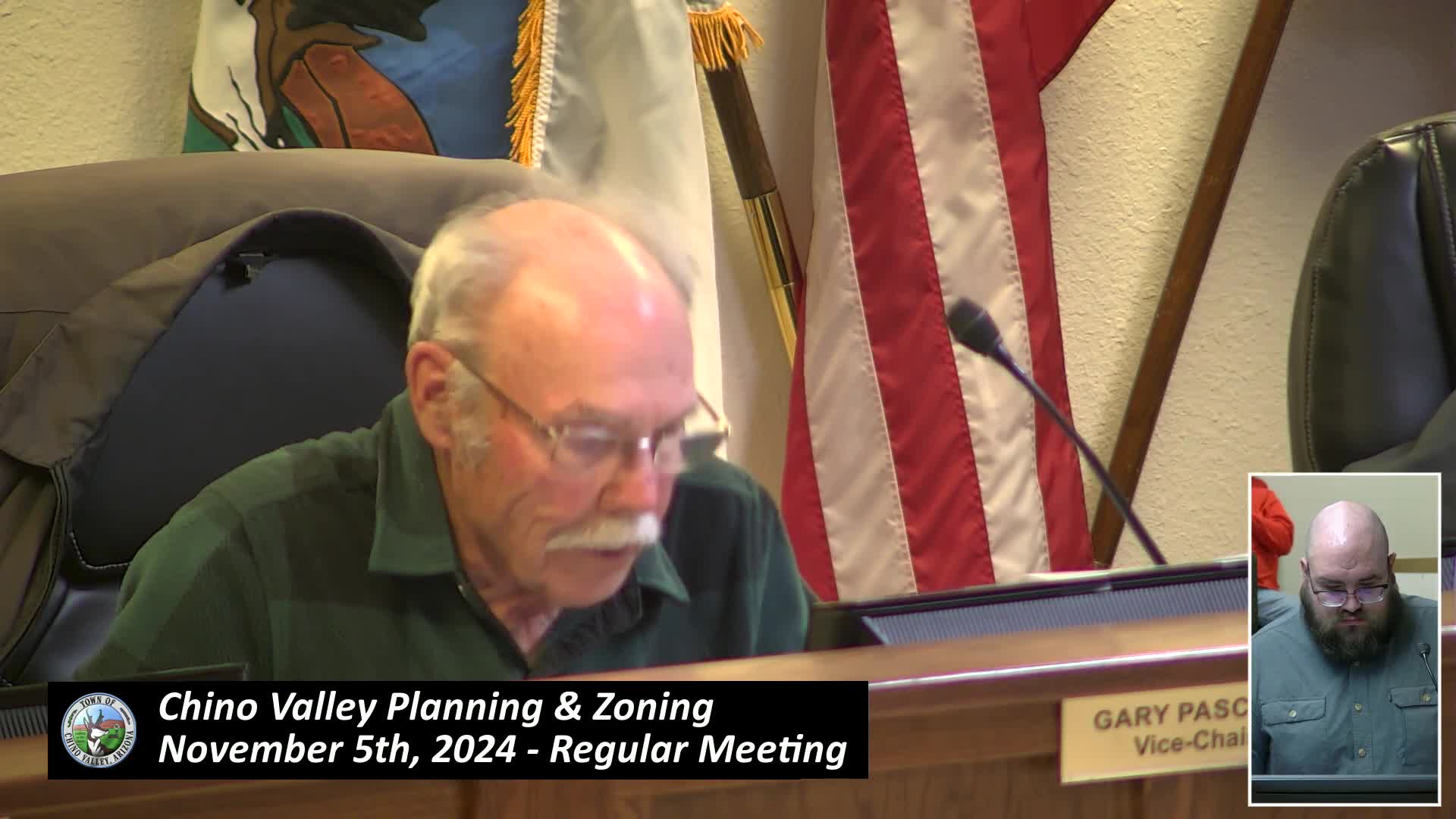
In the heart of Chino Valley, Arizona, the Planning and Zoning Commission convened on November 5, 2024, to address critical updates to the town's zoning regulations. As the meeting unfolded, the atmosphere buzzed with a sense of purpose, as commissioners and staff worked diligently to refine the town's land use policies.
A significant focus of the meeting was the discussion surrounding the Agricultural Residential (AR) zoning classifications. The commission reviewed the need to amend the Unified Development Ordinance (UDO) to include provisions for utility-scale solar photovoltaic facilities in both AR 4 and AR 5 zones. This adjustment aims to facilitate the integration of renewable energy sources into the community while ensuring that development aligns with existing land use standards. The dialogue highlighted the importance of clarity in the ordinance, with commissioners emphasizing the necessity of including specific sections to avoid confusion in future applications.
The conversation also touched on the potential for higher zoning classifications, such as AR 36, which had been previously reserved but never utilized. The commissioners noted that the largest current zoning district is AR 5, reflecting the community's cautious approach to development density. This restraint is further underscored by discussions about open space zoning, which, due to state legislation, mandates a minimum home requirement of one per acre. This stipulation has led to a reevaluation of how open space can be effectively utilized without compromising the community's character.
In addition to zoning classifications, the commission addressed concerns regarding fire mitigation plans. One commissioner expressed dissatisfaction with the current fire protection measures, labeling them as inadequate. This prompted a call for a thorough review of the existing plan, emphasizing the need for robust safety protocols to protect residents and properties in the event of wildfires.
As the meeting concluded, the commissioners left with a renewed commitment to refining Chino Valley's zoning regulations. The discussions not only highlighted the complexities of land use planning but also underscored the community's dedication to balancing development with safety and sustainability. The outcomes of this meeting will likely shape the future landscape of Chino Valley, ensuring that growth aligns with the values and needs of its residents.
A significant focus of the meeting was the discussion surrounding the Agricultural Residential (AR) zoning classifications. The commission reviewed the need to amend the Unified Development Ordinance (UDO) to include provisions for utility-scale solar photovoltaic facilities in both AR 4 and AR 5 zones. This adjustment aims to facilitate the integration of renewable energy sources into the community while ensuring that development aligns with existing land use standards. The dialogue highlighted the importance of clarity in the ordinance, with commissioners emphasizing the necessity of including specific sections to avoid confusion in future applications.
The conversation also touched on the potential for higher zoning classifications, such as AR 36, which had been previously reserved but never utilized. The commissioners noted that the largest current zoning district is AR 5, reflecting the community's cautious approach to development density. This restraint is further underscored by discussions about open space zoning, which, due to state legislation, mandates a minimum home requirement of one per acre. This stipulation has led to a reevaluation of how open space can be effectively utilized without compromising the community's character.
In addition to zoning classifications, the commission addressed concerns regarding fire mitigation plans. One commissioner expressed dissatisfaction with the current fire protection measures, labeling them as inadequate. This prompted a call for a thorough review of the existing plan, emphasizing the need for robust safety protocols to protect residents and properties in the event of wildfires.
As the meeting concluded, the commissioners left with a renewed commitment to refining Chino Valley's zoning regulations. The discussions not only highlighted the complexities of land use planning but also underscored the community's dedication to balancing development with safety and sustainability. The outcomes of this meeting will likely shape the future landscape of Chino Valley, ensuring that growth aligns with the values and needs of its residents.
Don't Miss a Word: See the Full Meeting!
Go beyond summaries. Unlock every video, transcript, and key insight with a Founder Membership.
✓
Get instant access to full meeting videos
✓
Search and clip any phrase from complete transcripts
✓
Receive AI-powered summaries & custom alerts
✓
Enjoy lifetime, unrestricted access to government data
30-day money-back guarantee
