Arkansas court officials report 91% clearance rate amid COVID-19 adjustments
January 10, 2022 | JUDICIARY COMMITTEE - SENATE, Senate, Committees, Legislative, Arkansas
This article was created by AI summarizing key points discussed. AI makes mistakes, so for full details and context, please refer to the video of the full meeting. Please report any errors so we can fix them. Report an error »
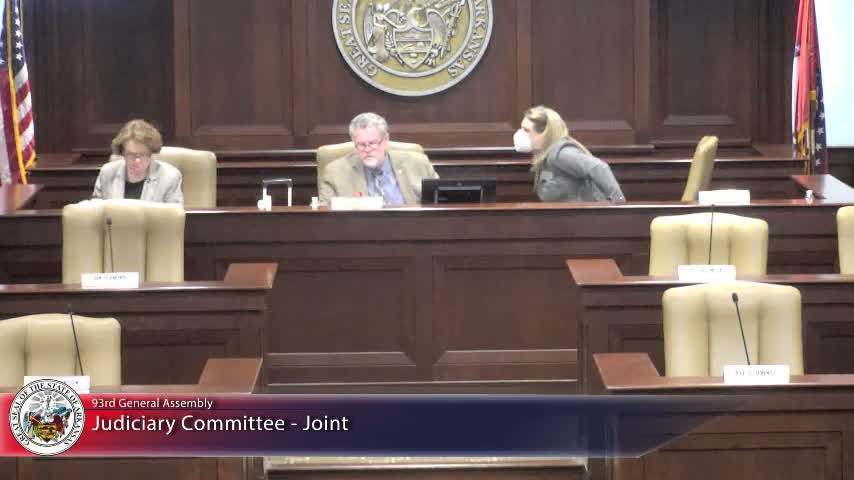
The Judiciary Committee of the Arkansas Senate convened on January 10, 2022, to discuss updates on court operations in response to the COVID-19 pandemic. The meeting began with introductions from key officials, including Scott Graves, Director of the Office of Research Justice Statistics, and Kristen Clark, Director of the Legal Services Division at the Administrative Office of the Courts (AOC).
Kristen Clark provided an overview of the impact of COVID-19 on the court system, noting that despite challenges, the courts have remained operational. She highlighted that the Arkansas Supreme Court mandated that courts continue to perform their constitutional functions, allowing litigants to seek redress. Clark reported a 91% clearance rate for cases over the past year, indicating that judges have been effectively managing case loads despite the pandemic's disruptions.
The discussion also addressed the flexibility granted to circuit and district judges regarding jury trials and virtual hearings. Judges have the discretion to suspend jury trials and conduct hearings virtually, balancing public health concerns with individuals' rights to access the court system. Clark emphasized the importance of improving technology in courts, which has facilitated e-filing and increased accessibility for the public.
Jennifer Kron, Director of the Juvenile Division, noted that juvenile courts had previously piloted virtual technology, allowing for a smoother transition to remote hearings during the pandemic. She confirmed that many courts are now conducting hearings both in-person and virtually, depending on the circumstances.
Senator Garner raised concerns about the use of remote technology in sensitive cases, particularly involving child witnesses. He noted discrepancies in how judges are applying the law regarding virtual testimony, suggesting that some judges may not be honoring motions for remote participation. The committee discussed the need for consistent application of remote technology across the judicial system.
Scott Graves provided statistical insights, comparing case filings and dispositions from 2019 to 2020. He reported a significant decline in incoming cases during the pandemic, while dispositions were less affected. This resulted in a backlog of pending cases, although the overall impact was mitigated by the courts' efforts to maintain operations.
The committee members expressed a desire for more detailed data on case backlogs and the effectiveness of measures taken to address delays. They requested a comprehensive snapshot of case filings and dispositions over the past five years to better understand trends and the current state of the court system.
In conclusion, the meeting underscored the judiciary's adaptability in the face of the pandemic, with ongoing efforts to balance public health and access to justice. The committee plans to continue monitoring court operations and addressing any challenges that arise as the situation evolves.
Kristen Clark provided an overview of the impact of COVID-19 on the court system, noting that despite challenges, the courts have remained operational. She highlighted that the Arkansas Supreme Court mandated that courts continue to perform their constitutional functions, allowing litigants to seek redress. Clark reported a 91% clearance rate for cases over the past year, indicating that judges have been effectively managing case loads despite the pandemic's disruptions.
The discussion also addressed the flexibility granted to circuit and district judges regarding jury trials and virtual hearings. Judges have the discretion to suspend jury trials and conduct hearings virtually, balancing public health concerns with individuals' rights to access the court system. Clark emphasized the importance of improving technology in courts, which has facilitated e-filing and increased accessibility for the public.
Jennifer Kron, Director of the Juvenile Division, noted that juvenile courts had previously piloted virtual technology, allowing for a smoother transition to remote hearings during the pandemic. She confirmed that many courts are now conducting hearings both in-person and virtually, depending on the circumstances.
Senator Garner raised concerns about the use of remote technology in sensitive cases, particularly involving child witnesses. He noted discrepancies in how judges are applying the law regarding virtual testimony, suggesting that some judges may not be honoring motions for remote participation. The committee discussed the need for consistent application of remote technology across the judicial system.
Scott Graves provided statistical insights, comparing case filings and dispositions from 2019 to 2020. He reported a significant decline in incoming cases during the pandemic, while dispositions were less affected. This resulted in a backlog of pending cases, although the overall impact was mitigated by the courts' efforts to maintain operations.
The committee members expressed a desire for more detailed data on case backlogs and the effectiveness of measures taken to address delays. They requested a comprehensive snapshot of case filings and dispositions over the past five years to better understand trends and the current state of the court system.
In conclusion, the meeting underscored the judiciary's adaptability in the face of the pandemic, with ongoing efforts to balance public health and access to justice. The committee plans to continue monitoring court operations and addressing any challenges that arise as the situation evolves.
View the Full Meeting & All Its Details
This article offers just a summary. Unlock complete video, transcripts, and insights as a Founder Member.
✓
Watch full, unedited meeting videos
✓
Search every word spoken in unlimited transcripts
✓
AI summaries & real-time alerts (all government levels)
✓
Permanent access to expanding government content
30-day money-back guarantee
