Arkansas General Assembly funds alternative learning environments to support at-risk students
May 03, 2022 | EDUCATION COMMITTEE - SENATE, Senate, Committees, Legislative, Arkansas
This article was created by AI summarizing key points discussed. AI makes mistakes, so for full details and context, please refer to the video of the full meeting. Please report any errors so we can fix them. Report an error »
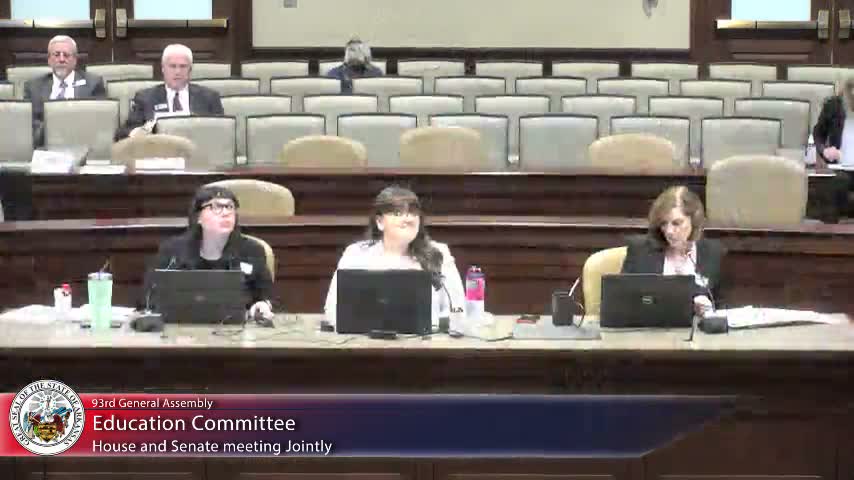
The Education Committee of the Arkansas Senate convened on May 3, 2022, to discuss critical updates regarding Alternative Learning Environments (ALE) as part of ongoing education reforms stemming from the Lakeview case. Jasmine Ray from the Bureau of Legislative Research introduced the session, emphasizing the importance of ALE in providing supportive educational settings for students facing various challenges.
The committee reviewed the definition and purpose of ALE, which is designed to eliminate barriers to learning for students whose academic and social progress is hindered by personal circumstances. The statute mandates that ALE programs must be non-punitive and focus on fostering a conducive learning environment. School districts have the flexibility to create their own ALE programs, collaborate with other districts, or partner with higher education institutions to deliver these services.
Key responsibilities of the Arkansas Department of Education (DESE) were outlined, including the development of rules to define eligibility criteria for ALE placement, funding distribution, and teacher training. DESE is also tasked with evaluating the effectiveness of ALE programs, which includes assessing student performance, attendance, and dropout rates. An annual report is required to provide insights into the demographics and effectiveness of ALE across the state.
Funding for ALE was a significant topic, with the committee noting that Arkansas provides categorical funding to support students who struggle in traditional classrooms. For the 2020 funding year, the amount was set at $4,700 per identified ALE student. The funding is based on full-time equivalent (FTE) calculations, which account for varying attendance patterns among students.
The committee discussed the structure of ALE programs, emphasizing the need for intervention services tailored to individual student needs. These services include access to counselors and academic support, ensuring that ALE students receive a curriculum comparable to that of traditional classrooms. The discussion highlighted the importance of maintaining appropriate teacher-to-student ratios, particularly in middle and high school settings, where current ratios do not meet national recommendations.
Additionally, the committee reviewed the criteria for student placement in ALE, which must involve a recommendation from a placement team that includes various educational professionals. The most common reasons for placement were identified as disruptive behavior and persistent academic challenges in literacy and math.
In conclusion, the meeting underscored the ongoing commitment of the Arkansas Senate Education Committee to enhance ALE programs, ensuring they effectively support students in overcoming barriers to learning. The committee plans to continue monitoring the implementation and effectiveness of these programs, with a focus on improving educational outcomes for all students.
The committee reviewed the definition and purpose of ALE, which is designed to eliminate barriers to learning for students whose academic and social progress is hindered by personal circumstances. The statute mandates that ALE programs must be non-punitive and focus on fostering a conducive learning environment. School districts have the flexibility to create their own ALE programs, collaborate with other districts, or partner with higher education institutions to deliver these services.
Key responsibilities of the Arkansas Department of Education (DESE) were outlined, including the development of rules to define eligibility criteria for ALE placement, funding distribution, and teacher training. DESE is also tasked with evaluating the effectiveness of ALE programs, which includes assessing student performance, attendance, and dropout rates. An annual report is required to provide insights into the demographics and effectiveness of ALE across the state.
Funding for ALE was a significant topic, with the committee noting that Arkansas provides categorical funding to support students who struggle in traditional classrooms. For the 2020 funding year, the amount was set at $4,700 per identified ALE student. The funding is based on full-time equivalent (FTE) calculations, which account for varying attendance patterns among students.
The committee discussed the structure of ALE programs, emphasizing the need for intervention services tailored to individual student needs. These services include access to counselors and academic support, ensuring that ALE students receive a curriculum comparable to that of traditional classrooms. The discussion highlighted the importance of maintaining appropriate teacher-to-student ratios, particularly in middle and high school settings, where current ratios do not meet national recommendations.
Additionally, the committee reviewed the criteria for student placement in ALE, which must involve a recommendation from a placement team that includes various educational professionals. The most common reasons for placement were identified as disruptive behavior and persistent academic challenges in literacy and math.
In conclusion, the meeting underscored the ongoing commitment of the Arkansas Senate Education Committee to enhance ALE programs, ensuring they effectively support students in overcoming barriers to learning. The committee plans to continue monitoring the implementation and effectiveness of these programs, with a focus on improving educational outcomes for all students.
Don't Miss a Word: See the Full Meeting!
Go beyond summaries. Unlock every video, transcript, and key insight with a Founder Membership.
✓
Get instant access to full meeting videos
✓
Search and clip any phrase from complete transcripts
✓
Receive AI-powered summaries & custom alerts
✓
Enjoy lifetime, unrestricted access to government data
30-day money-back guarantee
