Phil Conte presents geothermal feasibility study for South Kingstown High School project
December 18, 2024 | South Kingstown, Washington County, Rhode Island
This article was created by AI summarizing key points discussed. AI makes mistakes, so for full details and context, please refer to the video of the full meeting. Please report any errors so we can fix them. Report an error »
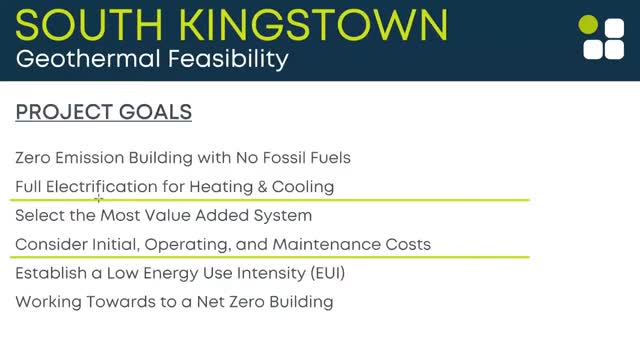
In the heart of South Kingstown, Rhode Island, a pivotal discussion unfolded during the December 18, 2024, Initial Budget Hearing, focusing on the feasibility of geothermal energy for the new high school project. As community members gathered, Phil Conte from Studio Jade presented a comprehensive update, shedding light on the ambitious goals of creating a zero-emission building powered entirely by electricity.
Conte began by outlining the project's commitment to sustainability, emphasizing the importance of selecting energy-efficient systems. The team had recently completed a geothermal test well, which provided crucial data for their analysis. The goal is to achieve a net-zero building, meaning the energy consumed would be balanced by the energy produced on-site.
However, the feasibility of implementing a geothermal system faced significant challenges. Initial estimates suggested that around 40 geothermal wells would be necessary, but further analysis indicated that approximately 100 wells would be required to meet the heating and cooling demands of the 155,000-square-foot facility. Unfortunately, the available land does not support this number of wells, leading to the conclusion that a full geothermal system is not viable at this time.
Instead, two alternative approaches were proposed. The first involves using a geothermal heat pump system for classrooms and smaller spaces, paired with rooftop air-source heat pumps for larger areas like the cafeteria and gymnasium. The second approach suggests a heat pump chiller central plant for the educational core, again utilizing air-source heat pumps for the larger spaces. Both options aim to optimize energy efficiency while accommodating the varied usage patterns of the school facilities.
Conte highlighted the importance of conducting a life cycle cost analysis to evaluate the total expenses associated with each system over 20 years. While the geothermal option may have higher initial costs, it could lead to lower utility expenses in the long run. Conversely, the heat pump chiller system presents a lower installation cost but higher utility expenses, making the decision complex.
As the meeting progressed, it became clear that the choice of heating and cooling systems would significantly impact the project's budget and sustainability goals. The discussions underscored the community's commitment to environmentally friendly solutions, even as they navigate the practical limitations of their chosen site. With the future of South Kingstown High School hanging in the balance, the decision-makers are tasked with balancing cost, efficiency, and environmental responsibility in their final choice.
Conte began by outlining the project's commitment to sustainability, emphasizing the importance of selecting energy-efficient systems. The team had recently completed a geothermal test well, which provided crucial data for their analysis. The goal is to achieve a net-zero building, meaning the energy consumed would be balanced by the energy produced on-site.
However, the feasibility of implementing a geothermal system faced significant challenges. Initial estimates suggested that around 40 geothermal wells would be necessary, but further analysis indicated that approximately 100 wells would be required to meet the heating and cooling demands of the 155,000-square-foot facility. Unfortunately, the available land does not support this number of wells, leading to the conclusion that a full geothermal system is not viable at this time.
Instead, two alternative approaches were proposed. The first involves using a geothermal heat pump system for classrooms and smaller spaces, paired with rooftop air-source heat pumps for larger areas like the cafeteria and gymnasium. The second approach suggests a heat pump chiller central plant for the educational core, again utilizing air-source heat pumps for the larger spaces. Both options aim to optimize energy efficiency while accommodating the varied usage patterns of the school facilities.
Conte highlighted the importance of conducting a life cycle cost analysis to evaluate the total expenses associated with each system over 20 years. While the geothermal option may have higher initial costs, it could lead to lower utility expenses in the long run. Conversely, the heat pump chiller system presents a lower installation cost but higher utility expenses, making the decision complex.
As the meeting progressed, it became clear that the choice of heating and cooling systems would significantly impact the project's budget and sustainability goals. The discussions underscored the community's commitment to environmentally friendly solutions, even as they navigate the practical limitations of their chosen site. With the future of South Kingstown High School hanging in the balance, the decision-makers are tasked with balancing cost, efficiency, and environmental responsibility in their final choice.
View the Full Meeting & All Its Details
This article offers just a summary. Unlock complete video, transcripts, and insights as a Founder Member.
✓
Watch full, unedited meeting videos
✓
Search every word spoken in unlimited transcripts
✓
AI summaries & real-time alerts (all government levels)
✓
Permanent access to expanding government content
30-day money-back guarantee
