East Tennessee State outlines FAFSA challenges and college enrollment projections
May 24, 2024 | East Tennessee State University, Public Universities, School Districts, Tennessee
This article was created by AI summarizing key points discussed. AI makes mistakes, so for full details and context, please refer to the video of the full meeting. Please report any errors so we can fix them. Report an error »
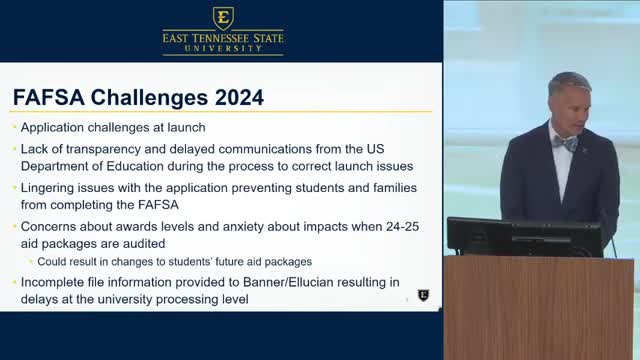
In a pivotal meeting held on May 24, 2024, the East Tennessee State University (ETSU) Board of Trustees addressed pressing challenges and strategic initiatives that could shape the future of the institution. The atmosphere was charged with urgency as Heather Levesque highlighted the significant impact of FAFSA (Free Application for Federal Student Aid) challenges on student enrollment and financial aid processes. Traditionally, students receive their financial aid packages in January, but this year, many did not receive their award letters until May, creating a ripple effect on college-going rates, particularly among low-income students.
Levesque shared concerning statistics: less than 50% of this year's high school seniors completed the FAFSA, with a staggering 23% among low-income students. This delay and the ongoing repercussions of the COVID-19 pandemic have left many students uncertain about their educational paths. In response, ETSU has ramped up outreach efforts, employing phone calls, text messages, and handwritten notes to connect with prospective students.
As the meeting progressed, the board reviewed enrollment projections, anticipating an incoming freshman class of approximately 2,100 students. This marks a hopeful recovery, as the university aims to surpass the 14,000-student threshold for the first time since the pandemic. The discussions also touched on the university's financial health, with a budget of $470 million and a notable increase in the composite financial index, indicating a solid financial footing.
Strategic initiatives were a focal point, particularly the restructuring of academic programs to better align with workforce needs in Tennessee. The board approved a significant overhaul of the academic structure, the first of its kind since the late 1970s, aimed at strengthening health sciences and addressing the state's labor shortages, particularly in STEM fields.
The meeting also addressed the implications of federal mandates, such as the Fair Labor Standards Act, which will require adjustments in employee classifications and salaries. The board emphasized the importance of investing in faculty and staff compensation to remain competitive.
In a forward-looking discussion, the board acknowledged the evolving landscape of intercollegiate athletics, particularly in light of potential changes to NCAA regulations regarding student-athlete compensation. These changes could significantly impact ETSU's athletic budget and the operational costs of sports programs.
As the meeting concluded, the board expressed optimism about the university's direction, underscoring the importance of strategic planning and community engagement in navigating the challenges ahead. The decisions made during this meeting are poised to influence not only the immediate future of ETSU but also its long-term role in the educational landscape of Tennessee.
Levesque shared concerning statistics: less than 50% of this year's high school seniors completed the FAFSA, with a staggering 23% among low-income students. This delay and the ongoing repercussions of the COVID-19 pandemic have left many students uncertain about their educational paths. In response, ETSU has ramped up outreach efforts, employing phone calls, text messages, and handwritten notes to connect with prospective students.
As the meeting progressed, the board reviewed enrollment projections, anticipating an incoming freshman class of approximately 2,100 students. This marks a hopeful recovery, as the university aims to surpass the 14,000-student threshold for the first time since the pandemic. The discussions also touched on the university's financial health, with a budget of $470 million and a notable increase in the composite financial index, indicating a solid financial footing.
Strategic initiatives were a focal point, particularly the restructuring of academic programs to better align with workforce needs in Tennessee. The board approved a significant overhaul of the academic structure, the first of its kind since the late 1970s, aimed at strengthening health sciences and addressing the state's labor shortages, particularly in STEM fields.
The meeting also addressed the implications of federal mandates, such as the Fair Labor Standards Act, which will require adjustments in employee classifications and salaries. The board emphasized the importance of investing in faculty and staff compensation to remain competitive.
In a forward-looking discussion, the board acknowledged the evolving landscape of intercollegiate athletics, particularly in light of potential changes to NCAA regulations regarding student-athlete compensation. These changes could significantly impact ETSU's athletic budget and the operational costs of sports programs.
As the meeting concluded, the board expressed optimism about the university's direction, underscoring the importance of strategic planning and community engagement in navigating the challenges ahead. The decisions made during this meeting are poised to influence not only the immediate future of ETSU but also its long-term role in the educational landscape of Tennessee.
View the Full Meeting & All Its Details
This article offers just a summary. Unlock complete video, transcripts, and insights as a Founder Member.
✓
Watch full, unedited meeting videos
✓
Search every word spoken in unlimited transcripts
✓
AI summaries & real-time alerts (all government levels)
✓
Permanent access to expanding government content
30-day money-back guarantee
