City explores financing options for $11M energy-efficient equipment project
May 29, 2024 | Lincoln, Placer County, California
This article was created by AI summarizing key points discussed. AI makes mistakes, so for full details and context, please refer to the video of the full meeting. Please report any errors so we can fix them. Report an error »
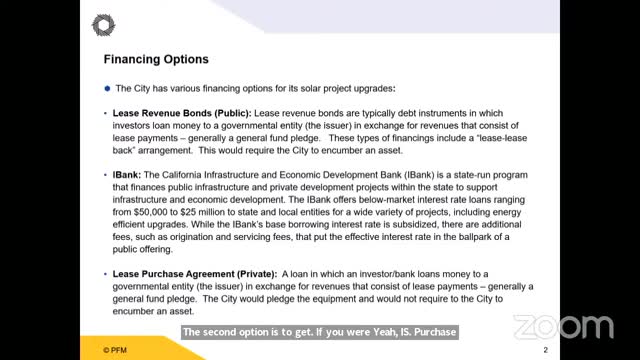
During the recent Regular City Council Meeting in Lincoln, California, city officials discussed financing options for purchasing energy-efficient equipment, a move aimed at enhancing sustainability and reducing operational costs for the city. The meeting highlighted three primary financing strategies: lease revenue bonds, loans from the California Infrastructure and Economic Development Bank (I Bank), and lease purchase agreements through private banks.
The first option, lease revenue bonds, is a common method for financing public projects, although it is less typical for equipment purchases. This approach requires the city to collateralize assets valued at approximately $11 million, which could include public buildings and parks. The process for securing these bonds is expected to take about three months.
The second option involves obtaining a loan from the I Bank, which offers below-market interest rates. However, this method is anticipated to take longer—up to six months—and also requires collateralization of assets. Notably, loans from the I Bank do not allow for prepayment, which could limit the city’s financial flexibility in the future.
The third option, a lease purchase agreement with a private bank, is characterized by a quicker turnaround of around two months. While this option carries the highest interest rate, it allows the city to use the purchased equipment as collateral, freeing up other city assets for potential future needs. This flexibility is seen as a significant advantage, especially in light of community concerns about using public spaces as collateral.
City officials emphasized the importance of these financing options in relation to the anticipated benefits from energy savings and potential federal reimbursements from the Inflation Reduction Act, estimated at $2.5 million. This funding could help reduce the overall debt service burden on the city.
As the council weighs these options, the discussions reflect a broader commitment to sustainability and fiscal responsibility, aiming to balance immediate financial needs with long-term community benefits. The council is expected to make a decision on the financing strategy in the coming months, with the goal of advancing Lincoln’s energy efficiency initiatives.
The first option, lease revenue bonds, is a common method for financing public projects, although it is less typical for equipment purchases. This approach requires the city to collateralize assets valued at approximately $11 million, which could include public buildings and parks. The process for securing these bonds is expected to take about three months.
The second option involves obtaining a loan from the I Bank, which offers below-market interest rates. However, this method is anticipated to take longer—up to six months—and also requires collateralization of assets. Notably, loans from the I Bank do not allow for prepayment, which could limit the city’s financial flexibility in the future.
The third option, a lease purchase agreement with a private bank, is characterized by a quicker turnaround of around two months. While this option carries the highest interest rate, it allows the city to use the purchased equipment as collateral, freeing up other city assets for potential future needs. This flexibility is seen as a significant advantage, especially in light of community concerns about using public spaces as collateral.
City officials emphasized the importance of these financing options in relation to the anticipated benefits from energy savings and potential federal reimbursements from the Inflation Reduction Act, estimated at $2.5 million. This funding could help reduce the overall debt service burden on the city.
As the council weighs these options, the discussions reflect a broader commitment to sustainability and fiscal responsibility, aiming to balance immediate financial needs with long-term community benefits. The council is expected to make a decision on the financing strategy in the coming months, with the goal of advancing Lincoln’s energy efficiency initiatives.
View the Full Meeting & All Its Details
This article offers just a summary. Unlock complete video, transcripts, and insights as a Founder Member.
✓
Watch full, unedited meeting videos
✓
Search every word spoken in unlimited transcripts
✓
AI summaries & real-time alerts (all government levels)
✓
Permanent access to expanding government content
30-day money-back guarantee
