Early Learning Standards integrate play and arts to support child development
February 07, 2024 | Maryland Department of Education, School Boards, Maryland
This article was created by AI summarizing key points discussed. AI makes mistakes, so for full details and context, please refer to the video of the full meeting. Please report any errors so we can fix them. Report an error »
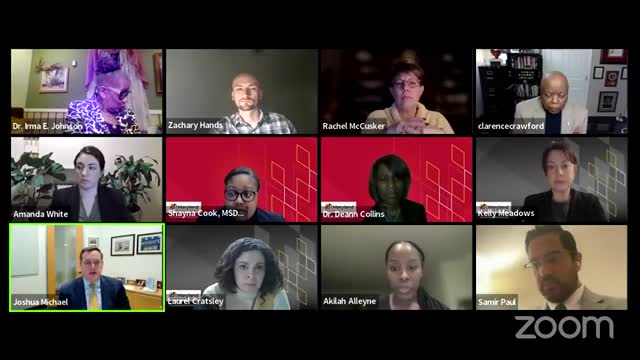
Quality early learning took center stage at the Maryland Department of Education's Virtual Education Policy Committee meeting on February 7, 2024, as officials discussed new standards aimed at enhancing early childhood education across the state. The committee emphasized that ensuring high-quality learning experiences is crucial for maximizing the return on investment in education.
A significant focus of the meeting was the integration of play into early learning standards. Committee members expressed enthusiasm about embedding play throughout the curriculum, highlighting its importance in fostering academic learning and development. One member noted, “We don’t want this dichotomy between play and learning; we wanted it integrated because play is learning.” This approach aims to help educators understand the different levels of play and how to scaffold children’s learning experiences effectively.
The committee also discussed the creation of a video library showcasing high-quality instructional practices, which will serve as a resource for both educators and families. These videos will illustrate how to implement play in real-time, providing a visual guide for best practices in early childhood education.
In addition to play, the meeting addressed the connection between early cognition and STEAM (Science, Technology, Engineering, Arts, and Mathematics) education. The decision to link these areas was based on the need for coherent learning trajectories that support developmental milestones from infancy through age three.
Family engagement emerged as another critical theme, with plans to leverage existing stakeholder groups to help families understand the new standards. The committee is committed to ensuring that families are actively involved in the educational process, recognizing their vital role in early learning.
Overall, the meeting underscored a commitment to advancing early childhood education in Maryland, with a focus on quality, integration of play, and family involvement. As the state moves forward with these initiatives, the anticipated outcomes include improved educational experiences for young learners and a stronger foundation for their future academic success.
A significant focus of the meeting was the integration of play into early learning standards. Committee members expressed enthusiasm about embedding play throughout the curriculum, highlighting its importance in fostering academic learning and development. One member noted, “We don’t want this dichotomy between play and learning; we wanted it integrated because play is learning.” This approach aims to help educators understand the different levels of play and how to scaffold children’s learning experiences effectively.
The committee also discussed the creation of a video library showcasing high-quality instructional practices, which will serve as a resource for both educators and families. These videos will illustrate how to implement play in real-time, providing a visual guide for best practices in early childhood education.
In addition to play, the meeting addressed the connection between early cognition and STEAM (Science, Technology, Engineering, Arts, and Mathematics) education. The decision to link these areas was based on the need for coherent learning trajectories that support developmental milestones from infancy through age three.
Family engagement emerged as another critical theme, with plans to leverage existing stakeholder groups to help families understand the new standards. The committee is committed to ensuring that families are actively involved in the educational process, recognizing their vital role in early learning.
Overall, the meeting underscored a commitment to advancing early childhood education in Maryland, with a focus on quality, integration of play, and family involvement. As the state moves forward with these initiatives, the anticipated outcomes include improved educational experiences for young learners and a stronger foundation for their future academic success.
View the Full Meeting & All Its Details
This article offers just a summary. Unlock complete video, transcripts, and insights as a Founder Member.
✓
Watch full, unedited meeting videos
✓
Search every word spoken in unlimited transcripts
✓
AI summaries & real-time alerts (all government levels)
✓
Permanent access to expanding government content
30-day money-back guarantee
