Victim's Family Demands Justice as Killer Accepts 40-Year Sentence in Chantal Case
November 20, 2024 | Committee on Parole, Boards & Commissions, Organizations, Executive, Louisiana
This article was created by AI summarizing key points discussed. AI makes mistakes, so for full details and context, please refer to the video of the full meeting. Please report any errors so we can fix them. Report an error »
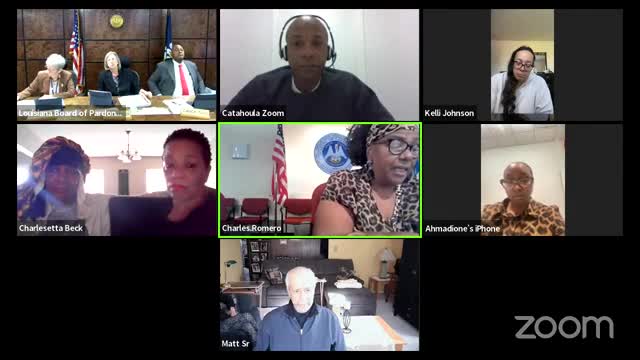
The Louisiana Board of Pardons and Parole convened on November 20, 2024, to address matters concerning revocation and parole hearings. The meeting featured poignant testimonies from victims' families, particularly focusing on the case of a man convicted of murdering a woman named Chantel.
During the session, a family member of Chantel expressed deep anguish over the loss of their loved one, emphasizing the lasting impact of the crime on their family. The speaker recounted the horrific circumstances surrounding Chantel's death, detailing how the perpetrator had stalked her and ultimately took her life in a brutal manner. The family member highlighted that the perpetrator had accepted a plea deal for 40 years in prison, which they felt was insufficient given the severity of the crime. They articulated the emotional void left in their lives, stating that Chantel was a "light" that had been extinguished, leaving behind children and a grieving family.
The testimony underscored the family's ongoing pain, as they lamented the loss of holidays and milestones that would never be shared with Chantel. The speaker urged the board to uphold the 40-year sentence, asserting that the perpetrator must face the consequences of his actions. The emotional weight of the testimony resonated throughout the meeting, illustrating the profound effects of violent crime on victims' families.
Following the emotional testimony, the board engaged with the perpetrator, Mr. Beck, who was questioned about his participation in rehabilitation programs during his incarceration. He acknowledged having taken some classes but faced scrutiny for not having engaged in significant rehabilitative programming or victim awareness courses since becoming parole eligible in 2021. The board expressed concern over the lack of substantial progress in his rehabilitation efforts.
The meeting concluded with a focus on the importance of accountability and the need for thorough consideration of both the victims' experiences and the rehabilitation of offenders. The board's deliberations will play a crucial role in determining the future of those seeking parole, balancing the need for justice with the potential for rehabilitation.
During the session, a family member of Chantel expressed deep anguish over the loss of their loved one, emphasizing the lasting impact of the crime on their family. The speaker recounted the horrific circumstances surrounding Chantel's death, detailing how the perpetrator had stalked her and ultimately took her life in a brutal manner. The family member highlighted that the perpetrator had accepted a plea deal for 40 years in prison, which they felt was insufficient given the severity of the crime. They articulated the emotional void left in their lives, stating that Chantel was a "light" that had been extinguished, leaving behind children and a grieving family.
The testimony underscored the family's ongoing pain, as they lamented the loss of holidays and milestones that would never be shared with Chantel. The speaker urged the board to uphold the 40-year sentence, asserting that the perpetrator must face the consequences of his actions. The emotional weight of the testimony resonated throughout the meeting, illustrating the profound effects of violent crime on victims' families.
Following the emotional testimony, the board engaged with the perpetrator, Mr. Beck, who was questioned about his participation in rehabilitation programs during his incarceration. He acknowledged having taken some classes but faced scrutiny for not having engaged in significant rehabilitative programming or victim awareness courses since becoming parole eligible in 2021. The board expressed concern over the lack of substantial progress in his rehabilitation efforts.
The meeting concluded with a focus on the importance of accountability and the need for thorough consideration of both the victims' experiences and the rehabilitation of offenders. The board's deliberations will play a crucial role in determining the future of those seeking parole, balancing the need for justice with the potential for rehabilitation.
View the Full Meeting & All Its Details
This article offers just a summary. Unlock complete video, transcripts, and insights as a Founder Member.
✓
Watch full, unedited meeting videos
✓
Search every word spoken in unlimited transcripts
✓
AI summaries & real-time alerts (all government levels)
✓
Permanent access to expanding government content
30-day money-back guarantee
