Wisconsin lawmakers push for data sharing to enhance election integrity before November vote
This article was created by AI summarizing key points discussed. AI makes mistakes, so for full details and context, please refer to the video of the full meeting. Please report any errors so we can fix them. Report an error »
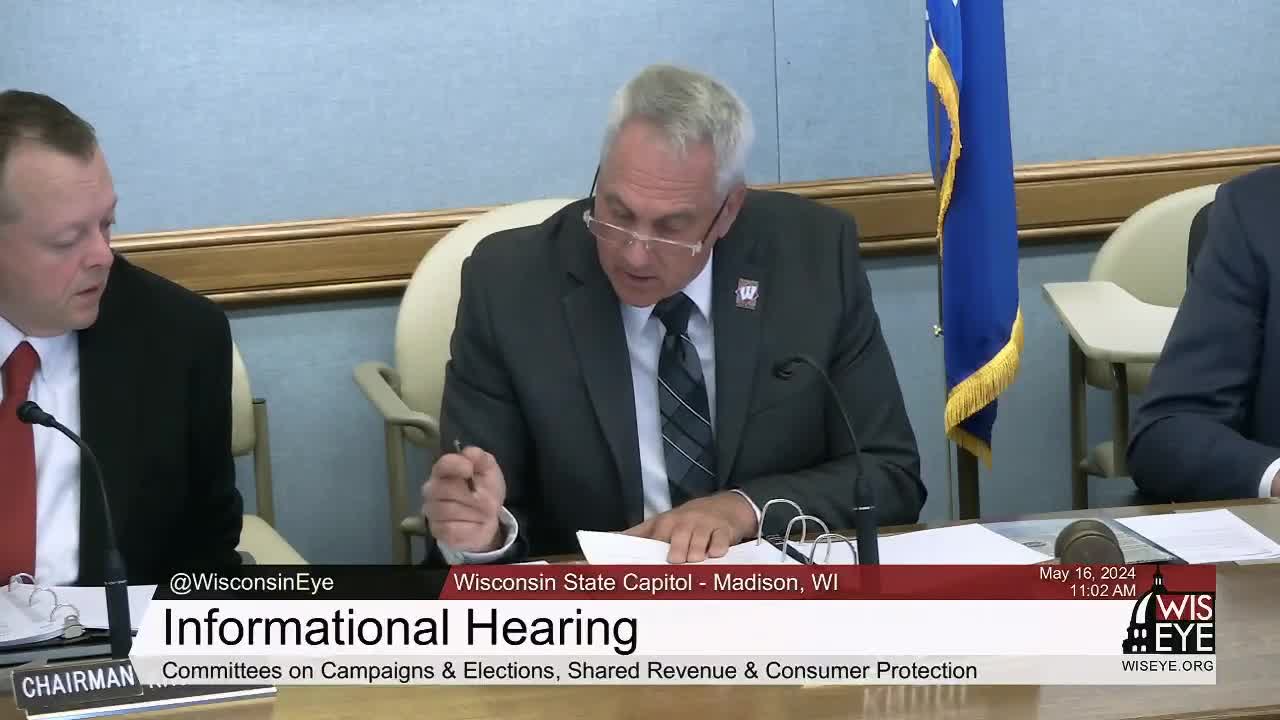
On May 16, 2024, the Joint Assembly and Senate Committees on Campaigns, Elections, Shared Revenue, and Consumer Protection convened to discuss critical issues surrounding voter identification and election integrity in Wisconsin. The meeting highlighted significant concerns regarding the implications of voter ID laws, particularly for non-citizens and permanent residents.
Senator Spreicher raised important questions about the potential for permanent residents to inadvertently commit felonies by registering to vote, as they are required to affirm their citizenship during the registration process. This discussion underscored the risks faced by these individuals, who could face severe consequences, including deportation, if found voting illegally. The senator emphasized the need for clear communication and understanding of the laws governing voter registration to prevent such situations.
The committee also addressed the recent veto by the governor concerning data sharing between the Department of Transportation (DOT) and the Wisconsin Elections Commission (WEC). Despite the veto, there was a call for collaboration among state agencies to enhance the sharing of citizenship information without the need for new legislation. This initiative aims to bolster public confidence in the electoral process, especially as concerns about election integrity remain prevalent among Wisconsin residents.
The discussions revealed a commitment from lawmakers to work proactively over the summer to establish a framework for data sharing that aligns with federal regulations. This effort is seen as crucial in addressing public apprehensions about the fairness and security of elections, particularly as the state approaches the November elections.
In conclusion, the meeting highlighted the ongoing challenges and complexities surrounding voter ID laws and election integrity in Wisconsin. As the state prepares for upcoming elections, the focus on improving communication and data sharing among agencies is expected to play a vital role in fostering trust in the electoral process. Lawmakers are determined to tackle these issues head-on, aiming to mitigate misinformation and ensure a transparent voting environment.
Senator Spreicher raised important questions about the potential for permanent residents to inadvertently commit felonies by registering to vote, as they are required to affirm their citizenship during the registration process. This discussion underscored the risks faced by these individuals, who could face severe consequences, including deportation, if found voting illegally. The senator emphasized the need for clear communication and understanding of the laws governing voter registration to prevent such situations.
The committee also addressed the recent veto by the governor concerning data sharing between the Department of Transportation (DOT) and the Wisconsin Elections Commission (WEC). Despite the veto, there was a call for collaboration among state agencies to enhance the sharing of citizenship information without the need for new legislation. This initiative aims to bolster public confidence in the electoral process, especially as concerns about election integrity remain prevalent among Wisconsin residents.
The discussions revealed a commitment from lawmakers to work proactively over the summer to establish a framework for data sharing that aligns with federal regulations. This effort is seen as crucial in addressing public apprehensions about the fairness and security of elections, particularly as the state approaches the November elections.
In conclusion, the meeting highlighted the ongoing challenges and complexities surrounding voter ID laws and election integrity in Wisconsin. As the state prepares for upcoming elections, the focus on improving communication and data sharing among agencies is expected to play a vital role in fostering trust in the electoral process. Lawmakers are determined to tackle these issues head-on, aiming to mitigate misinformation and ensure a transparent voting environment.
Don't Miss a Word: See the Full Meeting!
Go beyond summaries. Unlock every video, transcript, and key insight with a Founder Membership.
✓
Get instant access to full meeting videos
✓
Search and clip any phrase from complete transcripts
✓
Receive AI-powered summaries & custom alerts
✓
Enjoy lifetime, unrestricted access to government data
30-day money-back guarantee
