School district faces funding challenges despite projected $265M surplus for 2024
This article was created by AI summarizing key points discussed. AI makes mistakes, so for full details and context, please refer to the video of the full meeting. Please report any errors so we can fix them. Report an error »
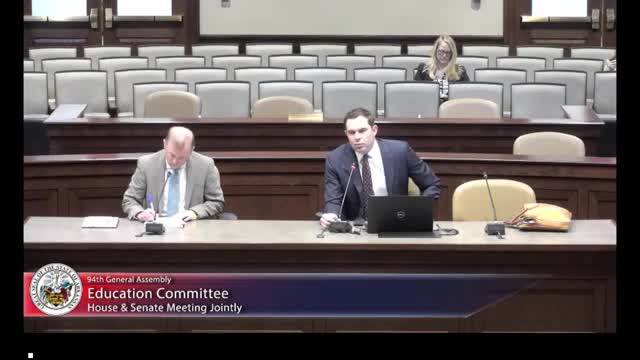
The Joint House and Senate Education Committee convened on February 8, 2024, to discuss the financial status and future funding strategies of the Arkansas education plan. The meeting focused on the current revenue sources, projected expenses, and potential adjustments needed to maintain financial stability.
The committee began by reviewing the three primary sources of revenue that support the education plan: employee contributions, district contributions, and a subsidy from the Department of Education. Notably, the minimum district contribution has recently decreased from $300 to $234.50 per month. The committee highlighted a five-year plan aimed at making employee contributions more competitive with benchmark states, which may result in either a decrease or stabilization of these contributions.
Financial projections indicate that the fund is expected to close 2024 with approximately $265.7 million in assets, significantly above the target reserve of $64 million. This surplus has been attributed to various factors, including reduced medical spending during the COVID-19 pandemic and one-time funding from the American Rescue Plan Act (ARPA). However, the committee cautioned that without strategic adjustments, expenses are projected to surpass revenue starting in 2025, leading to potential deficits in subsequent years.
The discussion included a detailed analysis of funding scenarios, emphasizing the need for a proactive approach to align revenue with rising expenses. The committee examined the implications of maintaining current funding levels versus increasing contributions in line with medical cost inflation. While some scenarios showed improved financial positions, they still indicated a growing disconnect between revenue and expenses, necessitating further action.
Two potential solutions were proposed to address the funding gap. The first involved a gradual increase in district and Department of Education contributions over ten years, which would initially bolster assets but still forecast a loss in later years. The second option suggested a more aggressive funding increase, which could stabilize the fund but would require careful management of expenses to avoid future deficits.
The meeting concluded with a consensus on the importance of strategic planning to ensure the long-term sustainability of the education fund. The committee plans to continue exploring funding adjustments and cost management strategies in future sessions to mitigate the projected financial challenges.
The committee began by reviewing the three primary sources of revenue that support the education plan: employee contributions, district contributions, and a subsidy from the Department of Education. Notably, the minimum district contribution has recently decreased from $300 to $234.50 per month. The committee highlighted a five-year plan aimed at making employee contributions more competitive with benchmark states, which may result in either a decrease or stabilization of these contributions.
Financial projections indicate that the fund is expected to close 2024 with approximately $265.7 million in assets, significantly above the target reserve of $64 million. This surplus has been attributed to various factors, including reduced medical spending during the COVID-19 pandemic and one-time funding from the American Rescue Plan Act (ARPA). However, the committee cautioned that without strategic adjustments, expenses are projected to surpass revenue starting in 2025, leading to potential deficits in subsequent years.
The discussion included a detailed analysis of funding scenarios, emphasizing the need for a proactive approach to align revenue with rising expenses. The committee examined the implications of maintaining current funding levels versus increasing contributions in line with medical cost inflation. While some scenarios showed improved financial positions, they still indicated a growing disconnect between revenue and expenses, necessitating further action.
Two potential solutions were proposed to address the funding gap. The first involved a gradual increase in district and Department of Education contributions over ten years, which would initially bolster assets but still forecast a loss in later years. The second option suggested a more aggressive funding increase, which could stabilize the fund but would require careful management of expenses to avoid future deficits.
The meeting concluded with a consensus on the importance of strategic planning to ensure the long-term sustainability of the education fund. The committee plans to continue exploring funding adjustments and cost management strategies in future sessions to mitigate the projected financial challenges.
View the Full Meeting & All Its Details
This article offers just a summary. Unlock complete video, transcripts, and insights as a Founder Member.
✓
Watch full, unedited meeting videos
✓
Search every word spoken in unlimited transcripts
✓
AI summaries & real-time alerts (all government levels)
✓
Permanent access to expanding government content
30-day money-back guarantee
