California State University commits to repatriating ancestral remains after audit reveals compliance failures
August 29, 2023 | California State Assembly, House, Legislative, California
This article was created by AI summarizing key points discussed. AI makes mistakes, so for full details and context, please refer to the video of the full meeting. Please report any errors so we can fix them. Report an error »
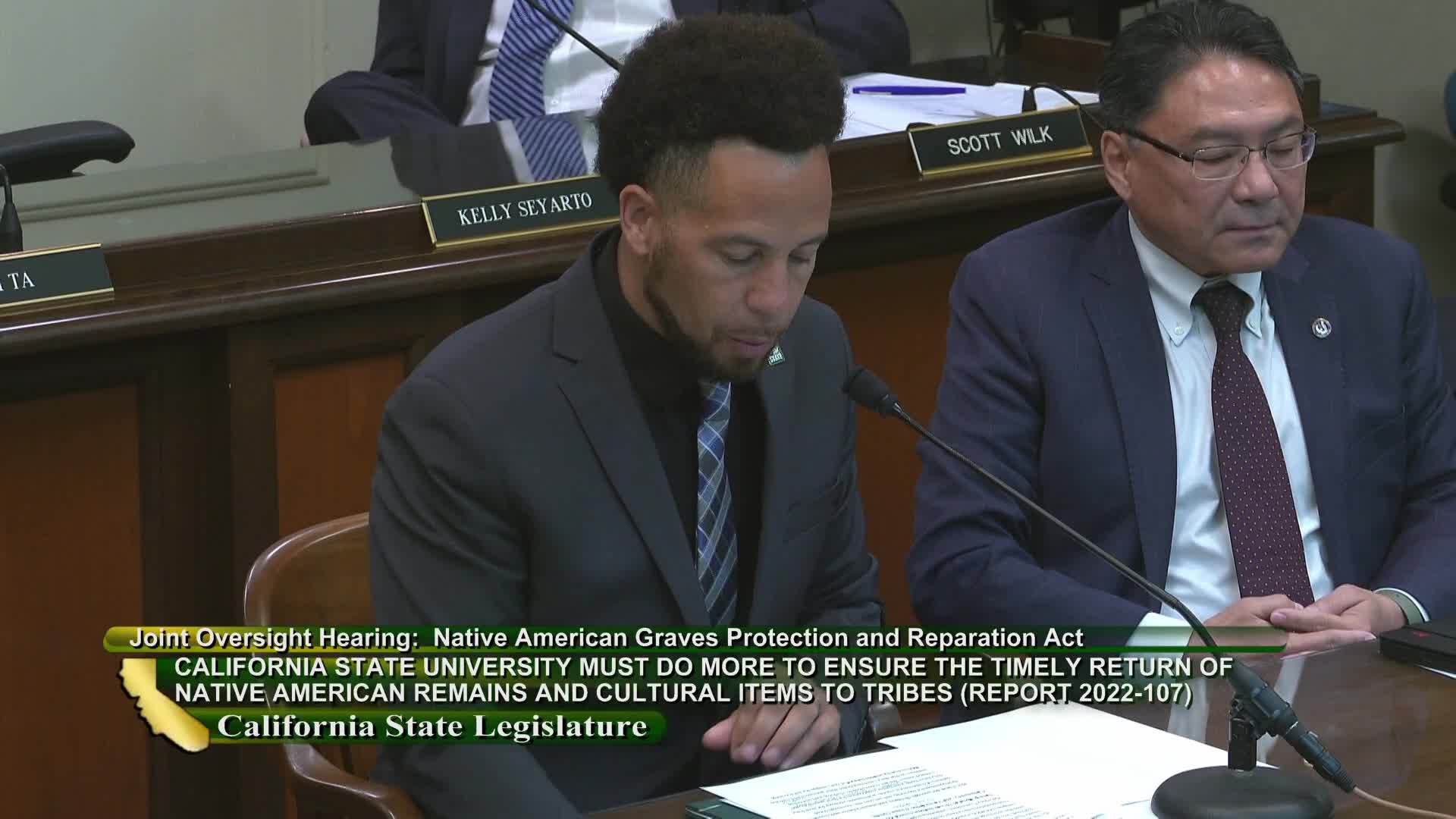
In a pivotal meeting held on August 29, 2023, the California State Assembly's Joint Legislative Audit Committee and the Assembly Select Committee on Native American Affairs addressed the pressing issue of repatriation of ancestral remains and cultural items to California's tribal nations. The atmosphere was charged with a sense of urgency and accountability as officials acknowledged the long-standing administrative failures that have hindered the repatriation process.
Dr. Wood, representing a California university, opened the discussion with a heartfelt apology to the tribal nations for the delays in returning their ancestors and cultural artifacts. He emphasized the university's commitment to rectify these shortcomings, noting that approximately 73% of ancestral remains and 49% of cataloged items under their control have been claimed by tribal nations and are expected to be repatriated soon. This progress, he stated, is largely attributed to the enactment of Assembly Bill 275, which has significantly increased the university's compliance efforts.
Raymond Hitchcock, Executive Secretary of the Native American Heritage Commission, followed with a stark reminder of the historical injustices faced by tribal communities. He highlighted the ongoing noncompliance issues within the California State University (CSU) system, citing a troubling statistic that only 6% of CSU collections have been repatriated. Hitchcock pointed to a specific incident involving San Jose University that underscored the need for immediate reform and better tribal consultation practices.
The meeting also revealed the commission's proactive steps to enhance compliance, including the development of a digital tracking system for repatriation processes and a new mediation training program aimed at resolving disputes. Hitchcock stressed the moral obligation of institutions to return ancestral remains and cultural items, urging them to prioritize these efforts and engage meaningfully with tribal leaders.
As the session progressed, committee members posed questions, seeking clarity on the steps being taken to ensure accountability and compliance with repatriation laws. The discussions underscored a collective commitment to healing and restoring dignity to California's tribal nations, marking a significant moment in the ongoing journey toward justice and reconciliation.
The meeting concluded with a renewed sense of purpose among the participants, as they recognized the importance of collaboration and transparency in addressing the historical grievances of Native American communities. The path forward remains challenging, but the commitment to change is palpable, signaling a hopeful future for the repatriation of ancestral heritage.
Dr. Wood, representing a California university, opened the discussion with a heartfelt apology to the tribal nations for the delays in returning their ancestors and cultural artifacts. He emphasized the university's commitment to rectify these shortcomings, noting that approximately 73% of ancestral remains and 49% of cataloged items under their control have been claimed by tribal nations and are expected to be repatriated soon. This progress, he stated, is largely attributed to the enactment of Assembly Bill 275, which has significantly increased the university's compliance efforts.
Raymond Hitchcock, Executive Secretary of the Native American Heritage Commission, followed with a stark reminder of the historical injustices faced by tribal communities. He highlighted the ongoing noncompliance issues within the California State University (CSU) system, citing a troubling statistic that only 6% of CSU collections have been repatriated. Hitchcock pointed to a specific incident involving San Jose University that underscored the need for immediate reform and better tribal consultation practices.
The meeting also revealed the commission's proactive steps to enhance compliance, including the development of a digital tracking system for repatriation processes and a new mediation training program aimed at resolving disputes. Hitchcock stressed the moral obligation of institutions to return ancestral remains and cultural items, urging them to prioritize these efforts and engage meaningfully with tribal leaders.
As the session progressed, committee members posed questions, seeking clarity on the steps being taken to ensure accountability and compliance with repatriation laws. The discussions underscored a collective commitment to healing and restoring dignity to California's tribal nations, marking a significant moment in the ongoing journey toward justice and reconciliation.
The meeting concluded with a renewed sense of purpose among the participants, as they recognized the importance of collaboration and transparency in addressing the historical grievances of Native American communities. The path forward remains challenging, but the commitment to change is palpable, signaling a hopeful future for the repatriation of ancestral heritage.
View the Full Meeting & All Its Details
This article offers just a summary. Unlock complete video, transcripts, and insights as a Founder Member.
✓
Watch full, unedited meeting videos
✓
Search every word spoken in unlimited transcripts
✓
AI summaries & real-time alerts (all government levels)
✓
Permanent access to expanding government content
30-day money-back guarantee
