Restorative justice transforms lives and rebuilds trust
June 22, 2024 | Department of Juvenile Justice, Justice, Governor's Secretary of the Cabinet, Organizations , Executive, Kentucky
This article was created by AI summarizing key points discussed. AI makes mistakes, so for full details and context, please refer to the video of the full meeting. Please report any errors so we can fix them. Report an error »
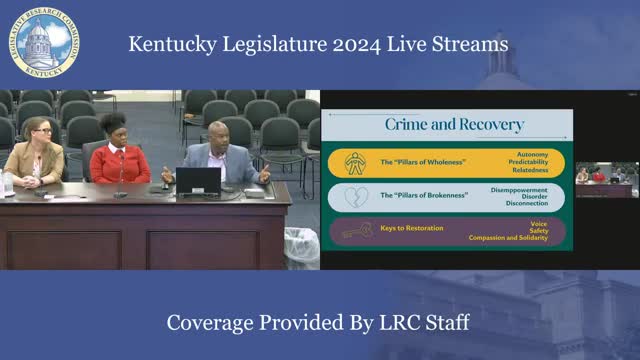
In a recent government meeting focused on restorative justice, participants shared powerful testimonies highlighting the profound psychological impact of crime on victims and offenders alike. One speaker emphasized the chaos and disempowerment that ensues when personal property is stolen, illustrating how such incidents disrupt not only daily life but also one's sense of safety and community.
The discussion revealed that victims often grapple with feelings of anxiety and mistrust, particularly towards familiar environments and individuals. A poignant example was shared by a long-time resident who expressed his newfound fear of local children after experiencing theft, stating, “I can’t relate to them the same way anymore.” This shift in perception underscores the broader societal implications of crime, where community bonds are strained and trust eroded.
The meeting also highlighted the role of restorative justice in addressing these emotional wounds. Facilitators and trauma coaches provide victims with a platform to articulate their experiences, allowing them to reclaim their narratives beyond the immediate loss. Participants noted that restorative justice practices are adaptable, catering to the unique needs of each individual, which is crucial for healing.
A compelling video featured Quinn Perkins, a young man who shared his journey through the juvenile justice system after committing a car theft. Perkins recounted his transformative experience of meeting his victim, who offered forgiveness and encouragement, ultimately inspiring him to pursue a better path for himself and his family. His story resonated with the meeting's theme of redemption and the importance of supportive relationships in overcoming past mistakes.
Overall, the meeting underscored the necessity of restorative justice as a means to restore not just property, but also the sense of safety and community that crime disrupts. By fostering dialogue and understanding, these practices aim to heal the psychological scars left by crime, promoting a more compassionate and connected society.
The discussion revealed that victims often grapple with feelings of anxiety and mistrust, particularly towards familiar environments and individuals. A poignant example was shared by a long-time resident who expressed his newfound fear of local children after experiencing theft, stating, “I can’t relate to them the same way anymore.” This shift in perception underscores the broader societal implications of crime, where community bonds are strained and trust eroded.
The meeting also highlighted the role of restorative justice in addressing these emotional wounds. Facilitators and trauma coaches provide victims with a platform to articulate their experiences, allowing them to reclaim their narratives beyond the immediate loss. Participants noted that restorative justice practices are adaptable, catering to the unique needs of each individual, which is crucial for healing.
A compelling video featured Quinn Perkins, a young man who shared his journey through the juvenile justice system after committing a car theft. Perkins recounted his transformative experience of meeting his victim, who offered forgiveness and encouragement, ultimately inspiring him to pursue a better path for himself and his family. His story resonated with the meeting's theme of redemption and the importance of supportive relationships in overcoming past mistakes.
Overall, the meeting underscored the necessity of restorative justice as a means to restore not just property, but also the sense of safety and community that crime disrupts. By fostering dialogue and understanding, these practices aim to heal the psychological scars left by crime, promoting a more compassionate and connected society.
Don't Miss a Word: See the Full Meeting!
Go beyond summaries. Unlock every video, transcript, and key insight with a Founder Membership.
✓
Get instant access to full meeting videos
✓
Search and clip any phrase from complete transcripts
✓
Receive AI-powered summaries & custom alerts
✓
Enjoy lifetime, unrestricted access to government data
30-day money-back guarantee
