Rafa Institute champions restorative justice to heal communities
June 22, 2024 | Department of Juvenile Justice, Justice, Governor's Secretary of the Cabinet, Organizations , Executive, Kentucky
This article was created by AI summarizing key points discussed. AI makes mistakes, so for full details and context, please refer to the video of the full meeting. Please report any errors so we can fix them. Report an error »
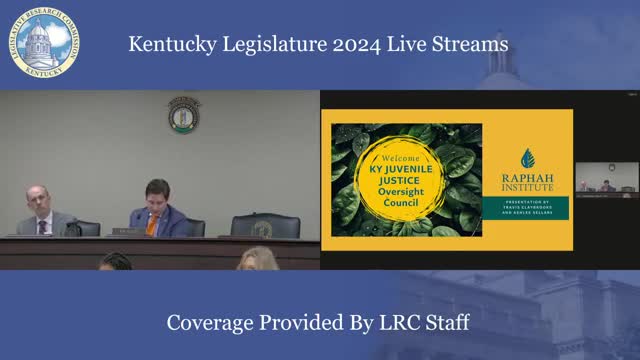
In a recent government meeting, Travis Claybrooks, CEO of the Rafa Institute, presented insights on restorative justice practices that have been implemented in Nashville, Tennessee. Joined by Ashley Sellers, the director of network and power building, and intern Sharon Ojibwe, Claybrooks emphasized the importance of addressing the inadequacies of the current legal system in responding to crime and its impact on communities.
Claybrooks, who has a background in law enforcement and victim advocacy, founded the Rafa Institute in 2017 with the goal of creating a restorative justice diversion program in collaboration with local juvenile courts and law enforcement. Over the past seven years, the institute has worked on over 200 cases, with more than 60 young individuals completing the restorative justice process. Notably, less than 5% of these participants have faced new charges, and over 90% of victims reported high satisfaction with the outcomes.
The presentation highlighted the fundamental principles of restorative justice, which focuses on accountability and healing rather than punishment. Claybrooks explained that traditional punitive measures often fail to address the needs of victims and do not promote genuine accountability among offenders. Instead, restorative justice encourages open dialogue between victims and offenders, allowing for a deeper understanding of the harm caused and the necessary steps for repair.
Claybrooks also pointed out that many victims of violent crime do not report incidents to the police, indicating a gap in the system's ability to provide adequate support. He argued that restorative justice offers a more effective approach by prioritizing the needs of those harmed and fostering a sense of community healing.
The Rafa Institute's work has been documented in a six-part series titled \"Justice USA,\" which explores the legal system in Nashville and features cases handled by the institute, including a poignant example involving a young offender and a homicide case.
As the meeting progressed, Claybrooks encouraged attendees to engage with the material, emphasizing that restorative justice is not merely about feeling remorse but involves tangible actions such as community service, restitution, and personal accountability. He concluded by asserting that addressing the root causes of crime and harm is essential for creating safer communities, a goal that restorative justice practices aim to achieve.
Claybrooks, who has a background in law enforcement and victim advocacy, founded the Rafa Institute in 2017 with the goal of creating a restorative justice diversion program in collaboration with local juvenile courts and law enforcement. Over the past seven years, the institute has worked on over 200 cases, with more than 60 young individuals completing the restorative justice process. Notably, less than 5% of these participants have faced new charges, and over 90% of victims reported high satisfaction with the outcomes.
The presentation highlighted the fundamental principles of restorative justice, which focuses on accountability and healing rather than punishment. Claybrooks explained that traditional punitive measures often fail to address the needs of victims and do not promote genuine accountability among offenders. Instead, restorative justice encourages open dialogue between victims and offenders, allowing for a deeper understanding of the harm caused and the necessary steps for repair.
Claybrooks also pointed out that many victims of violent crime do not report incidents to the police, indicating a gap in the system's ability to provide adequate support. He argued that restorative justice offers a more effective approach by prioritizing the needs of those harmed and fostering a sense of community healing.
The Rafa Institute's work has been documented in a six-part series titled \"Justice USA,\" which explores the legal system in Nashville and features cases handled by the institute, including a poignant example involving a young offender and a homicide case.
As the meeting progressed, Claybrooks encouraged attendees to engage with the material, emphasizing that restorative justice is not merely about feeling remorse but involves tangible actions such as community service, restitution, and personal accountability. He concluded by asserting that addressing the root causes of crime and harm is essential for creating safer communities, a goal that restorative justice practices aim to achieve.
View the Full Meeting & All Its Details
This article offers just a summary. Unlock complete video, transcripts, and insights as a Founder Member.
✓
Watch full, unedited meeting videos
✓
Search every word spoken in unlimited transcripts
✓
AI summaries & real-time alerts (all government levels)
✓
Permanent access to expanding government content
30-day money-back guarantee
