Unraveling the dark legacy of lynching narratives
June 22, 2024 | Greensboro City, Guilford County, North Carolina
This article was created by AI summarizing key points discussed. AI makes mistakes, so for full details and context, please refer to the video of the full meeting. Please report any errors so we can fix them. Report an error »
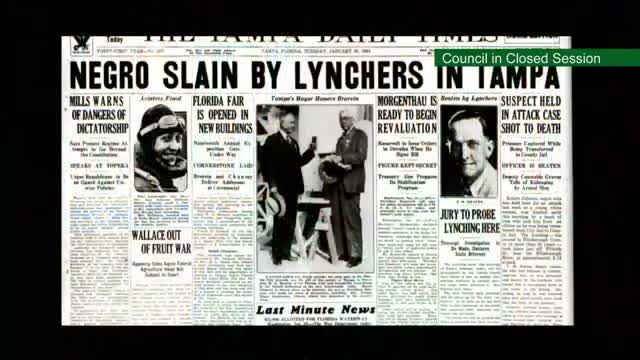
In a recent government meeting, discussions centered around the historical and cultural implications of lynching narratives in America, highlighting their role in shaping societal perceptions of race and power dynamics. The conversation revealed how newspapers capitalized on sensational stories of lynchings, producing multiple versions of events to maximize profit, particularly during times of racial violence.
Participants noted that lynching narratives serve as both a reflection and a reinforcement of racial hierarchies, often portraying whiteness as a cohesive and dominant identity. These narratives, described as voyeuristic and melodramatic, not only document the events but also legitimize mob violence and normalize social inequalities. The meeting emphasized that lynching was not merely an act of violence but a complex social phenomenon that defined and animated notions of race in America.
The discussion also touched on the challenges of accurately documenting historical events, particularly in the case of Eugene Harrison, a victim of lynching. Variations in newspaper accounts regarding his age and the circumstances of his death illustrate the difficulties historians face in reconstructing the truth. The meeting underscored the importance of understanding these narratives as products of their time, shaped by the prevailing social and racial tensions.
Furthermore, the role of figures like Ida B. Wells was highlighted, as she brought attention to the often consensual relationships between white women and Black men that led to lynching. This aspect of the narrative complicates the historical understanding of race relations and the societal pressures that dictated public perception and response.
Overall, the meeting served as a critical examination of how lynching narratives have influenced American history and continue to resonate in contemporary discussions about race, justice, and memory. The Guilford County Community Remembrance Project's efforts to memorialize victims like Eugene Harrison were presented as vital steps toward acknowledging and confronting this painful legacy.
Participants noted that lynching narratives serve as both a reflection and a reinforcement of racial hierarchies, often portraying whiteness as a cohesive and dominant identity. These narratives, described as voyeuristic and melodramatic, not only document the events but also legitimize mob violence and normalize social inequalities. The meeting emphasized that lynching was not merely an act of violence but a complex social phenomenon that defined and animated notions of race in America.
The discussion also touched on the challenges of accurately documenting historical events, particularly in the case of Eugene Harrison, a victim of lynching. Variations in newspaper accounts regarding his age and the circumstances of his death illustrate the difficulties historians face in reconstructing the truth. The meeting underscored the importance of understanding these narratives as products of their time, shaped by the prevailing social and racial tensions.
Furthermore, the role of figures like Ida B. Wells was highlighted, as she brought attention to the often consensual relationships between white women and Black men that led to lynching. This aspect of the narrative complicates the historical understanding of race relations and the societal pressures that dictated public perception and response.
Overall, the meeting served as a critical examination of how lynching narratives have influenced American history and continue to resonate in contemporary discussions about race, justice, and memory. The Guilford County Community Remembrance Project's efforts to memorialize victims like Eugene Harrison were presented as vital steps toward acknowledging and confronting this painful legacy.
View the Full Meeting & All Its Details
This article offers just a summary. Unlock complete video, transcripts, and insights as a Founder Member.
✓
Watch full, unedited meeting videos
✓
Search every word spoken in unlimited transcripts
✓
AI summaries & real-time alerts (all government levels)
✓
Permanent access to expanding government content
30-day money-back guarantee
