Advocates demand urgent action on disability support waitlists
August 28, 2024 | Department of Public Health, Departments and Agencies, Organizations, Executive, Connecticut
This article was created by AI summarizing key points discussed. AI makes mistakes, so for full details and context, please refer to the video of the full meeting. Please report any errors so we can fix them. Report an error »
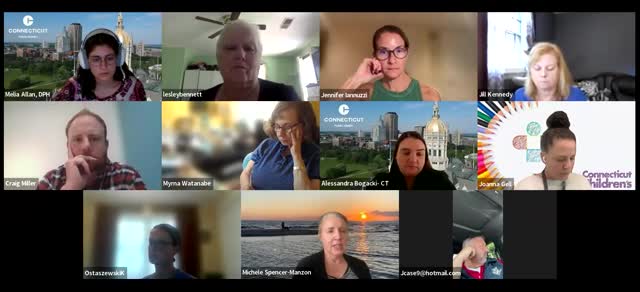
During a recent government meeting, significant concerns were raised regarding the overwhelming demand for services related to intellectual disabilities in Connecticut. A participant highlighted the alarming number of individuals on waitlists for assistance, with some reporting positions as low as 130. This stark reality underscores a critical gap between the needs of the community and the available resources.
The speaker, who identified as a healthcare provider, expressed frustration over the current system, noting that a substantial portion of their role has shifted towards social work rather than medical care. They emphasized the necessity for additional support to effectively assist patients, stating, \"I need help to help my patients.\" This sentiment reflects a broader issue within the healthcare system, where professionals are often required to juggle multiple roles due to insufficient resources.
In response, another meeting participant acknowledged the validity of these concerns and pointed out that recent legislative efforts have aimed to redefine how intellectual disabilities are classified and how eligibility for services is determined. However, they stressed that the next crucial step involves securing appropriations and funding to ensure these initiatives can be effectively implemented.
The discussions highlighted a pressing need for advocacy and collaboration among stakeholders to address the systemic challenges faced by individuals with intellectual disabilities in Connecticut. As the meeting concluded, the call for action was clear: without adequate funding and resources, many will continue to face significant barriers in accessing the support they require.
The speaker, who identified as a healthcare provider, expressed frustration over the current system, noting that a substantial portion of their role has shifted towards social work rather than medical care. They emphasized the necessity for additional support to effectively assist patients, stating, \"I need help to help my patients.\" This sentiment reflects a broader issue within the healthcare system, where professionals are often required to juggle multiple roles due to insufficient resources.
In response, another meeting participant acknowledged the validity of these concerns and pointed out that recent legislative efforts have aimed to redefine how intellectual disabilities are classified and how eligibility for services is determined. However, they stressed that the next crucial step involves securing appropriations and funding to ensure these initiatives can be effectively implemented.
The discussions highlighted a pressing need for advocacy and collaboration among stakeholders to address the systemic challenges faced by individuals with intellectual disabilities in Connecticut. As the meeting concluded, the call for action was clear: without adequate funding and resources, many will continue to face significant barriers in accessing the support they require.
Don't Miss a Word: See the Full Meeting!
Go beyond summaries. Unlock every video, transcript, and key insight with a Founder Membership.
✓
Get instant access to full meeting videos
✓
Search and clip any phrase from complete transcripts
✓
Receive AI-powered summaries & custom alerts
✓
Enjoy lifetime, unrestricted access to government data
30-day money-back guarantee
