Ohio lawmakers push for historic minimum wage increase
June 07, 2024 | Ways and Means, Senate, Committees, Legislative, Ohio
This article was created by AI summarizing key points discussed. AI makes mistakes, so for full details and context, please refer to the video of the full meeting. Please report any errors so we can fix them. Report an error »
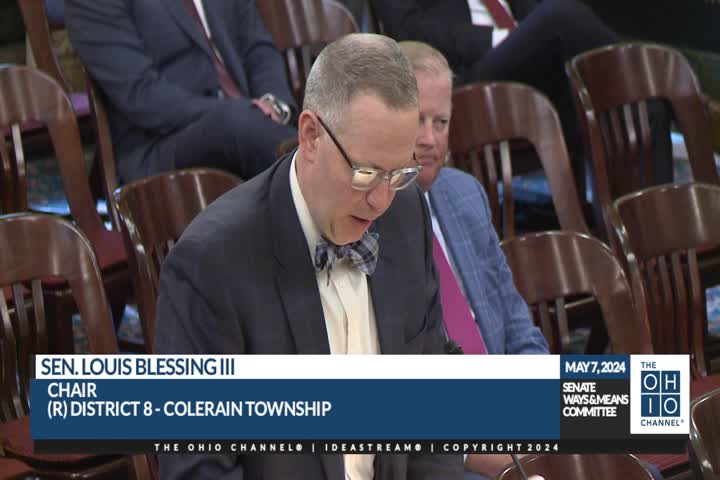
In a recent government meeting, Ohio lawmakers discussed significant changes to the state's minimum wage and earned income tax credit (EITC) policies. Currently, Ohio's minimum wage stands at $10.45 for non-tipped employees and $5.25 for tipped employees, with provisions for subminimum wages. The proposed legislation aims to raise the minimum wage to $15 for non-tipped employees by January 1, 2028, starting with an increase to $12 on January 1, 2025, followed by annual increments of $1. Tipped employees would see their minimum wage set at half of the non-tipped wage, reaching $7.50 by 2028.
The bill also introduces a refundable EITC option, allowing taxpayers to choose between a non-refundable credit currently set at 30% of the federal credit or a new refundable credit, which is 9% of the federal credit, increasing to 12% for families with dependents under three years old. This change is expected to provide targeted financial relief to low- and middle-income families, with estimated costs for the refundable EITC projected at around $250 million.
Additionally, a ballot initiative is underway to increase the minimum wage to $15 by January 1, 2026, with a gradual adjustment for tipped wages. This initiative, along with Senate Bill 146, which proposes a faster timeline for wage increases, reflects ongoing discussions about the economic pressures faced by low-income workers, particularly in light of rising living costs.
Lawmakers acknowledged the complexities surrounding minimum wage increases, including potential impacts on employment and business operations. Concerns were raised about the balance between providing adequate wages and the risk of job losses or increased prices for consumers. The discussion highlighted the importance of addressing wage disparities, particularly for tipped workers, who are often more vulnerable to economic fluctuations.
As Ohio navigates these legislative changes, the outcome may significantly affect the state's workforce and economic landscape, with many residents eager for reforms that address their financial challenges. The general sentiment among lawmakers is that while the path to reform may be contentious, the need for action is clear, and the legislative process may ultimately yield a solution that aligns with public interests.
The bill also introduces a refundable EITC option, allowing taxpayers to choose between a non-refundable credit currently set at 30% of the federal credit or a new refundable credit, which is 9% of the federal credit, increasing to 12% for families with dependents under three years old. This change is expected to provide targeted financial relief to low- and middle-income families, with estimated costs for the refundable EITC projected at around $250 million.
Additionally, a ballot initiative is underway to increase the minimum wage to $15 by January 1, 2026, with a gradual adjustment for tipped wages. This initiative, along with Senate Bill 146, which proposes a faster timeline for wage increases, reflects ongoing discussions about the economic pressures faced by low-income workers, particularly in light of rising living costs.
Lawmakers acknowledged the complexities surrounding minimum wage increases, including potential impacts on employment and business operations. Concerns were raised about the balance between providing adequate wages and the risk of job losses or increased prices for consumers. The discussion highlighted the importance of addressing wage disparities, particularly for tipped workers, who are often more vulnerable to economic fluctuations.
As Ohio navigates these legislative changes, the outcome may significantly affect the state's workforce and economic landscape, with many residents eager for reforms that address their financial challenges. The general sentiment among lawmakers is that while the path to reform may be contentious, the need for action is clear, and the legislative process may ultimately yield a solution that aligns with public interests.
Don't Miss a Word: See the Full Meeting!
Go beyond summaries. Unlock every video, transcript, and key insight with a Founder Membership.
✓
Get instant access to full meeting videos
✓
Search and clip any phrase from complete transcripts
✓
Receive AI-powered summaries & custom alerts
✓
Enjoy lifetime, unrestricted access to government data
30-day money-back guarantee
