Lawmakers push for data transparency in solitary confinement
June 04, 2024 | California State Assembly, House, Legislative, California
This article was created by AI summarizing key points discussed. AI makes mistakes, so for full details and context, please refer to the video of the full meeting. Please report any errors so we can fix them. Report an error »
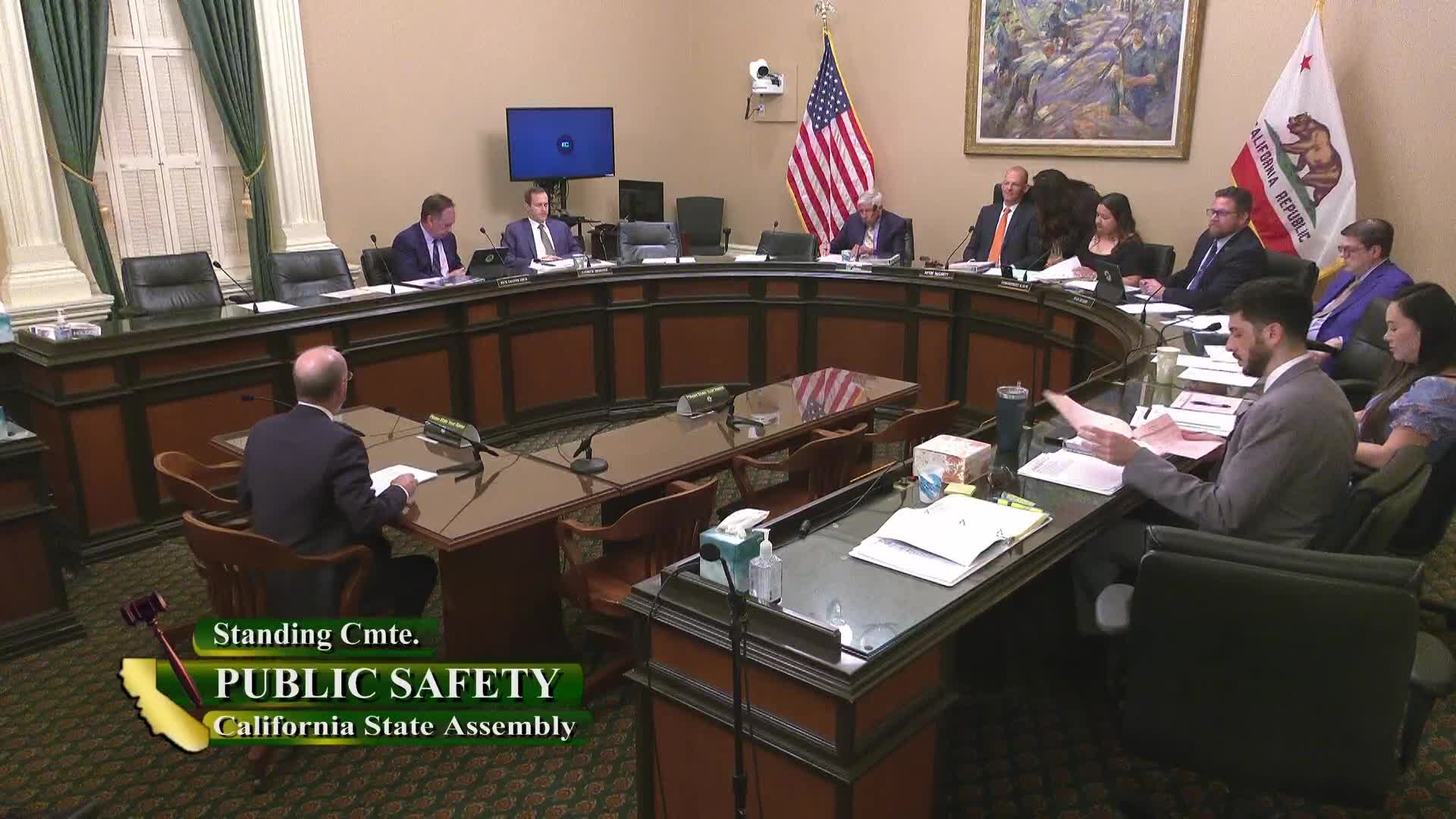
In a recent government meeting, lawmakers discussed significant legislative proposals aimed at improving conditions within the state's correctional facilities and enhancing safety in schools and places of worship.
One of the key topics was Senate Bill 733, introduced by Senator Glaser, which seeks to address the contentious issue of solitary confinement, also known as segregated housing. The bill mandates that starting January 2026, the Department of Corrections and Rehabilitation will be required to collect and report data on individuals placed in solitary confinement. This includes details on the duration of confinement, the reasons for placement, and the circumstances surrounding these decisions. Senator Glaser emphasized the importance of this data in ensuring humane treatment of inmates and maintaining safety for both the incarcerated individuals and prison staff. He argued that without accurate data, policymakers are left with \"blind spots\" that hinder informed decision-making regarding potential reforms in segregated housing practices.
The bill received support from various committee members, with some expressing confusion over any opposition, as many viewed the initiative as a positive step towards accountability and transparency in the prison system. The committee ultimately voted in favor of the bill, sending it to the Appropriations Committee for further consideration.
Additionally, Senator Alvarado Gill introduced Senate Bill 796, which addresses threats of violence in schools and places of worship. This legislation aims to make it unlawful to threaten to commit a crime that could result in death or serious injury, even if no specific individual is named. The bill reflects growing concerns over safety in educational and religious environments, echoing a similar measure passed unanimously in 2019.
Both bills highlight the ongoing efforts by lawmakers to enhance public safety and ensure humane treatment within the state's correctional facilities, responding to pressing societal concerns.
One of the key topics was Senate Bill 733, introduced by Senator Glaser, which seeks to address the contentious issue of solitary confinement, also known as segregated housing. The bill mandates that starting January 2026, the Department of Corrections and Rehabilitation will be required to collect and report data on individuals placed in solitary confinement. This includes details on the duration of confinement, the reasons for placement, and the circumstances surrounding these decisions. Senator Glaser emphasized the importance of this data in ensuring humane treatment of inmates and maintaining safety for both the incarcerated individuals and prison staff. He argued that without accurate data, policymakers are left with \"blind spots\" that hinder informed decision-making regarding potential reforms in segregated housing practices.
The bill received support from various committee members, with some expressing confusion over any opposition, as many viewed the initiative as a positive step towards accountability and transparency in the prison system. The committee ultimately voted in favor of the bill, sending it to the Appropriations Committee for further consideration.
Additionally, Senator Alvarado Gill introduced Senate Bill 796, which addresses threats of violence in schools and places of worship. This legislation aims to make it unlawful to threaten to commit a crime that could result in death or serious injury, even if no specific individual is named. The bill reflects growing concerns over safety in educational and religious environments, echoing a similar measure passed unanimously in 2019.
Both bills highlight the ongoing efforts by lawmakers to enhance public safety and ensure humane treatment within the state's correctional facilities, responding to pressing societal concerns.
View the Full Meeting & All Its Details
This article offers just a summary. Unlock complete video, transcripts, and insights as a Founder Member.
✓
Watch full, unedited meeting videos
✓
Search every word spoken in unlimited transcripts
✓
AI summaries & real-time alerts (all government levels)
✓
Permanent access to expanding government content
30-day money-back guarantee
