Task force tackles AI impact on academic freedom and IP
June 07, 2024 | Radford University, Board of Visitors, Boards and Commissions, Executive, Virginia
This article was created by AI summarizing key points discussed. AI makes mistakes, so for full details and context, please refer to the video of the full meeting. Please report any errors so we can fix them. Report an error »
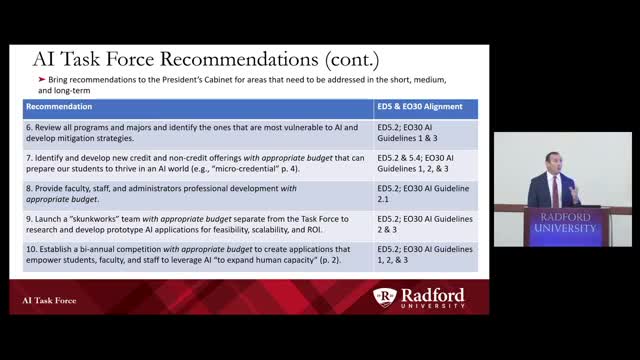
In a recent government meeting, a task force presented recommendations aimed at enhancing the use of artificial intelligence (AI) within the educational community. The proposal includes establishing a biannual competition with a dedicated budget to foster the development of applications that empower students, faculty, and staff to leverage AI for expanding human capacity.
The discussion highlighted the importance of recognizing the contributions of task force members and the collaborative efforts that led to these recommendations. However, a significant concern raised during the meeting was the impact of AI on intellectual property rights for faculty and students engaged in research. Board member George inquired about measures being taken to protect potential patents and innovations that may arise from AI-assisted work.
The task force acknowledged the complexity of this issue, noting ongoing discussions and research into how AI tools, such as ChatGPT and Microsoft Copilot, interact with user data. They emphasized the need for leadership to provide guidance on intellectual property matters, which may also involve legal considerations from the Attorney General's office.
Additionally, the meeting referenced policies from other institutions, such as Harvard, which requires students to cite AI-generated work similarly to personal conversations. This approach raises philosophical questions about the nature of academic freedom and the evolving definition of intellectual property in the age of AI.
As the meeting transitioned into a closed session to discuss personnel matters, it was clear that the implications of AI in academia will continue to be a topic of significant debate and development, with potential legal ramifications that may shape future policies. The task force's recommendations and the ensuing discussions reflect a proactive approach to navigating the challenges posed by emerging technologies in educational settings.
The discussion highlighted the importance of recognizing the contributions of task force members and the collaborative efforts that led to these recommendations. However, a significant concern raised during the meeting was the impact of AI on intellectual property rights for faculty and students engaged in research. Board member George inquired about measures being taken to protect potential patents and innovations that may arise from AI-assisted work.
The task force acknowledged the complexity of this issue, noting ongoing discussions and research into how AI tools, such as ChatGPT and Microsoft Copilot, interact with user data. They emphasized the need for leadership to provide guidance on intellectual property matters, which may also involve legal considerations from the Attorney General's office.
Additionally, the meeting referenced policies from other institutions, such as Harvard, which requires students to cite AI-generated work similarly to personal conversations. This approach raises philosophical questions about the nature of academic freedom and the evolving definition of intellectual property in the age of AI.
As the meeting transitioned into a closed session to discuss personnel matters, it was clear that the implications of AI in academia will continue to be a topic of significant debate and development, with potential legal ramifications that may shape future policies. The task force's recommendations and the ensuing discussions reflect a proactive approach to navigating the challenges posed by emerging technologies in educational settings.
View the Full Meeting & All Its Details
This article offers just a summary. Unlock complete video, transcripts, and insights as a Founder Member.
✓
Watch full, unedited meeting videos
✓
Search every word spoken in unlimited transcripts
✓
AI summaries & real-time alerts (all government levels)
✓
Permanent access to expanding government content
30-day money-back guarantee
