State launches urgent plan to tackle air quality crisis
July 01, 2024 | Yuma County, Arizona
This article was created by AI summarizing key points discussed. AI makes mistakes, so for full details and context, please refer to the video of the full meeting. Please report any errors so we can fix them. Report an error »
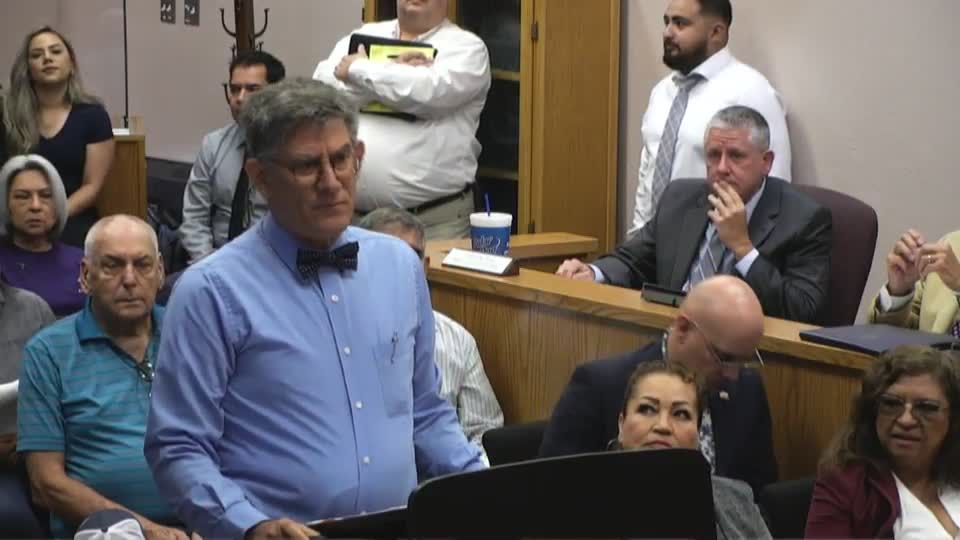
In a recent government meeting, officials from the state of AAVC discussed ongoing efforts to address air quality issues related to particulate matter (PM10) in the Phoenix PM nonattainment area, which includes parts of Yuma, Somerton, and San Luis. The state has been collaborating with stakeholders for several years to develop a comprehensive State Implementation Plan (SIP) aimed at complying with National Ambient Air Quality Standards (NAAQS) set by the Environmental Protection Agency (EPA).
The meeting highlighted the significance of PM10, which consists of particles smaller than 10 micrometers, often referred to as dust. The EPA mandates that areas cannot exceed the PM10 standard more than once per calendar year, with a maximum of three exceedances over a three-year period. Unfortunately, the Phoenix area has historically exceeded these standards, prompting the EPA to take action in 2022 by rescinding its previous clean data designation.
Officials outlined the steps necessary for the SIP revision, which includes creating a comprehensive inventory of PM sources, evaluating all contributors to violations, and implementing reasonably available control measures (RACM). The plan must also include contingency measures to be activated if air quality does not improve as expected.
A key concern raised during the meeting was the potential consequences of failing to submit the SIP on time or if the EPA disapproves the plan. Such failures could trigger severe sanctions, including a \"2-for-1\" offset requirement for new or expanding facilities in the nonattainment area, where for every ton of PM10 emitted, two tons must be offset. Additionally, federal highway funding for projects in the area could be jeopardized, further impacting local infrastructure development.
The state is committed to improving air quality and ensuring compliance with federal regulations, but the path forward requires careful planning and collaboration with various stakeholders to avoid significant economic and environmental repercussions.
The meeting highlighted the significance of PM10, which consists of particles smaller than 10 micrometers, often referred to as dust. The EPA mandates that areas cannot exceed the PM10 standard more than once per calendar year, with a maximum of three exceedances over a three-year period. Unfortunately, the Phoenix area has historically exceeded these standards, prompting the EPA to take action in 2022 by rescinding its previous clean data designation.
Officials outlined the steps necessary for the SIP revision, which includes creating a comprehensive inventory of PM sources, evaluating all contributors to violations, and implementing reasonably available control measures (RACM). The plan must also include contingency measures to be activated if air quality does not improve as expected.
A key concern raised during the meeting was the potential consequences of failing to submit the SIP on time or if the EPA disapproves the plan. Such failures could trigger severe sanctions, including a \"2-for-1\" offset requirement for new or expanding facilities in the nonattainment area, where for every ton of PM10 emitted, two tons must be offset. Additionally, federal highway funding for projects in the area could be jeopardized, further impacting local infrastructure development.
The state is committed to improving air quality and ensuring compliance with federal regulations, but the path forward requires careful planning and collaboration with various stakeholders to avoid significant economic and environmental repercussions.
View the Full Meeting & All Its Details
This article offers just a summary. Unlock complete video, transcripts, and insights as a Founder Member.
✓
Watch full, unedited meeting videos
✓
Search every word spoken in unlimited transcripts
✓
AI summaries & real-time alerts (all government levels)
✓
Permanent access to expanding government content
30-day money-back guarantee
