New handwriting assessment could detect critical patient symptoms
June 07, 2024 | California Institute for Regenerative Medicine, Boards and Commissions, Executive, California
This article was created by AI summarizing key points discussed. AI makes mistakes, so for full details and context, please refer to the video of the full meeting. Please report any errors so we can fix them. Report an error »
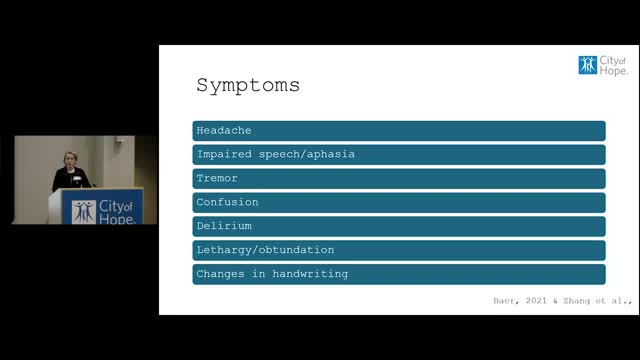
In a recent government meeting focused on advancements in patient care, discussions highlighted the significance of handwriting assessments in identifying early signs of immune effector cell-associated neurotoxicity (ICANS) in patients undergoing CAR T-cell therapy. The meeting underscored that subtle changes in handwriting can serve as critical indicators of a patient's neurological status, particularly as they relate to ICANS, which can lead to severe complications such as cerebral edema.
The meeting detailed the Immune Effector Cell Associated Encephalopathy Score (ICE score), a tool used to evaluate adult patients for ICANS. This assessment includes various cognitive tasks, such as answering orientation questions, naming common objects, and performing simple arithmetic. Notably, the ICE score is complemented by the Cornell Assessment of Pediatric Delirium Scale for younger patients.
Participants discussed the importance of timely assessments, with the ICE score typically administered at baseline before treatment and subsequently at regular intervals, depending on institutional protocols. For instance, at City of Hope, assessments are conducted every shift, allowing for close monitoring of any behavioral changes that may indicate worsening symptoms.
The meeting also addressed the transient nature of ICANS symptoms, which can take longer to resolve compared to those associated with Cytokine Release Syndrome (CRS). While patients often do not recall their experiences with ICANS, caregivers may struggle with the emotional impact of these symptoms. The discussions emphasized the need for healthcare providers to remain vigilant and responsive to changes in patient status to mitigate risks associated with ICANS effectively.
Overall, the meeting reinforced the critical role of comprehensive assessments in improving patient outcomes and highlighted ongoing efforts to refine monitoring practices in the context of advanced cancer therapies.
The meeting detailed the Immune Effector Cell Associated Encephalopathy Score (ICE score), a tool used to evaluate adult patients for ICANS. This assessment includes various cognitive tasks, such as answering orientation questions, naming common objects, and performing simple arithmetic. Notably, the ICE score is complemented by the Cornell Assessment of Pediatric Delirium Scale for younger patients.
Participants discussed the importance of timely assessments, with the ICE score typically administered at baseline before treatment and subsequently at regular intervals, depending on institutional protocols. For instance, at City of Hope, assessments are conducted every shift, allowing for close monitoring of any behavioral changes that may indicate worsening symptoms.
The meeting also addressed the transient nature of ICANS symptoms, which can take longer to resolve compared to those associated with Cytokine Release Syndrome (CRS). While patients often do not recall their experiences with ICANS, caregivers may struggle with the emotional impact of these symptoms. The discussions emphasized the need for healthcare providers to remain vigilant and responsive to changes in patient status to mitigate risks associated with ICANS effectively.
Overall, the meeting reinforced the critical role of comprehensive assessments in improving patient outcomes and highlighted ongoing efforts to refine monitoring practices in the context of advanced cancer therapies.
View the Full Meeting & All Its Details
This article offers just a summary. Unlock complete video, transcripts, and insights as a Founder Member.
✓
Watch full, unedited meeting videos
✓
Search every word spoken in unlimited transcripts
✓
AI summaries & real-time alerts (all government levels)
✓
Permanent access to expanding government content
30-day money-back guarantee
