New Hampshire education bills spark debate on accountability and funding
June 05, 2024 | Manchester School District, School Districts, New Hampshire
This article was created by AI summarizing key points discussed. AI makes mistakes, so for full details and context, please refer to the video of the full meeting. Please report any errors so we can fix them. Report an error »
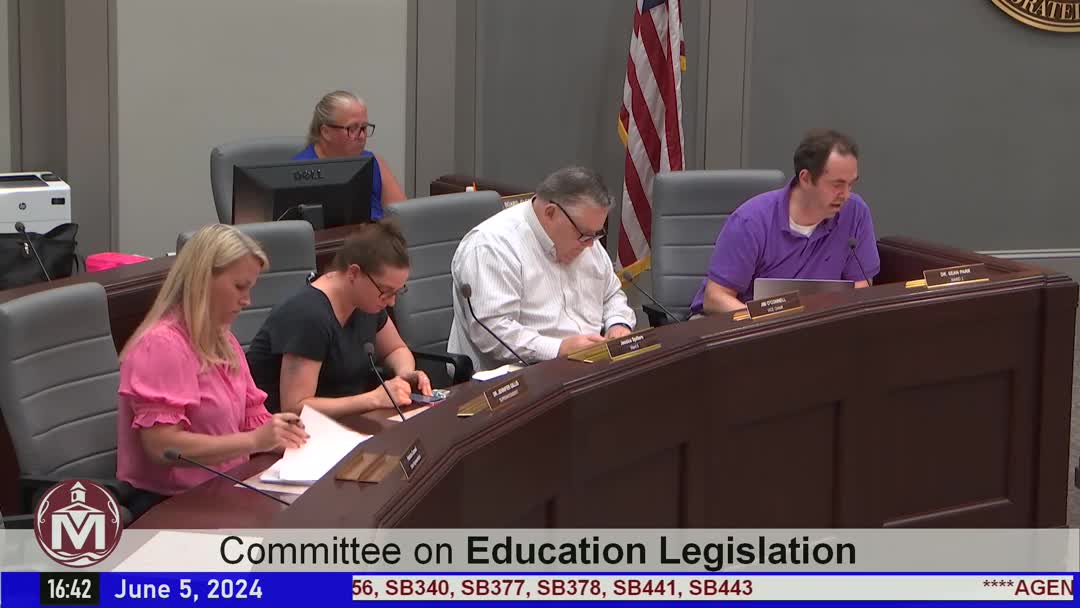
During a recent government meeting, several key education-related bills were discussed, highlighting ongoing legislative efforts and challenges within the state's education system.
One significant topic was House Bill 1298, which aims to define part-time teachers. Currently in the committee of conference, the bill is undergoing revisions, with Representative Cornell indicating that the definition may become less open-ended than initially proposed.
Another bill, House Bill 1311, concerning school district collection development and reconsideration policies, faced a non-concurrence vote, effectively rendering it dead. Originally intended to empower local districts in managing their collections, the bill was amended by the Senate to impose restrictions, leading to its demise.
Senate Bill 340, which focuses on enhancing communication between parents and school districts regarding special education, remains in the committee of conference, indicating that discussions are still ongoing.
Senate Bill 377, which establishes a savings account program for education, has passed both the House and Senate and is expected to be signed into law soon. Meanwhile, Senate Bill 378, which creates a task force to develop a performance-based school accountability system, has also passed and is set to review whether schools are providing adequate educational opportunities. The task force will consist of various educational professionals, including superintendents and experienced educators.
Additionally, Senate Bill 441 aims to establish an advisory group to explore potential funding sources for career and technical education (CTE) facilities. This bill has found concurrence and is moving forward, with discussions about representation from local districts on the advisory group.
Superintendent Gillis noted ongoing conversations regarding facilities projects, emphasizing the importance of local input in shaping educational policy. The meeting underscored the need for community engagement in these legislative processes, as opportunities arise for district representatives to influence policy decisions.
One significant topic was House Bill 1298, which aims to define part-time teachers. Currently in the committee of conference, the bill is undergoing revisions, with Representative Cornell indicating that the definition may become less open-ended than initially proposed.
Another bill, House Bill 1311, concerning school district collection development and reconsideration policies, faced a non-concurrence vote, effectively rendering it dead. Originally intended to empower local districts in managing their collections, the bill was amended by the Senate to impose restrictions, leading to its demise.
Senate Bill 340, which focuses on enhancing communication between parents and school districts regarding special education, remains in the committee of conference, indicating that discussions are still ongoing.
Senate Bill 377, which establishes a savings account program for education, has passed both the House and Senate and is expected to be signed into law soon. Meanwhile, Senate Bill 378, which creates a task force to develop a performance-based school accountability system, has also passed and is set to review whether schools are providing adequate educational opportunities. The task force will consist of various educational professionals, including superintendents and experienced educators.
Additionally, Senate Bill 441 aims to establish an advisory group to explore potential funding sources for career and technical education (CTE) facilities. This bill has found concurrence and is moving forward, with discussions about representation from local districts on the advisory group.
Superintendent Gillis noted ongoing conversations regarding facilities projects, emphasizing the importance of local input in shaping educational policy. The meeting underscored the need for community engagement in these legislative processes, as opportunities arise for district representatives to influence policy decisions.
Don't Miss a Word: See the Full Meeting!
Go beyond summaries. Unlock every video, transcript, and key insight with a Founder Membership.
✓
Get instant access to full meeting videos
✓
Search and clip any phrase from complete transcripts
✓
Receive AI-powered summaries & custom alerts
✓
Enjoy lifetime, unrestricted access to government data
30-day money-back guarantee
