Lawmakers confront Medicaid loopholes fueling poverty crisis
August 30, 2024 | Appropriations, HOUSE OF REPRESENTATIVES, Committees, Legislative, Louisiana
This article was created by AI summarizing key points discussed. AI makes mistakes, so for full details and context, please refer to the video of the full meeting. Please report any errors so we can fix them. Report an error »
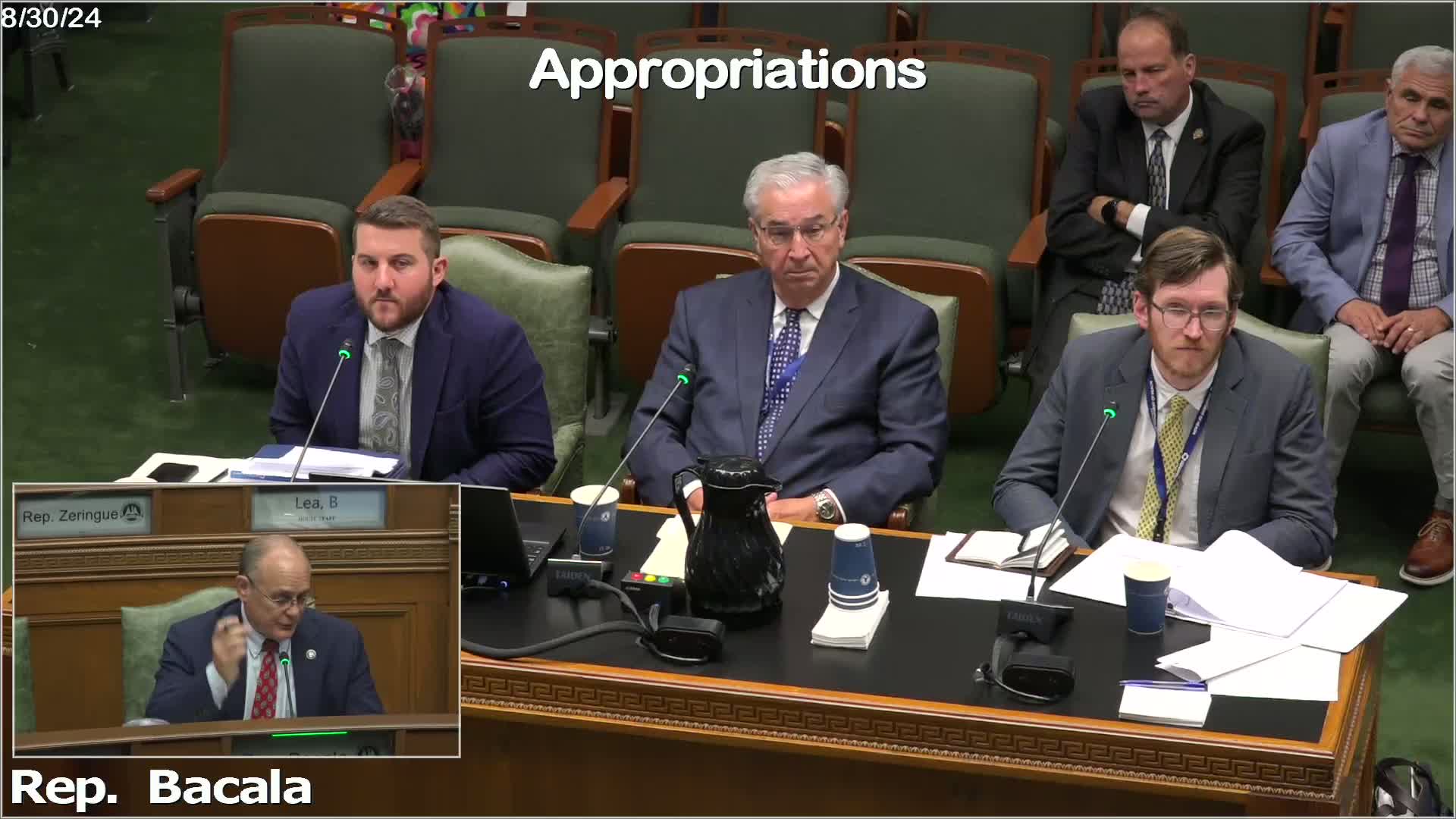
In a recent government meeting, significant concerns were raised regarding the integrity and efficiency of the state’s Medicaid system. Representative DeWitt highlighted vulnerabilities within the system, particularly the lack of verification for marital status, which can lead to individuals fraudulently claiming benefits they do not qualify for. He suggested that the state could utilize income tax returns to better assess eligibility and identify potential overpayments, especially in cases where one parent earns significantly more than the other.
The discussion also touched on the broader implications of Medicaid and similar social programs, with DeWitt arguing that the current structure creates a \"benefits cliff.\" He explained that individuals may avoid accepting raises or additional hours at work to prevent losing substantial government benefits, effectively trapping them in poverty. This issue, he argued, is not unique to Medicaid but extends across various assistance programs, which collectively can amount to significant financial support that is forfeited with minimal income increases.
Additionally, the meeting addressed the performance of Managed Care Organizations (MCOs) and the fee-for-service model. Concerns were raised about the inefficiencies in the fee-for-service system, which has been criticized for its outdated software and inability to manage payments effectively. Representatives suggested that transitioning more services under MCOs could improve care and reduce wasteful spending.
The state’s nursing home care was also scrutinized, with representatives noting that the state ranks poorly in quality indicators, such as the prevalence of bedsores among residents. The current payment model, which compensates nursing homes for empty beds, was criticized for lacking incentives to provide adequate care.
Overall, the meeting underscored the urgent need for reforms in the Medicaid system and related programs to enhance accountability, improve care quality, and better support individuals striving to improve their financial situations.
The discussion also touched on the broader implications of Medicaid and similar social programs, with DeWitt arguing that the current structure creates a \"benefits cliff.\" He explained that individuals may avoid accepting raises or additional hours at work to prevent losing substantial government benefits, effectively trapping them in poverty. This issue, he argued, is not unique to Medicaid but extends across various assistance programs, which collectively can amount to significant financial support that is forfeited with minimal income increases.
Additionally, the meeting addressed the performance of Managed Care Organizations (MCOs) and the fee-for-service model. Concerns were raised about the inefficiencies in the fee-for-service system, which has been criticized for its outdated software and inability to manage payments effectively. Representatives suggested that transitioning more services under MCOs could improve care and reduce wasteful spending.
The state’s nursing home care was also scrutinized, with representatives noting that the state ranks poorly in quality indicators, such as the prevalence of bedsores among residents. The current payment model, which compensates nursing homes for empty beds, was criticized for lacking incentives to provide adequate care.
Overall, the meeting underscored the urgent need for reforms in the Medicaid system and related programs to enhance accountability, improve care quality, and better support individuals striving to improve their financial situations.
Don't Miss a Word: See the Full Meeting!
Go beyond summaries. Unlock every video, transcript, and key insight with a Founder Membership.
✓
Get instant access to full meeting videos
✓
Search and clip any phrase from complete transcripts
✓
Receive AI-powered summaries & custom alerts
✓
Enjoy lifetime, unrestricted access to government data
30-day money-back guarantee
