Black Men's Health Clinic tackles disparities with innovative outreach
June 05, 2024 | Austin, Travis County, Texas
This article was created by AI summarizing key points discussed. AI makes mistakes, so for full details and context, please refer to the video of the full meeting. Please report any errors so we can fix them. Report an error »
In a recent government meeting, officials discussed the impending closure of the marshaling yard and its implications for clients currently utilizing its services. As the facility prepares to shut down, clients will be offered housing or shelter options, with a focus on those with verified housing resources. The transition plan includes assisting clients with housing vouchers and facilitating placements in permanent supportive housing units, such as the upcoming Pecan Gardens. However, those unable to secure housing will be directed to shelters in other cities, potentially impacting other initiatives like the HEAL program. The full extent of these impacts will not be clear until later in the year.
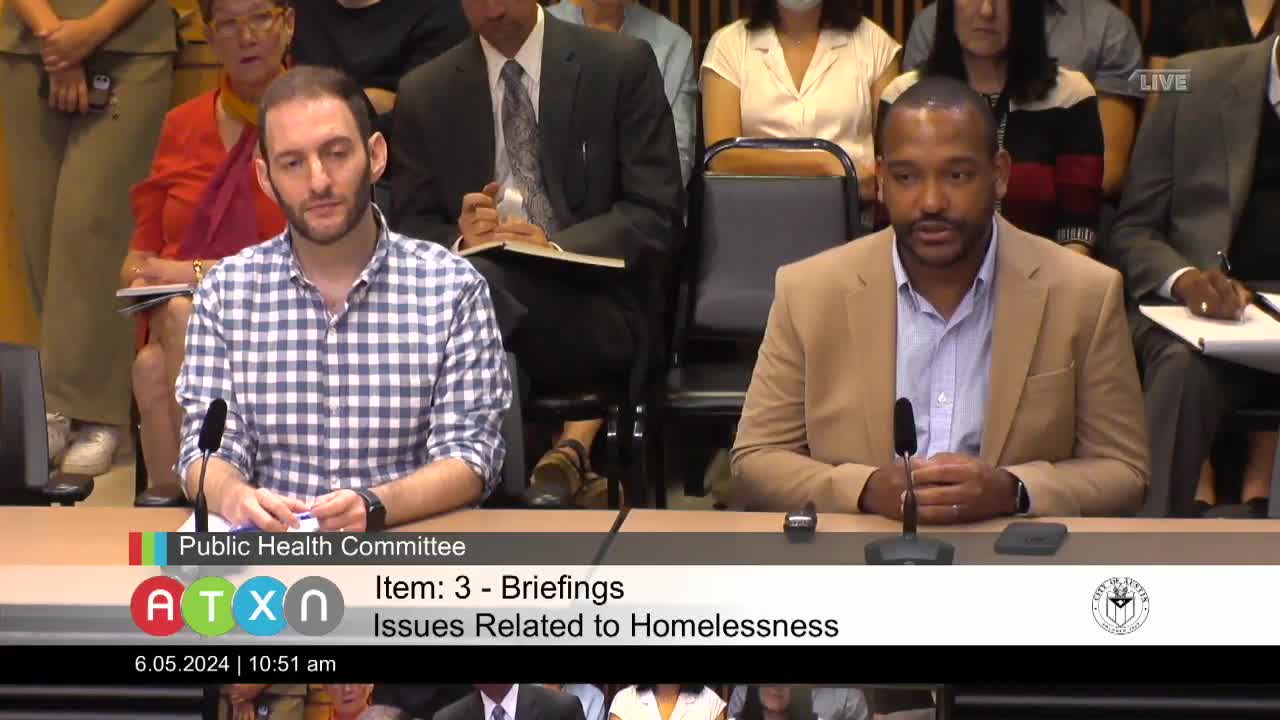
The meeting also featured a briefing on the Black Men's Health Clinic (BMHC), which recently celebrated its two-year anniversary. Leaders from the clinic highlighted the significant health disparities faced by Black and brown men, noting that conditions such as stroke, cancer, and hypertension disproportionately affect this demographic. The clinic aims to address these issues by providing culturally appropriate healthcare services and removing barriers to access.
BMHC representatives emphasized their holistic approach, focusing on mental health, physical health screenings, and addressing social determinants of health, such as housing and food security. They reported a notable increase in client engagement, with a doubling of unduplicated clients in just six months compared to the previous year. The clinic's collaborative efforts with local health organizations aim to enhance care coordination and improve health outcomes for underserved populations.
Looking ahead, BMHC leaders expressed a commitment to expanding their outreach, particularly to the unhoused population, and discussed ongoing partnerships with various community organizations. They underscored the importance of securing additional funding to sustain and grow their initiatives, which are crucial for improving health equity in the region.
The meeting also featured a briefing on the Black Men's Health Clinic (BMHC), which recently celebrated its two-year anniversary. Leaders from the clinic highlighted the significant health disparities faced by Black and brown men, noting that conditions such as stroke, cancer, and hypertension disproportionately affect this demographic. The clinic aims to address these issues by providing culturally appropriate healthcare services and removing barriers to access.
BMHC representatives emphasized their holistic approach, focusing on mental health, physical health screenings, and addressing social determinants of health, such as housing and food security. They reported a notable increase in client engagement, with a doubling of unduplicated clients in just six months compared to the previous year. The clinic's collaborative efforts with local health organizations aim to enhance care coordination and improve health outcomes for underserved populations.
Looking ahead, BMHC leaders expressed a commitment to expanding their outreach, particularly to the unhoused population, and discussed ongoing partnerships with various community organizations. They underscored the importance of securing additional funding to sustain and grow their initiatives, which are crucial for improving health equity in the region.
View the Full Meeting & All Its Details
This article offers just a summary. Unlock complete video, transcripts, and insights as a Founder Member.
✓
Watch full, unedited meeting videos
✓
Search every word spoken in unlimited transcripts
✓
AI summaries & real-time alerts (all government levels)
✓
Permanent access to expanding government content
30-day money-back guarantee
