Tax Reform Debate Highlights Inequality and Corporate Loopholes
June 12, 2024 | Budget: Senate Committee, Standing Committees - House & Senate, Congressional Hearings Compilation, Legislative, Federal
This article was created by AI summarizing key points discussed. AI makes mistakes, so for full details and context, please refer to the video of the full meeting. Please report any errors so we can fix them. Report an error »
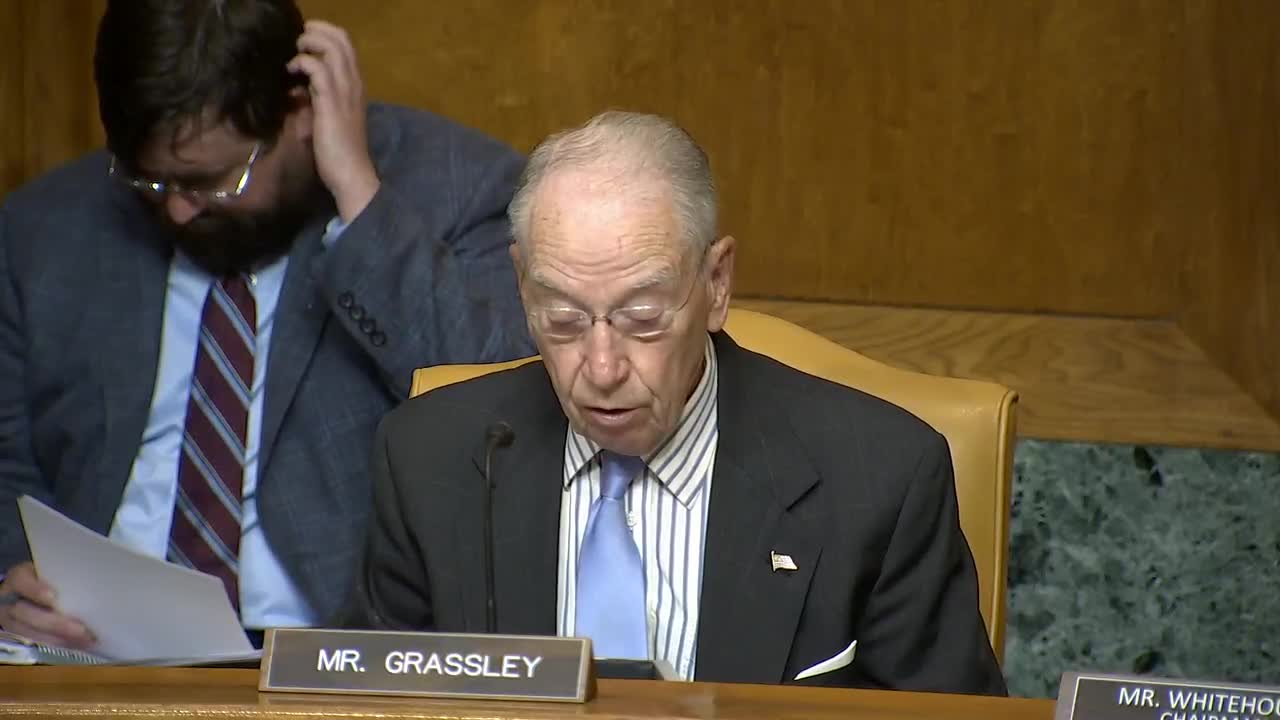
In a recent government meeting focused on tax policy, significant discussions emerged regarding the fairness and effectiveness of the current tax code. The meeting featured expert testimonies from notable economists, including Nobel Laureate Joseph Stiglitz, who emphasized the need for comprehensive tax reforms to address growing inequality and corporate tax avoidance.
Stiglitz highlighted that the U.S. tax system disproportionately benefits wealthy individuals and corporations, allowing them to pay lower effective tax rates than average workers. He proposed several reforms aimed at closing loopholes, eliminating special provisions that favor the rich, and ensuring that billionaires contribute their fair share. Stiglitz argued that the tax code should discourage harmful economic behaviors and promote investments that enhance living standards.
Sarah Anderson, director of the Global Economy Project at the Institute for Policy Studies, echoed Stiglitz's concerns, advocating for a tax system that holds financial institutions accountable. She suggested implementing a financial transaction tax to curb excessive speculation and proposed a tax increase on companies with significant pay disparities between executives and median workers. Anderson emphasized the need for tax policies that encourage long-term value creation rather than short-term gains.
Conversely, Dr. Michael Falkender, a finance professor and former assistant secretary for economic policy, defended the current tax structure, arguing that it has led to economic growth and increased federal revenues. He contended that higher taxes could stifle economic activity and drive innovation overseas. Falkender criticized proposals for new taxes, such as a financial transaction tax, citing historical examples where similar measures led to decreased trading volumes and economic activity.
The meeting underscored a growing divide in perspectives on tax policy, with proponents of reform advocating for a more equitable system and opponents warning against potential negative impacts on economic growth. As the 2025 tax debate approaches, the discussions from this meeting will likely shape future legislative efforts aimed at addressing these critical issues.
Stiglitz highlighted that the U.S. tax system disproportionately benefits wealthy individuals and corporations, allowing them to pay lower effective tax rates than average workers. He proposed several reforms aimed at closing loopholes, eliminating special provisions that favor the rich, and ensuring that billionaires contribute their fair share. Stiglitz argued that the tax code should discourage harmful economic behaviors and promote investments that enhance living standards.
Sarah Anderson, director of the Global Economy Project at the Institute for Policy Studies, echoed Stiglitz's concerns, advocating for a tax system that holds financial institutions accountable. She suggested implementing a financial transaction tax to curb excessive speculation and proposed a tax increase on companies with significant pay disparities between executives and median workers. Anderson emphasized the need for tax policies that encourage long-term value creation rather than short-term gains.
Conversely, Dr. Michael Falkender, a finance professor and former assistant secretary for economic policy, defended the current tax structure, arguing that it has led to economic growth and increased federal revenues. He contended that higher taxes could stifle economic activity and drive innovation overseas. Falkender criticized proposals for new taxes, such as a financial transaction tax, citing historical examples where similar measures led to decreased trading volumes and economic activity.
The meeting underscored a growing divide in perspectives on tax policy, with proponents of reform advocating for a more equitable system and opponents warning against potential negative impacts on economic growth. As the 2025 tax debate approaches, the discussions from this meeting will likely shape future legislative efforts aimed at addressing these critical issues.
Don't Miss a Word: See the Full Meeting!
Go beyond summaries. Unlock every video, transcript, and key insight with a Founder Membership.
✓
Get instant access to full meeting videos
✓
Search and clip any phrase from complete transcripts
✓
Receive AI-powered summaries & custom alerts
✓
Enjoy lifetime, unrestricted access to government data
30-day money-back guarantee
