City Council Moves to Tackle Short Term Rental Crisis
June 13, 2024 | San Antonio, Bexar County, Texas
This article was created by AI summarizing key points discussed. AI makes mistakes, so for full details and context, please refer to the video of the full meeting. Please report any errors so we can fix them. Report an error »
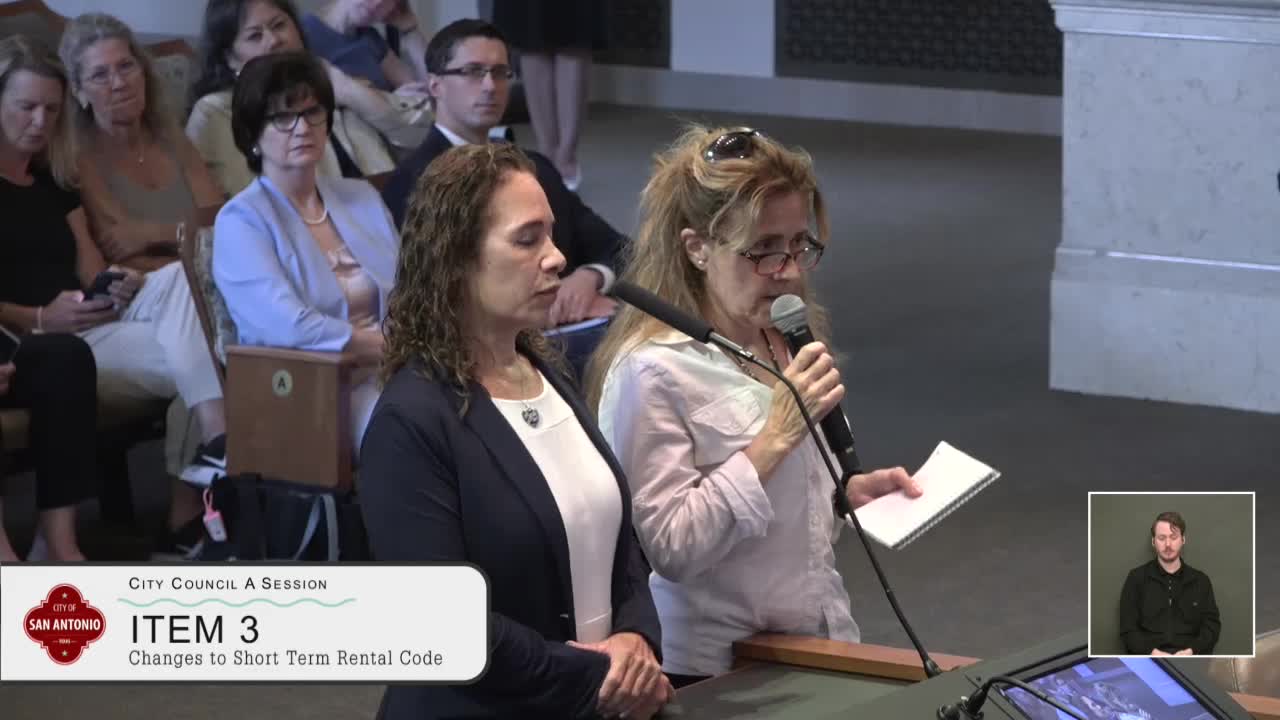
In a recent city council meeting, significant discussions centered around the regulation of short-term rentals (STRs), particularly focusing on the proposed fee increases for rental permits. Council members expressed concerns about the impact of investor-operated STRs on housing affordability and neighborhood quality of life.
Councilman Castillo introduced a motion to amend the permit fees for Type 2 STRs from $300 to $450 every three years, while maintaining the fee for Type 1 rentals at $300. This proposal aims to enhance compliance and enforcement of rental regulations, addressing growing concerns about non-compliant operators and the overall impact of STRs on local housing markets.
During the meeting, Castillo highlighted research indicating a correlation between the proliferation of STRs and rising rental prices, emphasizing the need for a dedicated code compliance officer to oversee STR regulations. Currently, the city lacks a dedicated officer for this purpose, relying on existing staff who juggle multiple responsibilities. The proposed fee increase would facilitate the hiring of a full-time officer focused solely on STR compliance.
Councilman McKee Rodriguez echoed these sentiments, noting that a significant portion of STRs in his district are investor-operated, which exacerbates housing shortages. He advocated for a fee structure that would impose higher fees on multiple-property operators to deter the conversion of residential homes into commercial rentals.
The council also discussed the prevalence of disruptive parties associated with STRs, with city staff reporting a few dozen incidents over the past few years. While this number may seem low compared to the total permits issued, the impact on affected neighborhoods can be substantial. The proposed code officer would be tasked with addressing these issues directly, ensuring compliance and mitigating disturbances.
Council members expressed a collective commitment to balancing property rights with the need for neighborhood stability, recognizing the importance of regulating STRs to protect local communities. The council is expected to finalize the fee increase and the hiring of a dedicated code officer in the upcoming budget discussions, aiming to enhance the enforcement of STR regulations and address the concerns raised by residents.
Councilman Castillo introduced a motion to amend the permit fees for Type 2 STRs from $300 to $450 every three years, while maintaining the fee for Type 1 rentals at $300. This proposal aims to enhance compliance and enforcement of rental regulations, addressing growing concerns about non-compliant operators and the overall impact of STRs on local housing markets.
During the meeting, Castillo highlighted research indicating a correlation between the proliferation of STRs and rising rental prices, emphasizing the need for a dedicated code compliance officer to oversee STR regulations. Currently, the city lacks a dedicated officer for this purpose, relying on existing staff who juggle multiple responsibilities. The proposed fee increase would facilitate the hiring of a full-time officer focused solely on STR compliance.
Councilman McKee Rodriguez echoed these sentiments, noting that a significant portion of STRs in his district are investor-operated, which exacerbates housing shortages. He advocated for a fee structure that would impose higher fees on multiple-property operators to deter the conversion of residential homes into commercial rentals.
The council also discussed the prevalence of disruptive parties associated with STRs, with city staff reporting a few dozen incidents over the past few years. While this number may seem low compared to the total permits issued, the impact on affected neighborhoods can be substantial. The proposed code officer would be tasked with addressing these issues directly, ensuring compliance and mitigating disturbances.
Council members expressed a collective commitment to balancing property rights with the need for neighborhood stability, recognizing the importance of regulating STRs to protect local communities. The council is expected to finalize the fee increase and the hiring of a dedicated code officer in the upcoming budget discussions, aiming to enhance the enforcement of STR regulations and address the concerns raised by residents.
Don't Miss a Word: See the Full Meeting!
Go beyond summaries. Unlock every video, transcript, and key insight with a Founder Membership.
✓
Get instant access to full meeting videos
✓
Search and clip any phrase from complete transcripts
✓
Receive AI-powered summaries & custom alerts
✓
Enjoy lifetime, unrestricted access to government data
30-day money-back guarantee
